Table Of ContentArchive Document
Historic,
Do assume
not content reflects current
scientific knowledge, policies, or practices.
United States Department ofAgriculture
Soil Conservation Service
ProgramAidNumber 420
a Watershed?
is
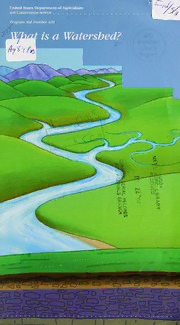
What a watershed?
is
It's the land that water flows
across or under on its way to
a stream, river, or lake.
How do watersheds work?
The landscape is made up ofmany inter-
connected basins, or watersheds. Within
each watershed, all water runs to the
—
lowestpoint a stream, river, or lake.
On its way, water travels over the surface
and across farm fields, forest land, subur-
ban lawns, and city streets, or it seeps
into the soil andtravels as groundwater.
Large watersheds like the ones for the
Mississippi River, ColumbiaRiver, and
Chesapeake Bayare made up ofmany
smallerwatersheds across several states.
Are all watersheds thesame?
Not at all. Watersheds come in many
different shapes and sizes and have many
differentfeatures. Watersheds can have
hills or mountains or be nearlyflat. They
can have farmland, rangeland, small
towns, and big cities. Parts ofyourwater-
shed can be so rough, rocky, or marshy
that they're suited onlyfor certain trees,
plants, and wildlife.
Your watershedcommunity.
Everyone lives in awatershed. You and
everyone in your watershed are part ofthe
watershed community. The animals, birds,
and fish are, too. You influence what hap-
pens inyourwatershed, good or bad, by
—
howyou treat the natural resources the
soil, water, air, plants, and animals. What
happens inyour small watershed also
affects the larger watershed downstream.
There are manythings you and your
watershed community can do to keep your
watershed healthy and productive. To
learn whatyou can do to take care ofyour
watershed, call 1-800-THE-SOIL oryour
local Soil Conservation Service office. It's
listed in the telephone book under U.S.
Government, Department ofAgriculture.
What is a watershed?
It's the land that water flows
across or under on its way to
a stream, river, or lake.
Howdowatershedswork?
Thelandscape is made up ofmanyinter-
connectedbasins, orwatersheds.Within
eachwatersh—ed,allwater runstothe
lowestpoint astream, river, or lake.
On itsway, watertravels overthesurface
andacross farmfields, forestland, subur-
ban lawns, andcitystreets, oritseeps
intothe soil andtravels as groundwater.
Largewatersheds liketheones forthe
Mississippi River, ColumbiaRiver, and
ChesapeakeBayaremadeup ofmany
smallerwatersheds acrossseveral states.
Areallwatershedsthesame?
Notatall. Watersheds comeinmany
differentshapes andsizes and havemany
differentfeatures. Watershedscanhave
hillsormountainsorbenearlyflat.They
canhave farmland, rangeland, small
towns, andbigcities. Partsofyourwater-
shedcan be sorough, rocky, ormarshy
thatthey'resuitedonlyforcertaintrees,
plants, andwildlife.
Yourwatershedcommunity.
Everyonelivesinawatershed. You and
everyone inyourwatershedare partofthe
watershedcommunity.Theanimals, birds,
andfish are, too. You influencewhathap-
pens inyourwatershed, goodorbad—, by
howyou treatthe natural resources the
soil, water, air, plants, andanimals. What
happens inyoursmall watershedalso
affectsthelargerwatersheddownstream.
Therearemanythingsyou andyour
watershedcommunitycandoto keepyour
watershedhealthyandproductive.To
learnwhatyou can dototakecareofyour
watershed, call 1-800-THE-SOILoryour
local Soil ConservationServiceoffice. It's
listedindietelephone book underU.S.
Government, DepartmentofAgriculture.
We
all live in a watershed.
Everything we do in our watershed
affects the soil, water, air, plants,
and animals.
Let's work together to keep our
watersheds healthy. Here are some
things you can do.
1
.
On the farm
Keep plant residue on the surface of sloping
cropland. This reduces runoff and prevents
sediment, fertilizers, and pesticides from
entering streams, rivers, lakes, and ponds.
log
home
At
Landscape your yard with plants that need
a minimum ofwater and fertilizer. Use only the
amount offertilizers and pesticides that
plants need.
3
In your community
Protect wetlands that serve as natural buffers
against pollution, soil erosion, and flooding.
TheUnitedStatesDepartmentofAgriculture(USDA)prohibitsdiscriminationinits
programsonthebasisofrace,color,nationalorigin,sex,religion,age.disability, political
beliefs,andmaritalorfamilialstatus.(Notallprohibitedbasesapplytoallprograms.)
Personswithdisabilitieswhorequirealternativemeansforcommunicationofprogram
information(Braille,largeprint,audiotape,etc.)shouldcontacttheUSDAOfficeof
Communicationsat(202)"20-5881 (voice)or(202)720-7808(TDD).
Tofileacomplaint,writetheSecretaryofAgriculture.U.S. DepartmentofAgriculture.
Washington,D.C.,20250,orcall(202)720-7327(voice)or(202)690-1538(TDD).
USDAisanequalemploymentopportunityemployer.
Revised:September1994
o
PrintedonRecycledPaper