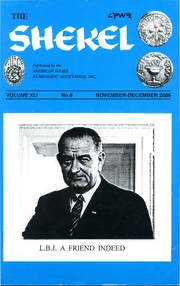
Table Of ContentL.B.J. A FRIEND INDEED
Top Six Reasons to Consign to Heritage:
• Heritage Auction Galleries is the world's largest collectibles auction firm
·Since 1976, Heritage has sold more than $3 billion worth of collectibles and earns
over $600 million in annual sales
• Each day an average of over 25,000 collectors visit Heritage's
website (over 60 times as much traffic as H.R. Harmer, Siegel,
Spink/Shreve, Rumsey, and Bennett's websites combined)
·Heritage reaches a world-wide audience with over 600,000
collectors on our mailing list, and over 400,000 registered
online bidder members from 164 different countries
·Heritage spends more than $7 million annually on marketing and advertising alone
·Since our first auction in 1976, each of Heritage's 45,000 consignors has been paid in
full and right on schedule
This outstanding pair will be featured in our upcoming January
auction. Great Britain 2p Blue (S.G. #5 f Scott #2). Spectacular Mint Original
Gum Pair. Generous and Well Balanced Margins around. Rare.
Est. $35,000-$50,000
Seeking quality stamps with value of $500+
• RARITIES • INVERTS • CLASSICS • PSE GRADED • POSTAL HISTORY •
• BACK OF THE BOOK • CERTIFIED • GRADED OR UNGRADED •
•SPECIALTY ITEMS • EXHIBITS • UNITED STATES OR WORLDWIDE •
To receive a complimentary
copy of this catalog, or another HERITAGE<rlD
catalog of your choice from CALL NOW!
any category, register online gallerkcY Steven Crippe,
at HA.com/SHEK10098 or call ctfucfian,
Director
866-835-3243 and
mention reference SHEK10098. StevenC@HA .com
The entire auction will go on The World's Largest Collectibles Auctioneer 1-800-872-6467
line approximately Jan uary 2 ext. 1777
Annual Sales Exceeding $600 Million• Over 400,000 Registered Online Bidder-Members
3500 Maple Ave, 17th Floor• Dallas, Texas 75219 • 214-409-1777 • 800-872-6467 ext. 1777 • HA.com
TX Aucdonffr lk•,..s: s.nwl Foon 11717; Robert Korver 13754; Andr.a Voss 16'06. TM auction is subj«t to• 19.5% bu)w's ptemiwn.
VOLUME XLI No. 6 (Cons. #222)
NOVEMBER -DECEMBER 2008
EDWARD SCHUMAN, EDITOR
TABLE OF CONTENTS
Our Organization .................. ......... ............................. 2
President's Message ............ ... ..................... ............... 3
The Editor's Page ..................... ........................... ....... 4
The East African Project. ................. .......................... 5
LBJ and the Jews ........................ ......... .................... 10
AINA at the ANA Convention
By Donna Sims .................. ................................. 14
Profile of Courage and Hope
By Donna Sims ... ............................................... 16
Jerusalem Temple and Temple Tax
By Fonfeder, Holtzman & Maccarrone.... .. .............. 18
Jewish History in the Rep. of Georgia...........................25
The Forgotton Whistle-Blower
By Rafael Medoff. ..........................................30
Medieval Narbonne, France
By Marvin Tameanko ......... ............ ...... ..... , .... 35
The Oliphant Scheme for Palestine ... ... ... ... ............ ..... .40
Deciphering the Dead Sea Scrolls
By Philip J. Hicks.............................. ............44
AINA Dealer Directory ...... ............ ... ... .....................4 6
Membership Application ... ...... ............ ... ................ .48
ARTICLES PUllaHED wmt AUTHOR'S ~ ARE ORIGINAL MANUSCRIPTS..
STORES WITHOUT AUTHOR'S CREDfT HAVE IEEN RESEMc:HEo 1Y THE EDITOR
USING JUCWCA·OICTIONMIES, ENC't'Ct.OPEDIAS, NEWSPAP£.A6 OR MAGAZINES.
@2001 l\mericao lsrad·Numismatic Association
ISSN 0087-3486
1
AMERICAN ISRAEL
NUMISMATIC ASSOCIATION
WEBSITE: WWW.THESHEKEL.ORG
OFFICERS
MEL WACKS, PRESIDENT
EMAIL: [email protected]
TEL: (818) 225-1348
J.J. VAN GROVER, VICE PRESIDENT
EMAIL: [email protected]
DONNA SIMS, SECRETARY-TREASURER
JULIUS TUROFF, SECRETARY EMERITUS
FLORENCE SCHUMAN, TREASURER EMERITUS
GENERAL CONTACT
DONNA SIMS
P.O. BOX 20255
FOUNTAIN HILLS, AZ 85269
EMAIL: DANCIN.DONNA@YAHOO. COM
EDITORIAL CONTACT
EDWARD SCHUMAN
3900 ISLAND BLVD. #B-401, AVENTURA, FL 33160
EMAIL: [email protected]
TEL: (305) 466-2833 FAX: (305)466-2834
BOARD OF DIRECTORS
FLORENCE SCHUMAN, DONNA SIMS, ODED PAZ (2009)
--
MEL WACKS, J.J. VAN GROVER, SAGI SALOMON (2010)
JOSH PROTTAS, ROGER MERRITT, IRA REZAK (2011)
2 .
President's Message
By Mel Wacks
We want to hear from you!
I would like you to consider AINA as your very own club. Sure,
we are spread out across the nation and have members around the
world, but we can easily communicate in the pages of The Shekel,
through letters, emails and the telephone. Let us know ifwe are doing
a good job, or if we can do anything better. Are there other subjects
you. would like to read about in The Shekel? - let us know. Are there
any other services we can offer to you? - let us know. Do you have
ideas how we can get new members? - let us know.
We would also like to know what you think about the coins,
medals and other collectibles offered by the Israel Government Coins
and Medals Corporation. Would you like more diverse offerings like
gold bullion coins, rare ancient Judaean coins (like silver Shekels)
priced at hundreds or even thousands of dollars, inexpensive coins
and medals priced below $25, color on coins and medals, an annual
art medal? What other ideas do you have?
We thank you for being a member of our club, and promise to
continue to inform, entertain, and assist you any way possible. Tell
me what AINA is doing right ... and what we can do better by writing
to Mel Wacks, AINA, PO Box 20255, Fountain Hill, AZ 85269,
sending email to [email protected] or calling (818) 225-1348.
I look forward to hearing from you.
Happy collecting,
3
The Editor's Page
By Edward Schuman
Our president, Mel Wacl<s suggested start that I include with my
editor's message the following "Letter to the Editor". Over the years, we
have received many such letters but this is the first I have printed.
Hello Ed
I am a 56 year old member ofthe tribe and have been collecting coins
most ofmy life offand on. I live in Baltimore and always attend the coin
shows. I stopped at the AINA booth this year and joined up.
I have collected Israeli coins for a few years now. Here comes the
interesting part. (to me anyway.) I got your Sept-Oct issue in the mail and
read your page. I started laughing. I told my wife this was a sign. I am a
nurse and I manage a dialysis clinic in a hospital here in Baltimore. I
have many Philippine nurses that work for me. They are the best. I showed
one of them the story about the cigar factory and they started telling me
all about Jews in their home country. Anyway I found it interesting. I have
read 2 issues now cover to cover, and have learned more about Jewish
history in a few hours than I have in the rest of my life. I share this info
with my boys (25 and 27) and my coworkers. I am accused of sharing
information whether you want it or not. I hope you are doing well with
your treatments.
Looking forward to your next issue.
Sincerely,
Stuart Lessner, RN,M Owings Mills, Md 21117
It is always gratifying to receive letters like the above. As the editor of
this magazine I strive to present articles of Jewish context which normally
would not appear in the newspapers etc. In this issue are two articles that I
believe have not been publicized extensively before. They were sent to me
by email from my wife's cousin Marshall Cohen, who is an astute student
of modem Jewish history. I have put a photo of Lyndon Baines Johnson
on the front cover. Please read "LBJ and the Jews" and you will see why I
believe his photograph on the front cover ofthe SHEKEL is appropriate.
Till the next issue
4
THE £AST AFRICAN PROJECT
The offer of a territory in British East Africa for a self-governing
Jewish State was made on the direct initiative of Joseph Chamberlain, then
Secretary of State for the Colonies. On the journey from the coast to that
Central African territory, Chamberlain passed through a region, part of the
British Empire, apparently well adapted for European settlement, yet
practically uninhabited. With the Jewish Question fresh in his mind, he
was anxious, on humane grounds, to assist in relieving the misery of the
Jewish people and doubtless desirous also of identifying the British name
with a departure that might well prove a turning point in human history.
Above all, with true statesmanlike instinct, wishing to incorporate into the
mosaic of the British Empire an element whose prospective value would
be so considerable as that of a Jewish dominion. The idea of including in
the ultimate British Federation a Jewish state seized his heart, his
imagination, and his sense of statesmanship.
British East Africa did not fall within the sphere of the Colonial
Office. It would not therefore fall to Chamberlain to translate his idea into
formal proposals. He referred the matter to the Foreign Office, at the head
of which was Lord Lansdowne. There the proposal met with as much
sympathy as if it had remained in the hands of Chamberlain himself.
The East African project formally entered the sphere of practical
politics on the 14th of August, 1903, when a letter was sent by the Foreign
Office to Mr. L. J. Greenberg, a prominent English Zionist. This letter,
after stating that Lord Lansdowne had studied the question with the
interest which His Majesty's Government must always take in any well
considered scheme for the amelioration of the position of the Jewish race,
proceeded to lay down in general terms the conditions of the offer of a
territory.
Lord Lansdowne would be prepared to discuss the details of a
scheme comprising as its main features the grant of a considerable area of
land, the appointment of a Jewish official as the chief of the local
administration, and permission to the colony to have a free hand in regard
to municipal legislation, and as to the management of religious and purely
domestic matters, such local autonomy being conditional upon the right of
His Majesty's Government to exercise general control.
Herzl was in a difficult position. His efforts had resulted in an offer
by the British Government of everything for which the organization of
which he was the head was striving, except that the land had neither
religious nor historical sentiment behind it. Herzl had long before been
educated by his associates with the opinion that the soul of the Zionist
5
Movement was the craving of the Jewish people for Palestine. He had
once looked at the question as little more than one of social economics,
and the offer of the British Government then would, to his mind, have
solved the whole problem.
Lord Lansdowne and his colleagues were, in fact, in 1903 in the
mental position which Herzl had occupied when eight years earlier he
wrote "The Jewish State." Herzl therefore knew that the acceptance of
the East African offer would mean no settlement of the Jewish Question.
On the other hand, the need ofthe Jewish people was urgent.
The sixth Zionist Congress was held in the midst of a period of
externally induced suffering for the Jewish people. The offer was so
generous, so unprecedented, that one would well hesitate and hesitate
again lest its rejection might not prove an act of treason to the Jewish
people. Herzl decided to accept it, subject to the territory being found
suitable for European settlement, a condition which the British
Government had already accepted, not as the end of the Zionist efforts, but
as a half-way house, a stepping-stone to Palestine, a land in which the
Jewish people might serve the apprenticeship of self-government,
preparatory to entering into their ancient heritage. This was the proposal
which he hoped to persuade the Congress to accept.
Herzl did not, however, even yet realize the strength of the ·
Palestinian sentiment among his followers. All were unanimous in their
gratitude to the British Government, but the opposition to the proposed
abandonment, even only temporary and partial, of the Zionist ideal was
keen. The Russian delegates, who, one might have expected, would have
welcomed almost any land of refuge, were practically unanimous in their
opposition ;o the proposal. The parties among the other nationalities were
more evenly divided. In England Dr. Gaster md Dr. Weizmann were pure
Zionists. Mr. Herbert Bentwich who thought with them, carried the Order
of Ancient Maccabeans, one of the two principal English Zionist
institutions, with him. On the other hand, Mr. Zangwill and Mr. Greenberg
were in favor of the acceptance of the offer. Max Nordau agreed with.M r.
Zangwill.
Ultimately a compromise resolution, which in effect committed no
one to any decision, was adopted, but the opposition of a large section of
the Palestinian party even to this, was intense. The resolution was to the
effect that a commission of investigation, as suggested by the British
Government, should be sent to East Africa to ascertain whether the
country was suitable for the purpose to which it was proposed to devote it.
The cost of the commission should not come out of Zionist funds, but
should be soecially provided from prix ate sources. On the .p resentation of
6
the Commission's report to the next Congress, to be expressly convened
for the purpose, a decision should be taken whether to accept or decline
the British offer.
This Congress was held in the following year, but in the meanwhile
Herzl had died, a self-sacrifice to the cause of his people. Theodor Herzl,
the re-creator of Jewish nationalism, one of those very occasional leaders
whom the Jews of all lands accept, died on the 4th of July, 1904, at the
premature age of forty-four years. He was the one universal Jew of his
age, the unique personification of the Jewish spirit that it had possessed
since the death of Sir Moses Montefiore. Half of the Jewish race called
him Master and owed to him the revival of the Jewish hope. Thousands of
Jewish homes, the humblest in the Diaspora, in Russia, in Rumania, in
Galicia, in the United States, and in a score of other countries, possessed
and treasured the portrait of the Viennese journalist. Into these dwellings,
the abodes of the most wretched of God's creatures, Herzl came with a
message that lit up the gloom and replenished the oil in the lamp that was
about to perish of exhaustion. The cumulative pressure of two thousand
years of persecution and oppression had almost extinguished the last
glimmer of the brilliant light created by Israel's prophets and tended by the
Jewish poets and prophets of succeeding generations. So many centuries
had passed since the Restoration to Zion was first promised, the
experiences of the Wandering Jew had been so bitter throughout that long
drawn agony, that history was beginning to merge into legend; and the
reality contrasting so painfully with the hope, the annual cry at. the
celebration of the Passover, "Next year in Jerusalem!" had become more
and more a mere formula.
It was at this juncture that Herzl arose and gave to the eternal
movement for the Return to Zion a strong practical impulse. It was he who
brought Israel back into the family of the nations. Out of a number of
widely scattered fragments, sundered one from another by distance, by
interes~s, by culture, by surroundings, by sentiment, he formed again a ·
nation. He re-created the Jewish consciousness and made every Jew feel
his kinship with his fellow-Jews. The Zionist Movement has been great
enough to bring into its fold Jews of every complexion, religious and
physical. From every corner of the earth, in innumerable garbs, Jews of
every country made the annual pilgrimage to the Congress over which
Herzl was wont to preside, and where he was accustomed to conduct the
deliberations of a cosmopolitan gathering three-quarters of whom were
often totally unacquainted with the language in which had to be translated
into four languages. With him year after year, they repeated the abjuration
of the psalmist:- "If I forget thee, 0 Jerusalem, may my right hand
forget its cunning!" Jews of every_Y.ariety of belief and want of belief
7
ranged themselves around him. The superstition-tinged extremists of the
Bast and the assimilated Sunday-service Jews of the West, the Karaite
rejectors of traditional Judaism-representatives of the earliest schism in
Jewry in the Christian era-and the Talmud idolaters, joined with the
agnostics of the Jewish race, all imbued, however, with the Jewish spirit
and brought together in the furtherance of the one ideal. In the course of
eight years Herzl created the Jewish nation and secured its recognition by
the rulers of most of the Great Powers of Europe, and then he died at the
age of forty-four, sacrificing his life as he had already sacrificed his
fortune, to the Cause the furtherance of which was his legacy to the Jewish
people . .
The Choveve Zion element in the Zionist Movement was very
prominent in the opposition to the East African project. They had become
restless even before the British offer was known, and simultaneously with
the holding of the sixth Congress at Basie, there was held in Palestine a
Choveve Zion Congress, under the chairmanship of M. Ussischkin, a
Russian Zionist leader, who had been prominent in the counsels of the
Choveve Zion before the advent of Herzl. This Palestinian Congress
recommended the formation of a permanent body, representative of
Palestinian colonization interests, Zionist and non-Zionist, which would in
effect have been a rival to Herzl's organization. To these Palestinian
enthusiasts the colonization of Palestine was the most important. Herzl
claimed that the Congress should not reject the plan, but should investigate
it, as it was a legitimate offer from the British Empire, an offer that
conferred upon Zionism an important stamp of approval and legitimacy.
The reaction of the Congress delegates was heated. Many threatened to
withdraw, and the Russian delegation did, in fact, walk out of the
congress-hall for a number of hours. While the Congress voted by a
majority to impanel a commission to investigate the British offer, it was
apparent that acceptance of the offer would undermine the Zionist
movement. Herzl died ten months later. The seventh Congress, the most
historic in the history of the movement, was held at Basie at the end of
July, 1905. The report of the commission which had been sent to East
Africa was not altogether favorable, as the question whether the region
was suitable for agricultural as distinct from pastoral settlement remained
in doubt. The suitability of the offered territory, however, scarcely came
into consideration at the Congress. The question that arose for settlement
was whether the Zionist Organization was to confine its efforts to securing
the creation of a Jewish autonomous State in Palestine or in the
neighboring lands or not. From the opening ofthe Congress there could be
no doubt as to the views of the majority of the delegates. In fact, at a
8 .