
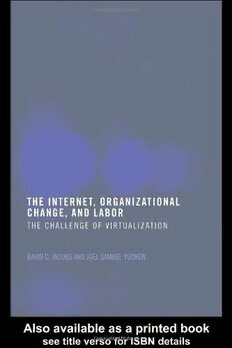
Download The Internet, Organizational Change and Labor: The Challenge of Virtualization PDF Free - Full Version
Download The Internet, Organizational Change and Labor: The Challenge of Virtualization by David Jacobs, Joel Samuel Yudken in PDF format completely FREE. No registration required, no payment needed. Get instant access to this valuable resource on PDFdrive.to!
About The Internet, Organizational Change and Labor: The Challenge of Virtualization
As we devote increasing amounts of time time at work and at home to the Internet and computer networks, our daily lives are dramatically being reshaped. We are better informed and can work more efficiently, yet there is anxiety about the security of our jobs. Examining what is happening to work, organizations and unions in the age of the Internet, this fascinating book reveals both the opportunities and dangers for workers in the digital age.Exploring the Internet's impact on organizations and labor from complementary perspectives, Jacobs and Yudken consider how new digital technologies shape cultural change. They look at the culmination of the development of the Internet, its impact upon jobs and the current prospects for unions, and conclude that the Internet ultimately reduces transaction costs thereby aiding profit making, and also assists workers, consumers and citizens in challenging business practices.Ideal for students of management, e-business and human resource management, this informative text is a balanced analysis of the Internet aided workplace. Unlike many enthusiasts of e-commerce, it identifies dangers in the Internet-driven enterprise such as contingent employment, employee monitoring and job loss, and also explores the potential benefits for employees, proposing possible strategies for reforming the economy.
Detailed Information
| Author: | David Jacobs, Joel Samuel Yudken |
|---|---|
| Publication Year: | 2003 |
| ISBN: | 9780415269995 |
| Pages: | 188 |
| Language: | English |
| File Size: | 1.13 |
| Format: | |
| Price: | FREE |
Safe & Secure Download - No registration required
Why Choose PDFdrive for Your Free The Internet, Organizational Change and Labor: The Challenge of Virtualization Download?
- 100% Free: No hidden fees or subscriptions required for one book every day.
- No Registration: Immediate access is available without creating accounts for one book every day.
- Safe and Secure: Clean downloads without malware or viruses
- Multiple Formats: PDF, MOBI, Mpub,... optimized for all devices
- Educational Resource: Supporting knowledge sharing and learning
Frequently Asked Questions
Is it really free to download The Internet, Organizational Change and Labor: The Challenge of Virtualization PDF?
Yes, on https://PDFdrive.to you can download The Internet, Organizational Change and Labor: The Challenge of Virtualization by David Jacobs, Joel Samuel Yudken completely free. We don't require any payment, subscription, or registration to access this PDF file. For 3 books every day.
How can I read The Internet, Organizational Change and Labor: The Challenge of Virtualization on my mobile device?
After downloading The Internet, Organizational Change and Labor: The Challenge of Virtualization PDF, you can open it with any PDF reader app on your phone or tablet. We recommend using Adobe Acrobat Reader, Apple Books, or Google Play Books for the best reading experience.
Is this the full version of The Internet, Organizational Change and Labor: The Challenge of Virtualization?
Yes, this is the complete PDF version of The Internet, Organizational Change and Labor: The Challenge of Virtualization by David Jacobs, Joel Samuel Yudken. You will be able to read the entire content as in the printed version without missing any pages.
Is it legal to download The Internet, Organizational Change and Labor: The Challenge of Virtualization PDF for free?
https://PDFdrive.to provides links to free educational resources available online. We do not store any files on our servers. Please be aware of copyright laws in your country before downloading.
The materials shared are intended for research, educational, and personal use in accordance with fair use principles.

