Table Of ContentCulture Profile No. 18
June 2004
The Hmong
An Introduction to their History and Culture
Writers: John Duffy, Roger Harmon, Donald A. Ranard, Bo Thao,
and Kou Yang
With contributions from Paul Herr
Editor: Donald A. Ranard
Published by the Center for Applied Linguistics
The Cultural Orientation Resource Center
Center for Applied Linguistics
4646 40th Street, NW
Washington, DC 20016-1859
Tel. (202) 362-0700
Fax (202) 363-7204
http://www.culturalorientation.net
http://www.cal.org
Refugee Camps
in Thailand
The contents of this profile were developed with funding from the Bureau of Population,
Refugees, and Migration, United States Department of State, but do not necessarily repre-
sent the policy of that agency and the reader should not assume endorsement by the fed-
eral government.
This profile was published by the Center for Applied Linguistics (CAL), but the opinions
expressed herein do not necessarily reflect positions or policies of CAL.
Editorial/production supervision: Sanja Bebic
Copyediting: Sharyl Tanck
Proofreading: Amy Fitch
Cover photo: Vincent Sagart, 2004
Design, illustration, production: SAGARTdesign, 2004
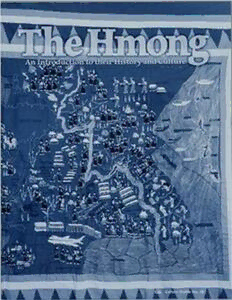
Cover art: The Hmong Diaspora. A Hmongpaj ntaub('flower cloth'), a story cloth of needle-
work and appliqué, circa 1991–1992. Hmong artist(s) unknown. From the Nancy and Roger
Harmon collection of crafts made for sale by inhabitants in Thailand refugee camps.
Front cover: Hmong flee war in Laos, crossing the Mekong River to Thai refugee camps.
Back Cover: The Hmong diaspora on a world map.
©2004 by the Center for Applied Linguistics
The U.S. Department of State reserves a royalty-free, nonexclusive, and irrevocable right to
reproduce, publish, or otherwise use, and to authorize others to use, the work for
Government purposes.
All other rights reserved. No part of this book may be reproduced, in any form or by any
means, without permission in writing from the publisher. All inquiries should be addressed
to the Cultural Orientation Resource Center, Center for Applied Linguistics, 4646 40th
Street, N.W., Washington, D.C. 20016.
The Hmong ii
Acknowledgments
Many people helped to produce this profile. The principal writers were Bo Thao,
Executive Director of Hmong National Development, Inc., in Washington, D.C.;
Dr. Kou Yang, Chair of Ethnic and Gender Studies and an associate professor of
Asian American Studies at California State University, Stanislaus; Dr. John Duffy, an
associate professor of English at Notre Dame who has published articles on
Hmong literacy development in Laos and the United States; Dr. Roger Harmon, a
cultural anthropologist with many years of experience working in refugee educa-
tion and resettlement; and Donald Ranard, a writer, editor, and educator with a
long background in refugee affairs. Paul Herr, a Mong Leng speaker who also
knows Hmong Der, prepared the section “Common Words, Phrases, and
Sayings,” and Peter Yang, Director of the Wausau (Wisconsin) Area Hmong
Mutual Assistance Association compiled the set of Hmong Der and Mong Leng
words, illustrating the Hmong tones, that appears on p. 44.
Drafts of the manuscript were reviewed for accuracy, balance, and tone by both
academic specialists and service providers working in refugee resettlement. In
particular, we would like to thank Dr. Gary Yia Lee, a visiting fellow in anthro-
pology at the Australian National University in Canberra, Australia, and a leading
authority on the Hmong, and Dr. Martha Ratliff, an associate professor of lin-
guistics at Wayne State University, specializing in the Hmong language. In addi-
tion to their thorough and thoughtful review of the manuscript, they patiently
answered our many questions about Hmong culture and language. Dr. Lee also
contributed text to the section “Life in Laos.”
Among the many other people who read drafts of the manuscript, we would like
to thank Marta Brenden and Lisa Campbell, Office of Refugee Resettlement (ORR),
Department of Health and Human Services; Heather Colvin, Office of Global
Health Affairs, Department of Health and Human Services; Dr. Christina Eira, a lec-
turer and Hmong language specialist at the University of Adelaide, Australia;
Captain John Tuskan, Center for Mental Health Services (CMHS), Substance Abuse
and Mental Health Services Administration (SAMHSA); Fue Heu, Hmong-American
Partnership; Long Vue, Wisconsin Community Program Association; Colleen
Mahar-Piersma, U. S. Conference of Catholic Bishops (USCCB); Miriam Burt and
Craig Packard, Center for Applied Linguistics (CAL); Margaret Burkhardt, Program
Officer in the Admissions Office at the U.S. Department of State’s Bureau of
Population, Refugees, and Migration; and the members of the Cultural Orientation
Work Group. For their assistance throughout the development of the profile, our
special thanks go to Kelly Gauger, Program Officer in the Admissions Office at the
U.S. Department of State’s Bureau of Population, Refugees, and Migration, and to
KaYing Yang, who coordinates the Cultural Orientation Program for Hmong
refugees at Wat Tham Krabok for the International Organization for Migration
(IOM).
The Hmong iii
We would also like to acknowledge the valuable contributions of Jane Bloom,
Consultant to the Office of Refugee Resettlement, who not only carefully reviewed
the section on U.S. resettlement but provided additional text to it as well.
Finally, we would like to thank the Bureau for Population, Refugees, and
Migration, U.S. Department of State, whose support made this profile possible.
Sanja Bebic, Director, Cultural Orientation Resource Center
Donald A. Ranard, Editor
The Hmong iv
Table of Contents
Acknowledgments. . . . . . . . . . . . . . . . . . . . . . . . . . . . . . . . . . . . . . . . . iii
Introduction . . . . . . . . . . . . . . . . . . . . . . . . . . . . . . . . . . . . . . . . . . . . . . 1
People . . . . . . . . . . . . . . . . . . . . . . . . . . . . . . . . . . . . . . . . . . . . . . . . . . 2
History . . . . . . . . . . . . . . . . . . . . . . . . . . . . . . . . . . . . . . . . . . . . . . . . . . 3
Life in Laos. . . . . . . . . . . . . . . . . . . . . . . . . . . . . . . . . . . . . . . . . . . . . . . . 9
The Refugee Experience in Thailand . . . . . . . . . . . . . . . . . . . . . . . . . 19
Literacy and Education . . . . . . . . . . . . . . . . . . . . . . . . . . . . . . . . . . . . 25
Resettlement in the United States. . . . . . . . . . . . . . . . . . . . . . . . . . . 29
Language. . . . . . . . . . . . . . . . . . . . . . . . . . . . . . . . . . . . . . . . . . . . . . . . 41
Common Words, Phrases, and Sayings . . . . . . . . . . . . . . . . . . . . . . . 47
Bibliography . . . . . . . . . . . . . . . . . . . . . . . . . . . . . . . . . . . . . . . . . . . . . 49
The Hmong v
The Hmong vi
Introduction
In December 2003, the U.S. Embassy in Bangkok announced that a large group
of Lao Hmong living at Wat Tham Krabok, a temple complex 80 miles north of
Bangkok, would be considered for resettlement in the United States. The deci-
sion to resettle the Hmong was applauded by U.S. refugee advocacy groups,
who had become concerned about conditions at the temple and the possibility
that the Thai government would send the Hmong back to Laos.
The Hmong at Wat Tham Krabok are the last large group of Vietnam War-era
refugees remaining in Southeast Asia. Their resettlement represents the final
phase of a relief and resettlement program that began in 1975, when hundreds The community
of thousands of refugees fled Vietnam, Laos, and Cambodia after the fall of U.S.-
as a whole
supported governments there.
has achieved
The Hmong from Wat Tham Krabok will be joining large and well-established
remarkable
Hmong communities in the United States. More than 186,000 Hmong men,
women, and children live in the United States, according to the 2000 U.S. progress.
Census.1While Hmong live throughout the United States, the majority are clus-
tered in communities in three states: California, Minnesota, and Wisconsin.
To start life over in a new and unfamiliar society is never easy. For the Hmong,
there have been added challenges. In the United States, they have encountered
a society that is very different, sometimes fundamentally so, from their own.
Many Hmong adults have arrived with little or no formal education and with
skills as farmers, soldiers, and artisans that have not proven useful in the U.S. job
market. Yet, while life continues to be a struggle for many, the community as a
whole has achieved remarkable economic and educational progress in the 30
years since the first arrivals. Welfare rates have dropped, employment rates have
risen, and Hmong students are graduating from high school and attending col-
lege in increasing numbers. The characteristic Hmong spirit of mutual assistance
is evident in the more than 100 Hmong-run community-based organizations. In
other ways, too, Hmong are contributing to their communities, and to the coun-
try as a whole, as doctors, lawyers, teachers, business people, police officers, and
college professors.
We can expect that the refugees from Wat Tham Krabok will face many of the
resettlement challenges that previous groups encountered. Yet if past experience
is a guide, we can also expect that with help from their families, friends, and ser-
vice providers, the new arrivals will survive the hardships of resettlement and go
on to rebuild their lives and contribute to their communities.
This profile provides information about the Hmong in general—their history, cul-
ture, language, and resettlement experiences—as well as information about the
1 Includes those who report being Hmong alone and Hmong with one or more
ethnic/racial designation. Hmong community leaders believe that this number is low and
that the Hmong population in the United States numbers somewhere between 250,000
and 300,000.
The Hmong 1
new arrivals in particular. It is intended primarily for service providers who will be
assisting the refugees in their communities in the United States. But others may
find it useful, too. Teachers may use it to educate students about a people whose
modern history is closely intertwined with America’s. Local government agen-
cies—the courts, the police, the housing and health departments—may use it to
help their staff better understand, and thus better serve, the new arrivals.
A profile by its nature oversimplifies its subject, although we have tried in this
one to challenge some of the common stereotypes about the Hmong. For read-
ers who wish to learn more about the Hmong, we provide a bibliography at the
end of this profile. Ultimately, however, the best source of information about the
Hmong is the Hmong themselves, and readers who find this profile interesting The Hmong in
should consider taking the next step—getting to know those whose history and
Southeast Asia
way of life are described on these pages. Readers who do will discover a people
who are eager to share their stories and culture. include two groups,
distinguished by
People
differences in lan-
The Hmong in the United States, as well as those awaiting resettlement at Wat
guage and custom:
Tham Krabok, are members of an ethnic group from Laos, where 315,000
Hmong still reside. Several million Hmong live in southwestern China, and there Hmong Der (White
are approximately 500,000 in Vietnam and 120,000 in Thailand, with pockets of
Hmong) and Mong
Hmong communities found in Burma. According to the 2000 U.S. Census, more
than 186,000 Hmong live in the United States.2 Leng (Blue Hmong).
The Hmong in Southeast Asia include two groups, distinguished by differences
in language and custom: Hmong Der (White Hmong) and Mong Leng (Blue
Hmong). Hmong Der and Mong Leng speakers are able to understand one
another, for the most part, and in Laos the two groups have a long history of
intermarriage and harmonious relations.
Previously, the Hmong in Laos were known as Meo, a term that the Hmong
themselves find offensive because in the Lao language a similar-sounding word
means ‘cat,’ and during the last 30 years, the word Hmonghas come to be used,
particularly in the United States. In China, the Hmong are still generally referred
to as Miao.
In Laos, the Hmong, the Iu Mien, and several other highland groups are officially
referred to as Lao Soung (‘Lao of the mountain tops’), because they have tradi-
tionally lived in the higher elevations (above 3,000 feet). In contrast, the Lao—
the dominant political and cultural group in Laos—live in the lowlands
bordering the Mekong River and its tributaries, and are referred to as Lao Loum
(‘Lao of the lowlands’). The Lao language belongs to the Tai-Kadai language
family that also includes several Thai dialects. The third major grouping in Laos
is the Lao Theung (‘Lao of the mountain slopes’), who traditionally live at lower
2See footnote on p.1.
The Hmong 2
elevations on the mountains. The Lao Theung, sometimes called khaby the Lao,
speak Mon-Khmer languages.
In 2003, the use of the word Hmongas a term for both Hmong Der and Mong
Leng emerged as an issue in the Hmong community in the United States. Mong
Leng speakers point out that Hmong, spelled H-m-o-n-g, is a Hmong Der word
whose Mong Leng equivalent is Mong, spelled M-o-n-g. The term Hmong, there-
fore, refers only to the Hmong Der and does not include the Mong Leng, whose
variety of language and culture is distinct and distinguishable from that of the
Hmong Der, some Mong Leng speakers argue. Alternative terms, each with its
own linguistic justification, have been proposed. These include Mong/Hmong,
Hmong/Mong, Mhong, Mong,and M/hong. The origins of the
Hmong are
Those who support the continued use of the term Hmongargue that it does by
convention include both groups, and they downplay the differences in custom obscure and the
and speech between the two. Proponents of this position believe that the use of
subject of specula-
a term such as Mong/Hmong would only serve to divide the community and
confuse non-Hmong who are interested in learning more about the Hmong tion and debate.
people.
In this publication, we have chosen to use the term Hmong when referring to
both groups, because this is the term that most writers and researchers on the
Hmong, and most major Hmong organizations, continue to use. Our use of the
term should not be interpreted as support for a particular position in a debate
that is up to the Hmong community to resolve. Service providers are advised to
approach this issue with care and sensitivity.
History
Early History
The origins of the Hmong are obscure and the subject of speculation and
debate. Hmong folktales—which describe an ancient homeland of ice and snow,
darkness and light—have led some to speculate that the Hmong originated in
central Siberia, although there is no independent evidence for this theory.
Because the Hmong retain cultural traces of the earliest forms of Chinese social
organizations, however, other specialists have considered them to be among the
aboriginal inhabitants of China, where about 4 million of the world’s 6 million
Hmong still live today.
The earliest written accounts of the Hmong—or Miao, as the Hmong are called
in China—are found in Chinese annals dating to the third century BCE.3 These
records focus on the Hmong’s many uprisings against the Chinese state, which
regarded the Hmong as barbarians in need of the civilizing influences of Chinese
3To avoid showing religious preference, this profile uses the neutral era designations BCE
(before the common era) and CE (of the common era) in place of the Christian designa-
tions BC (before Christ) and AD (anno domini, ‘in the year of the Lord’).
The Hmong 3