
Download Structure and Function of Intrinsically Disordered Proteins PDF Free - Full Version
Download Structure and Function of Intrinsically Disordered Proteins by Peter Tompa, Alan Fersht in PDF format completely FREE. No registration required, no payment needed. Get instant access to this valuable resource on PDFdrive.to!
About Structure and Function of Intrinsically Disordered Proteins
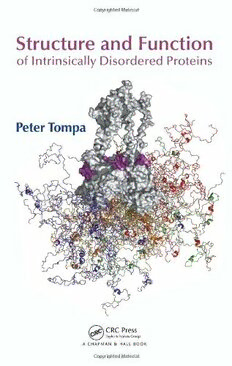
The existence and functioning of intrinsically disordered proteins (IDPs) challenge the classical structure-function paradigm that equates function with a well-defined 3D structure. Uncovering the disordered complement of proteomes and understanding their functioning can extend the structure-function paradigm to herald new breakthroughs in drug development. Structure and Function of Intrinsically Disordered Proteins thoroughly covers the history up to the latest developments in this field. After examining the principles of protein structure, the classical paradigm, and the history of structural disorder, the book focuses on physical techniques for the identification and characterization of IDPs. It discusses proteomic and bioinformatic approaches and shows how IDPs behave under crowding conditions in living cells. The next several chapters describe the structure, correlating biological processes, and molecular mechanisms of IDPs. The author also explores the evolutionary advancement of structural disorder in proteomes and possible ways of extending the structure-function paradigm to encompass both ordered and disordered states of proteins. He concludes with discussions on the involvement of IDPs in various diseases and how to establish rational drug design through detailed characterization of IDPs. Although drug discovery rates have leveled off, new insight generated by the study of IDPs may offer fresh strategies for drug development. This work illustrates how these proteins defy the structure-function paradigm and play important regulatory and signaling roles.
Detailed Information
| Author: | Peter Tompa, Alan Fersht |
|---|---|
| Publication Year: | 2009 |
| ISBN: | 1420078925 |
| Pages: | 362 |
| Language: | English |
| File Size: | 6.213 |
| Format: | |
| Price: | FREE |
Safe & Secure Download - No registration required
Why Choose PDFdrive for Your Free Structure and Function of Intrinsically Disordered Proteins Download?
- 100% Free: No hidden fees or subscriptions required for one book every day.
- No Registration: Immediate access is available without creating accounts for one book every day.
- Safe and Secure: Clean downloads without malware or viruses
- Multiple Formats: PDF, MOBI, Mpub,... optimized for all devices
- Educational Resource: Supporting knowledge sharing and learning
Frequently Asked Questions
Is it really free to download Structure and Function of Intrinsically Disordered Proteins PDF?
Yes, on https://PDFdrive.to you can download Structure and Function of Intrinsically Disordered Proteins by Peter Tompa, Alan Fersht completely free. We don't require any payment, subscription, or registration to access this PDF file. For 3 books every day.
How can I read Structure and Function of Intrinsically Disordered Proteins on my mobile device?
After downloading Structure and Function of Intrinsically Disordered Proteins PDF, you can open it with any PDF reader app on your phone or tablet. We recommend using Adobe Acrobat Reader, Apple Books, or Google Play Books for the best reading experience.
Is this the full version of Structure and Function of Intrinsically Disordered Proteins?
Yes, this is the complete PDF version of Structure and Function of Intrinsically Disordered Proteins by Peter Tompa, Alan Fersht. You will be able to read the entire content as in the printed version without missing any pages.
Is it legal to download Structure and Function of Intrinsically Disordered Proteins PDF for free?
https://PDFdrive.to provides links to free educational resources available online. We do not store any files on our servers. Please be aware of copyright laws in your country before downloading.
The materials shared are intended for research, educational, and personal use in accordance with fair use principles.

