
Download Seeds of Disaster, Roots of Response: How Private Action Can Reduce Public Vulnerability PDF Free - Full Version
Download Seeds of Disaster, Roots of Response: How Private Action Can Reduce Public Vulnerability by Philip E. Auerswald, Lewis M. Branscomb, Todd M. La Porte, Erwann O. Michel-Kerjan in PDF format completely FREE. No registration required, no payment needed. Get instant access to this valuable resource on PDFdrive.to!
About Seeds of Disaster, Roots of Response: How Private Action Can Reduce Public Vulnerability
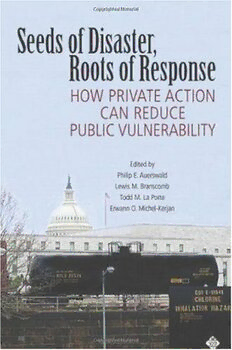
In the wake of 9/11 and Hurricane Katrina, executives and policymakers are motivated than ever to reduce the vulnerability of social and economic systems to disasters. Most prior work on “critical infrastructure protection” has focused on the responsibilities and actions of government rather than on those of the private sector firms that provide most vital services. Seeds of Disaster, Roots of Response is the first systematic attempt to understand how private decisions and operations affect public vulnerability. It describes effective and sustainable approaches - both business strategies and public policies - to ensure provision of critical services in the event of disaster. The authors are business leaders from multiple industries and experts in fields as diverse as risk analysis, economics, engineering, organization theory and public policy. The book shows the necessity of deeply rooted collaboration between private and public institutions, and the accountability and leadership required to go from words to action.
Detailed Information
| Author: | Philip E. Auerswald, Lewis M. Branscomb, Todd M. La Porte, Erwann O. Michel-Kerjan |
|---|---|
| Publication Year: | 2006 |
| ISBN: | 9780511250477 |
| Pages: | 578 |
| Language: | English |
| File Size: | 4.12 |
| Format: | |
| Price: | FREE |
Safe & Secure Download - No registration required
Why Choose PDFdrive for Your Free Seeds of Disaster, Roots of Response: How Private Action Can Reduce Public Vulnerability Download?
- 100% Free: No hidden fees or subscriptions required for one book every day.
- No Registration: Immediate access is available without creating accounts for one book every day.
- Safe and Secure: Clean downloads without malware or viruses
- Multiple Formats: PDF, MOBI, Mpub,... optimized for all devices
- Educational Resource: Supporting knowledge sharing and learning
Frequently Asked Questions
Is it really free to download Seeds of Disaster, Roots of Response: How Private Action Can Reduce Public Vulnerability PDF?
Yes, on https://PDFdrive.to you can download Seeds of Disaster, Roots of Response: How Private Action Can Reduce Public Vulnerability by Philip E. Auerswald, Lewis M. Branscomb, Todd M. La Porte, Erwann O. Michel-Kerjan completely free. We don't require any payment, subscription, or registration to access this PDF file. For 3 books every day.
How can I read Seeds of Disaster, Roots of Response: How Private Action Can Reduce Public Vulnerability on my mobile device?
After downloading Seeds of Disaster, Roots of Response: How Private Action Can Reduce Public Vulnerability PDF, you can open it with any PDF reader app on your phone or tablet. We recommend using Adobe Acrobat Reader, Apple Books, or Google Play Books for the best reading experience.
Is this the full version of Seeds of Disaster, Roots of Response: How Private Action Can Reduce Public Vulnerability?
Yes, this is the complete PDF version of Seeds of Disaster, Roots of Response: How Private Action Can Reduce Public Vulnerability by Philip E. Auerswald, Lewis M. Branscomb, Todd M. La Porte, Erwann O. Michel-Kerjan. You will be able to read the entire content as in the printed version without missing any pages.
Is it legal to download Seeds of Disaster, Roots of Response: How Private Action Can Reduce Public Vulnerability PDF for free?
https://PDFdrive.to provides links to free educational resources available online. We do not store any files on our servers. Please be aware of copyright laws in your country before downloading.
The materials shared are intended for research, educational, and personal use in accordance with fair use principles.

