
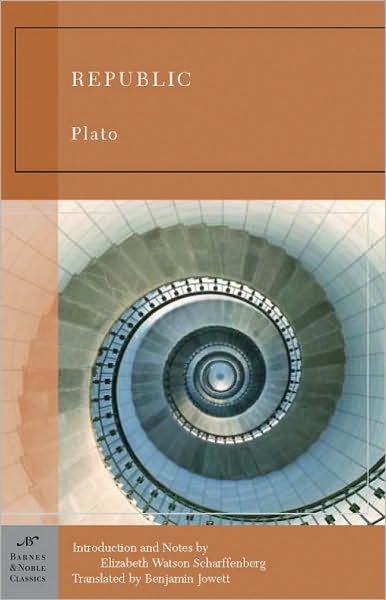
Download Republic PDF Free - Full Version
Download Republic by Plato; Prof. Benjamin Jowett; Elizabeth Watson Scharffenberger in PDF format completely FREE. No registration required, no payment needed. Get instant access to this valuable resource on PDFdrive.to!
About Republic
Excerpt. © Reprinted by permission. All rights reserved.<p>From Elizabeth Watson Scharffenberger’s Introduction to <em>Republic</em></p><p>The conversation in <em>Republic</em> begins simply enough. Socrates, who has plainly been on familiar terms with Polemarchus’ family for a long time, forthrightly asks Cephalus about old age. His response, that aging is not as difficult as it is often reported to be, prompts Socrates to wonder out loud whether Cephalus’ easygoing attitude is in part facilitated by his wealth. The old man’s response is affirmative. The wealthy, he asserts, face death without fear; their resources enable them to satisfy their debts to gods and men and also to avoid lying and cheating, and thus they can die with the confidence that they will not be punished in the afterlife. These remarks are what precipitate the discussion of just behavior and moral conduct, which Socrates introduces as he asks his elderly friend whether “justice” (<em>dikaiosynê</em>) simply consists of paying debts and telling the truth. Cephalus politely bows out of the conversation, leaving his son Polemarchus to argue that justice—meaning “right behavior” in general—does indeed consist of paying debts and giving “what is due,” as poets such as Simonides claim. Socrates, however, quickly leads Polemarchus to realize that there are serious logical problems with this traditional conception of justice, in which “what is due” is defined in terms of “help” to “friends” and “harm” to “enemies,” and the young man is left perplexed. </p><p>At this point, Thrasymachus leaps into the discussion, asserting that justice is simply “the advantage of the stronger,” by which he clearly means that “justice” is relative—that is, “right behavior” is whatever those in power determine it to be. With a series of questions that recall those he just posed to Polemarchus, Socrates uncovers logical problems in Thrasymachus’ definition as well. Thrasymachus, however, does not give up. Exploding in frustration at Socrates’ naive assumptions about the responsibilities that the powerful bear to those who are under their control, he reformulates his ideas with a bold new emphasis evocative of Antiphon’s thinking in “On Truth.” “Justice”—that is, the circumspect avoidance of doing “wrong” to others and obedience to social rules—is doing what is advantageous to another, who is stronger and more powerful than oneself. “Injustice,” on the other hand, is doing what is to one’s own advantage by taking what one wants regardless of social rules and by aggrandizing oneself at the expense of others. It is what leads to “happiness,” provided that one is not penalized for one’s exploitations. Tyrants who kill and confiscate and rape at will, according to Thrasymachus, are the happiest men of all. </p><p>Although Socrates is able to poke holes through the logic of this new formulation with questions that hark back once again to those he has already posed, Thrasymachus’ sulky concessions leave him unconvinced that he has made an effective case for the connection between justice, which through all has not been adequately defined, and “happiness.” Nor are Glaucon and Adeimantus convinced, and it is their persistence at the beginning of book 2 that launches the more systematic and extensive inquiry into the nature of justice and its relationship to happiness that occupies the rest of <em>Republic</em>. In particular, the brothers ask Socrates to explain how justice is <em>in itself</em> the source of happiness, regardless of whether it is recognized and rewarded, and how the just man can be happy, regardless of his material circumstances. </p><p>The challenges of defining justice and understanding its effects on long-term happiness, fulfillment, and well-being—all of which are conveyed by the Greek word <em>eudaimonia</em>—lead to the discussion of the ideal city-state, which is posited as a large-scale vehicle for apprehending the operations of justice in the individual. Socrates, Glaucon, and Adeimantus spend a good deal of time and energy discussing how the ideal state will be organized, and how its classes of warriors and leaders will be selected, educated, and provided for; they are especially concerned in books 2 and 3 with the training and acculturation of guardian children, whose exposure to poetry (<em>Iliad</em> and <em>Odyssey</em> in particular) is to be severely curtailed lest they learn harmful values and patterns of behavior. </p><p>Yet the three never lose sight of the goals of their examination. By the end of book 4, they arrive at a working (and, in several regards, striking) definition of justice as the condition, or state of being, in which each person in the community—and each element of the individual human soul (<em>psyche</em>)—minds his/her/its own business and does his/her/its own “work.” Since it has been determined that there is in the human soul, as in human society, a natural ruling element, justice is thus equated with the unencumbered rule of these elements: the “gold” class of guardians in the ideal state, which holds sway over the silver and bronze/iron classes, and, in the individual, the rational part of the soul that ought to be master of both “spirit” and appetites.</p>
Detailed Information
| Author: | Plato; Prof. Benjamin Jowett; Elizabeth Watson Scharffenberger |
|---|---|
| Publication Year: | 1880 |
| Language: | other |
| File Size: | 0.8265 |
| Format: | |
| Price: | FREE |
Safe & Secure Download - No registration required
Why Choose PDFdrive for Your Free Republic Download?
- 100% Free: No hidden fees or subscriptions required for one book every day.
- No Registration: Immediate access is available without creating accounts for one book every day.
- Safe and Secure: Clean downloads without malware or viruses
- Multiple Formats: PDF, MOBI, Mpub,... optimized for all devices
- Educational Resource: Supporting knowledge sharing and learning
Frequently Asked Questions
Is it really free to download Republic PDF?
Yes, on https://PDFdrive.to you can download Republic by Plato; Prof. Benjamin Jowett; Elizabeth Watson Scharffenberger completely free. We don't require any payment, subscription, or registration to access this PDF file. For 3 books every day.
How can I read Republic on my mobile device?
After downloading Republic PDF, you can open it with any PDF reader app on your phone or tablet. We recommend using Adobe Acrobat Reader, Apple Books, or Google Play Books for the best reading experience.
Is this the full version of Republic?
Yes, this is the complete PDF version of Republic by Plato; Prof. Benjamin Jowett; Elizabeth Watson Scharffenberger. You will be able to read the entire content as in the printed version without missing any pages.
Is it legal to download Republic PDF for free?
https://PDFdrive.to provides links to free educational resources available online. We do not store any files on our servers. Please be aware of copyright laws in your country before downloading.
The materials shared are intended for research, educational, and personal use in accordance with fair use principles.

