Table Of ContentStatistical Properties of Line Centroid Velocity Increments
in the p Ophiuchi Cloud
D.C. Lis, J. Keene, Y. Li, T.G. Phillips & J. Pety
1998-6
To appear in
The Astrophysical Journal
Statistical Properties of Line Centroid Velocity
Increments in the p Ophiuchi Cloud
D.C. Lis, Jocelyn Keene, Y. Li, and T.G. Phillips
California Institute of Technology
Downs Laboratory of Physics 320-47
Pasadena, CA 91125, USA
and
J. Pety
CNRS URA 336, Ecole Nor'male Supgrieure
_ rue Lhornond
75005 Paris, France
ABSTRACT
We present a comparison of histograms of CO (2-1) line centroid velocity increments
in the p Ophiuchi molecular cloud with those computed for spectra synthesized from
a three-dimensional, compressible, but non-starforming and non-gravitating hydrody-
namic simulation. Histograms of centroid velocity increments in the p Ophiuchi cloud
show clearly non-Gaussian wings, similar to those found in histograms of velocity in-
crements and derivatives in experimental studies of laboratory and atmospheric flows,
as well as numerical simulations of turbulence. The magnitude of these wings increases
monotonically with decreasing separation, down to the angular resolution of the data.
This behavior is consistent with that found in the phase of the simulation which has
most of the properties of incompressible turbulence. The time evolution of the mag-
nitude of the non-Gaussian wings in the histograms of centroid velocity increments in
the simulation is consistent with the evolution of the vorticity in the flow. However, we
cannot exclude the possibility that the wings are associated with the shock interaction
regions. Moreover, in an active starforming region like the p Ophiuchi cloud, the effects
of shocks may be more important than in the simulation. However, being able to identify
shock interaction regions in the interstellar medium is also important, since numerical
simulations show that vorticity is generated in shock interactions.
Subject headings: hydrodynamics - ISM: clouds - ISM: kinematics and dynamics -
turbulence
1. Introduction three-dimensional turbulent, compressible, but non-
star]orming and non-gravitating simulation (Porter,
Early spectroscopic observations of interstellar lines Pouquet & Woodward 1994) are in fact statistically
of HI, OH, and CO have revealed that observed line similar to the CO line profiles observed in quiescent
widths (or velocity dispersions) in interstellar clouds molecular clouds. However, Dubinski, Narayan, &
are larger than thermal line widths expected for these Phillips (1994) showed that non-Gaussian line pro-
low-temperature regions (see e.g. Myers 1997 and files can also be produced from a random velocity
references therein). These large line widths are in- field with a Kolmogorov power spectrum.
dicative of supersonic motions of the gas, however,
It is known from numerical simulations and atmo-
the exact nature of these motions is still a subject
spheric and laboratory measurements (e.g. Anselmet
of controversy. Proposed explanations generally in-
et al. 1984; Gagne 1987; Vincent & Meneguzzi 1991)
volve turbulent motions of the gas, be it hydrody-
that intermittency of turbulence manifests itself through
namic or magneto-hydrodynamic (e.g. Scalo 1987;
non-Gaussian wings in probability density functions
Falgarone 1997).
(PDFs or histograms) of velocity increments and deriva-
The idea that the gas motions in interstellar clouds tives. These kinds of measurements are not directly
are of turbulent nature was first proposed by Zuck- possible in the case of the interstellar medium where
erman & Evans (1974). As discussed by Falgar- one has information integrated over a line-of-sight col-
one (1997), gas motions in interstellar clouds exhibit umn defined by the passage of the telescope beam
many features of incompressible turbulence. One of through the medium. However, in a recent study (Lis
them is the size--line-width relation first discussed by et al. 1996), motivated by observational work of Mi-
Larson (1981). This power-law scaling with an expo- esch & Scalo (1995), we showed that histograms of
nent of -_0.3-0.5, found in the velocity field of molec- the centroid velocity increments (or differences be-
ular clouds is reminiscent of the Kolmogorov cascade tween line centroid velocities at positions separated
in incompressible turbulence. Another possible sign- by a given distance), for sections of the simulation
post of turbulence is the fractal structure of the in- data cube corresponding to the ISM columns, also
tensity contours in molecular clouds (e.g. Scalo 1990; show non-Gaussian wings, similar to those found in
Falgarone, Phillips, & Walker 1991). In both cases experiments and numerical simulations of incompress-
alternative explanations have been proposed. An ex- ible turbulence. Due to line-of-sight averaging, the
planation for the size--line-width relation observed wings seen in PDFs of centroid velocity increments
from cloud to cloud in a given molecular line has been are not as pronounced as those in PDFs of veloc-
proposed as based on virial equilibrium and the rela- ity increments calculated over the whole data cube.
tively small variation of the observed column density Nevertheless, the effect is clearly present. We also
between clouds of different size (Myers 1997). Expla- demonstrated that the lines of sight contributing to
nations for the observed scaling laws have also been the non-Gaussian wings of the PDFs of centroid ve-
given in terms of the framework of magnetically sup- locity increments trace a filamentary structure, which
ported cloud models (Scalo 1987). Alternative ex- follows the distribution of the two vorticity compo-
planations for the fractal cloud geometry based on nents involving cross-derivatives of the line-of-sight
coUisional fragmentation or gravitational clustering component of the velocity field. This suggests that
and virial balance have also been proposed (Nozakura the wings are a manifestation of the turbulent nature
1990; Pfenniger & Combes 1994). of the flow.
One of the tools employed in studies of gas motions The method presented by Lis et al. (1996) provides
in the interstellar medium is the analysis of shapes of a usefal new tool for studying the effects of intermit-
molecular line profiles. Falgarone & Phillips (1990) tency of turbulence on physics and chemistry of the
argued that the non-Gaussian CO line wings in inac- interstellar medium. In the present paper we apply
tive regions without associated star formation activity this method to a large-scale map of the CO (2-1)
represent a direct observational signature of the tur- emission from the p Ophiuchi molecular cloud. It is
bulent nature of the gas flow within molecular clouds true that this region with active low-mass star forma-
and of the existence of regions of intermittent tur- tion may not be ideal for a study of turbulence, since
bulent activity. In a subsequent study Falgarone et the shocks associated with embedded young stellar
al. (1994) showed that line profiles synthesized from a objects can have their signatures in the velocity field.
Ontheother hand, the energy injected into the cloud tance or beyond the cloud. Some of the stars appear
to lie within the cloud.
by the embedded sources may also play an important
role in generating the turbulent cascade. A statisti- In addition, the p Oph cloud is a site of ongoing
cal comparison of the velocity field in both active and low-mass star formation. This cloud has been the
quiescent regions is thus required. (Observations of a subject, over the years, of many near-infrared surveys
truly quiescent region are in progress.) In addition, (e.g., Grasdalen, Strom & Strom 1973; Elias 1978;
we extend our analysis to two additional epochs of the Wilking & Lada 1983; Greene & Young 1992; Bar-
simulation of Porter et al. (1994) to further investi- sony et al. 1997). Most of these surveys have been
gate the origin of the non-Gaussian wings in the PDFs of limited sensitivity or of small areas. In order to
of centroid velocity increments in the simulation. decide on the membership of a source in the embed-
ded infrared stellar cluster, it is good to have data
2. Observations in a variety of wavelength bands, optical, near-, mid-
, far-infrared, radio, and X-ray. Only of order 100
Observations of the CO (2-1) emission from the sources have been identified so far as being probable
p Oph molecular cloud presented here were carried p Oph cloud members (Wilking et al. 1983; Strom,
out between 1994 July and 1995 March using the Kepner & Strom 1995; Casanova et al. 1995). The
10.4-meter Leighton telescope of the Caltech Submil- rest simply do not have enough information available
limeter Observatory (CSO) on Manna Kea, Hawaii. for them. The most recent near-infrared survey, Bar-
The data set consists of 18 partially overlapping on- sony et al. (1997), is a high sensitivity survey of a
the-fly (OTF) maps. The relative calibration between large area (--, 1° square), which catalogs 4495 sources.
the various maps was determined from the overlap re- Analysis of this data set in terms of cloud member-
gions and the maps were scaled by the corresponding ship has not been completed. Probable p Oph cloud
intensity ratios. The final map thus has a uniform members are identified in Figure 3. The symbols in-
calibration. In the OTF technique not all the spec- dicate near-infrared, X-ray and radio sources and op-
tra are taken on the same regular-grid in the equato- tical emission line stars. Many sources have been de-
rial coordinate system, a final regular grid map with tected in more than one band. The sources are seen
15" spacing was produced by averaging spectra falling to be concentrated in two regions - near the dense
with 8" radius from a given grid point [the CSO beam molecular cores, called p Oph A and C. This is partly
at the frequency of the CO (2-1) line is -_31"]. This due to the fact that these areas are among the most
final resampled map consists of 8970 spectra taken thoroughly surveyed, but nevertheless appears to be
over an area of _-30 x 27'. A gray-scale image of the a real effect.
integrated line intensity between -4 and 12 kms -a The most luminous of the stars in the region
is shown in Figure 1 and velocity channel maps are that we have mapped are HD 147889 (B2 V; 5500
shown in Figure 2. In spite of the fact that the
Lo; 16h22m22.s8,-24°21'07"), S1 (B3 V; 1500 LO;
data were generally taken under less than optimum 16h23m32.s8, -24°16'44 ") and SR 3 (B9 V; 125 Lo;
weather conditions, the resulting signal-to-noise ratio 16523rn0T7 ' -24°27'26"). There are several sources
for the integrated intensity is quite high (12"280). In with luminosities in the 10-50 Lo range but most of
the subsequent analysis we use a 15" pixel as a length them have luminosities of order 1Lo or less (Wilking,
unit for the x and y axes. The size of our map is 122
Lada & Young 1983).
by 109 pixels. Stars can input energy into molecular clouds in
ways other than through optical radiation. Many of
3. Discussion
the embedded stars are X-ray sources (Montmerle et
The molecular cloud near p Oph is one of the al. 1983; Casanova et al. 1995). Also, there are sev-
closest clouds, ranging in distance from about 80 to eral outflow sources known. Among these are the
source of the extremely long outflow seen in Fig-
200 pc. This thickness is thought to be real (de Geus,
de Zeeuw & Lub 1989; de Geus & Burton 1991). The ure 1 - VLA 1623 (16h23m2570, -24°17'47"; Andrd,
Ward-Thompson, & Barsony 1990). Also, SR 4
cloud is brightly illuminated by the Sco OB 2 asso-
ciation, the closest such association to the Sun. The (16522m54.s8, -24°14'01 ") has been found to be the
center of the Upper-Scorpius subgroup lies to the west source of a string of HH objects (Wilking et al. 1997).
of the p Oph cloud and its stars lie at the same dis-
3.1. Centroid Velocity Increments in the p Ophi- first shocks. Shock interactions are the basic effects
uchi Cloud in the second supersonic phase where the vorticity
generated by these interactions, as well as by vortex
A gray-scalemap ofthe CO (2-1)centroidveloc-
stretching, allows most of the kinetic energy to be
ityinthe p Oph cloud isshown inthe top panel of
transferred to solenoidal modes. The energy dissipa-
Figure 4. In the bottom panels we show PDFs of
tion rate is thus considerably reduced, which explains
the centroidvelocityincrements computed forsepa-
the long duration of this phase, up to t ,,_2.1rat. In
rationsA _--2, 5, 10, and 20 pixels (1 pixel = 15" =
this phase and thereafter the flow has most of the
0.5 x FWHM). As in Lis et al. (1996), all histograms
properties of incompressible turbulence. The power
presented here are normalized to a zero mean and a
spectrum for the solenoidal part of the flow (which
standard deviation of unity. A normalized Gaussian
contains more than 90% of the energy) is close to that
distribution is also shown as a dotted line in each
predicted by Kolmogorov [E(k) --_k-S/3]. The PDF
panel. The magnitude of the non-Gaussian wings in
of the vorticity in this phase shows a conspicuous non-
the histograms of the centroid velocity increments de-
Gaussian tail, illustrative of the intermittency of the
creases monotonically with the increasing separation
flow. The last, post-supersonic, phase is that of the
A. This evolution is similar to that in the simulation
self-similar decay of the turbulent velocity spectrum.
(see Fig. 6), although for the p Oph histograms, the
Lis et al. (1996) studied centroid velocity incre-
wings are somewhat more pronounced at small sepa-
ments in the second phase of the simulation, t =
rations and the core of the histogram is more peaked.
1.2vac, when the solenoidal small-scale modes have
Several morphological features can be identified in
already gained a large fraction of the energy and al-
the centroid velocity map. The most prominent is
most all strong shocks have disappeared (Porter et
a narrow low-velocity (blue-shifted) filament running
al. 1994). To better understand the origin of the non-
at _45 ° position angle in the north-east quarter of
Gaussian wings in the histograms of centroid velocity
the map. Emission associated with this filament can
increments, we have performed a similar analysis for
be seen at velocities between -1 and 1 kms -x in the
the remaining epochs of the simulation. Results for
channel maps (Fig. 2). This feature is the blue lobe
the first phase, t = 0.5rat, just after the shock forma-
of the molecular outflow originating near VLA 1623
tion, are shown in Figure 5. At this early time, the
(Andrd et al. 1990). A somewhat less prominent
vorticity is very low and small-scale disturbances have
high-velocity (red-shifted) filament can be seen to the
not yet developed. The velocity field is not yet char-
south-west of the low-velocity filament in the centroid
acteristic of turbulence. The centroid velocity map
velocity map (Fig. 4). No feature corresponding to
for the second, supersonic, phase of the simulation
the high-velocity filament can be distinguished easily
(t = 1.2vat) is shown in Figure 6 (top panel) along
in the integrated intensity map. In addition, two com-
with the histograms of the centroid velocity incre-
pact regions with low and high velocities are seen on
ments (bottom panels). Finally, results for the third
the opposite sides of the two narrow filaments. There
phase of self-similar decay of turbulence (t = 2.4rat)
is also an east-west filament in the north-west quarter
are shown in Figure 7.
of the map. All these features can be identified in the
In the first phase of the simulation (Fig. 5) non-
channel maps (Fig. 2).
Gaussian wings in the histograms of centroid veloc-
3.2. Time Evolution of the Centroid Velocity ity increments are seen only for small separations, A.
Increments in the Simulation and the Ef- For A _ 15, the histograms have essentially Gaus-
fects of Shocks sian shapes. As time progresses, the magnitude of
the wings increases. The effect is most pronounced
As described in Falgarone et al. (1994), the time at larger separations (A _ 7); non-Gaussian wings
evolution of the simulation of Porter et al. (1994) is are clearly presents even for A = 30 in the second
described as comprising three major phases. Their phase of the simulation (Fig. 6). The magnitude of
duration is conveniently expressed in terms of the the wings increases monotonically with decreasing A
acoustic time rac = Lo/cs which is the sound cross- down to the numerical resolution of the simulation (---
ing time of the energy containing scale, Lo = 27r/ko, several pixels). At even later times (Fig. 7), the mag-
where cs is the sound speed in the medium. The first nitude of the wings increases further for large separa-
short phase ends at t ~ 0.3Vac with the formation of tions (A _ 15). However, the wings in the histograms
forsmallseparationsarenot veryprominent. As dis- centroid velocity increments in the simulation trace
cussedby Falgaroneetal.(1994),inthislatephaseof a filamentary structure, which follows the distribu-
thesimulationmost ofthestructureisatsmallscales, tion of the two vorticity components involving cross-
whilelargescalestructureshave alreadydisappeared. derivatives of the line-of-sight component of the ve-
The line-of-sighatveragingmay thusbe more effective locity field. The distributions of the lines of sight
insmearing outthemost extreme eventsforsmallsep- in the p Oph map with centroid velocity increments
arationsthan attheearlierepochs ofthesimulation. greater than 3.5 for a separation A = 2 are shown
The time evolutionof the non-Gaussian wings in in Figure 8. As in the simulation, the points are not
randomly distributed, but instead trace a number of
the histograms ofcentroidvelocityincrementsinthe
coherent structures described in §3.1, namely the nar-
simulation (inparticularthe increaseinthe magni-
tude ofthewings between phase one and two) iscon- row filaments, high- and low-velocity compact sources
and the east-west filament.
sistentwith theevolutionofvorticityinthe flow,as
describedabove. However, shocks may alsohavetheir
3.4. Optical Depth Effects
signaturesinthevelocityfieldinthesupersonicphase
ofthesimulation.We can show based on a simplege- The CO (2-1) lines in the p Ophiuchi cloud have
ometricalargument thatplanar shockswillhave lim- high optical depths. In an optically thick case, the
itedinfluenceon theshapes ofthehistogramsofcen- line emission does not trace uniformly the velocity
troidvelocityincrements.Linesofsightcontributing field along the line of sight, but instead it is sensi-
to thenon-Gaussian wings areassociatedwith large tive primarily to the gas near the surface of the cloud
centroidvelocityshiftson small angular scales.In
(note that the optical depth in the line wings may
the case ofa planar shock with the velocityin the still be low). Unless the turbulent velocity field in
plane ofthe sky (perpendicularto the lineofsight) the surface layer is statistically different from that
the shock frontiswelldefinedin the observations.
inside the cloud, we do not expect significant differ-
However, thereisno line-of-sighvtelocityjump, since ences in the shape of histograms of centroid veloc-
thevelocityoftheshock isintheplaneofthesky.Al- ity increments for optically thick and thin lines. Lis
ternativelyf,ora shockwiththevelocityalongtheline et al. (1996) considered centroid velocities calculated
ofsight,thereisalargeline-of-sighvtelocityjump be- with density weighting (appropriate for optically thin
tweenthepre-shockand post-shockgas,butwe donot lines), as well as uniform weighting (more appropri-
observea welldefinedshockfront(thepre-shockand ate for optically thick lines originating in a clumpy,
post-shockgas overlapspatiallyon the sky).There- supersonic medium) and showed that the resulting
fore,inneithercasewilltherebe a strong contribu- histograms are similar.
tionto the centroidvelocityincrements. However,
To study the optical depth effects more quantita-
the regionsof interactionsbetween shocks arelikely
tively, including spatial overlap of optically thick cells,
to exhibitlargevelocitygradientsover small angu-
we computed simulated spectra for the second epoch
larscales. Therefore, we cannot exclude the possi-
of the simulation for different optical depths through
bility that shock interactions contribute to the non- the cloud assuming LTE conditions. We assumed that
Gaussian wings in the histograms of centroid velocity
the optical depth through each cell of the data cube is
increments. However, being able to identify shock in-
proportional to the gas density in the cell, and the ex-
teraction regions is also interesting, since as discussed
citation temperature is uniform over the whole cube.
by Porter et al. (1994), the vorticity is generated in
Figure 9 shows a comparison of histograms of cen-
shock interactions.
troid velocity increments computed for an increment
The increment method will also select boundaries A = 3 for the second phase of the simulation, in opti-
of cloud fragments spatially superposed on the sky, cally thin and thick cases (average line center optical
which are of no interest to us and can only be identi- depths of 0.01 and 10, black and gray lines, respec-
fied by inspecting individual spectra. tively). As expected, the distributions corresponding
to optically thin and thick cases are very similar, in-
3.3. Distribution of Points Selected by Incre-
dicating that optical depth effects do not influence
ments Method
significantly the shapes of the histograms. From the
Lisetal.(1996)showed thatthe linesofsightcon- point of view of statistical sampling of the molecu-
tributingto the non-Gaussian wings ofthe PDFs of lar cloud velocity field, using optically thick lines is
anadvantages,ince lected quiescent region without signs of ongoing star
the emission is strong and it is
formation. The presence of non-Gaussian wings in
relatively easy to collect a large enough data set for
histograms of line centroid velocity increments in such
a meaningful statistical study. However, the distri-
a region would be a strong argument in favor of the
bution of points contributing to the wings of the his-
turbulent nature of the velocity field in interstellar
tograms is different in the two cases. Since in the opti-
molecular clouds. Also, since the energy injected into
cally thick case the emission does not trace uniformly
the cloud by the embedded sources may play an im-
the gas along the line of sight, the increment method
portant role in generating the turbulent cascade, a
selects preferentially the regions with increased vor-
comparison of the histograms of centroid velocity in-
ticity located closest to the observer. High vorticity
crements in active and quiescent regions may help in
regions located along the line of sight deeper inside
understanding similarities and differences in the sta-
the cloud would largely remain undetected. There-
tistical properties of the velocity field between differ-
fore, from the point of view of selecting lines of sight
for comparative chemical and physical studies of tur- ent regions in the ISM.
bulent regions with the bulk of the gas, the increment
method is best applied to optically thin lines. We thank D.H. Porter, A. Pouquet, and P.R.
Woodward for providing us with the result of their hy-
4. Summary drodynamic simulation and E. Falgarone for helpful
comments concerning the manuscript. This research
The time evolution of the non-Gaussian wings
has been supported by NSF grant AST 96-15025 to
in the histograms of centroid velocity increments the Caltech Submillimeter Observatory and by the
in a compressible, but non-star-forming and non- JPL Supercomputing Project which is sponsored by
gravitating turbulent simulation is consistent with JPL and the NASA Office of Space Science and Ap-
the evolution of the vorticity in the flow. In partic-
plications.
ular, the magnitude of the wings increases between
phase one and phase two of the simulation as shocks REFERENCES
dissipate and the vorticity is generated. However, we
Anselmet, F., Gagne, Y., Hopfinger, E.J., & Antonia,
cannot exclude the possibility that shock interactions
contribute to the non-Gaussian wings present in the R. 1984, J. Fluid Mech., 140, 63
simulation. Andre, P., Ward-Thompson, D., & Barsony, M. 1993,
Histograms of CO (2-1) centroid velocity incre- ApJ, 406, 122
ments in the p Ophiuchi cloud are similar to those
found in the simulation. This is consistent with the Barsony, M., Kenyon, S.3., Lada, E.L. & Teuben, P.J.
proposition that ISM velocity structure is vorticity 1997, ApJS, 112, 109
dominated like that of the turbulent simulation. How-
Brown, R. L. & Zuckerman, B. 1975, ApJ, 202, L125
ever, the region we have studied contains some ac-
tive star formation, as indicated by the presence of Casanova, S., Montmerle, T., Feigelson, E.D. &
infrared sources and molecular outflows. As a re- Andre, P. 1995, ApJ, 439, 752
sult shocks may have more important effects on the
velocity field structure and molecular line shapes in Dubinski, J., Narayan, R., & Phillips, T.G. 1995,
this region compared to the simulation. In particu- ApJ, 448, 226
lar, regions of shock interactions may contribute to
Elias, J.H. 1978, ApJ, 224, 453
the wings of the histograms of centroid velocity in-
crements in the p Ophiuchi cloud. However, being Falgarone, E. 1997, in IAUSymp. 170, ed. W. Latter
able to identify shock interaction regions in the ISM et al., (Kluwer), 119
is also important, since numerical simulations show
that vorticity is generated in shock interactions. Falgarone, E., Lis, D.C., Phillips, T.G., Pouquet, A.,
Porter, D.H., & Woodward, P.R. 1994, ApJ, 436,
We have demonstrated that the increment method
728
can be successfully applied as a tool for studying the
velocity field in interstellar molecular clouds. The
Falgarone, E., & Phillips, T.G., 1990, ApJ, 359, 344
same analysis now has to be applied to a carefully se-
FalgaroneE,.,Phillips,T.G.,& Walker,C.W.1991,
ApJ,378,186
GagneY,.1987T, h_sed'Etat,Universit_deGrenoble
deGeusE, .J.&Burton,W.B.1991_,,246,559
deGeusE, .J.deZeeuwP,.T.& LubJ.1989£;,216,
44
GrasdalenG,.L.,Strom,K.M.,& Strom,S.E.1973,
ApJ,184,L33
GreeneT,.P.&YoungE, .T.1992A, pJ,395,516
Larson,R.B.1981M, NRAS,194,809
Lis,D.C.,Pety,J., Phillips,T.G.,& FalgaroneE,.
1996A, pJ,463,623
MieschM, .S.& ScaloJ,.M.1995,
ApJ, 450, L27
Montmerle, T., Koch-Miramond, L., Falgarone, E., &
Grindlay, J. E., 1983, ApJ, 269, 182
Myers, P.C. 1997, in IAU Syrup. 170, ed. W. Latter
et al., (Kluwer), 137
Porter, D.H., Pouquet, A., & Woodward, P.R. 1994,
Phys. Fluids, 6, 2133
Scalo, J.M. 1987, in Interstellar Processes, eds. D.
Hollenbach & H. Thronson, (Reidel), 349
Scalo, J.M. 1990, in Physical Processes in Fragmenta-
tion and Star Formation eds. R. Capuzzo-Dolcetta
et al. (Kluwer), 151
Strom, K.M., Kepner, J. & Strom, S.E. 1995, ApJ,
438, 813
Vincent, A., & Meneguzzi, M. 1991, J. Fluid Mech.,
225, 1
Willdng, B.A. & Lada, C. J. 1983, ApJ, 274, 698
Wilking, B.A. Lada, C. J. & Young, E.T. 1989, ApJ,
340, 823
Wilking, B.A., Schwartz, R.D., Fanetti, T.M., & Friel,
E.D., 1997, PASP, 109, 549
Zuckerman, B., & Evans, N.J. 1974, ApJ, 192, L149
This 2-column preprint was prepared with the AAS LATEX
macros v4.0.
6O
-24o20,00 ,,
I
E
4O
I,o
>
"1o
-24030,00 ,,
I--
,.__.=
2O
FWHM o
16"24m00 s 16h23mo0 s
0_1950
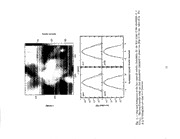
Fig. 1.-- Gray-scale map of the CO (2-1) integrated intensity between -4 and 12 km s-1 in the p Oph cloud.
Contour levels are from 20 to 70 by 10 K kms -I. The intensity has not been corrected for the main beam
efficiency, which is ,,-75% at the frequency of the CO (2-1) line.