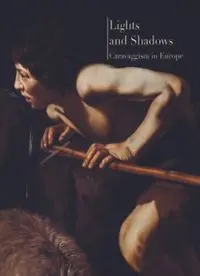
Table Of ContentLights
and Shadows
Caravaggism in Europe
Lights and Shadows:
Caravaggism in Europe
Lights and Shadows:
Caravaggism in Europe
Valentina Rossi and Marcella di Martino
DE LUCA EDITORI D’ARTE
Lights and Shadows:
Caravaggism in Europe
Cesare Lampronti Gallery
29 June - 31 July 2015
from 9.30 am to 6 pm
Exhibition curated by
Cesare Lampronti
Catalogue edited by
Marcella di Martino
Valentina Rossi
Catalogue entries by
Dorothea Bieneck
Alberto Cottino
Andrea G. De Marchi
Wayne Franits
Riccardo Lattuada
Anna Orlando
Valentina Rossi
Nicola Spinosa
Claudio Strinati
Translations by
Lyelle Shohet
Julia Hanna Weiss
Photography by
Mauro Coen
Matthew Hollow
Acknowledgments
Barbara De Nipoti, the staff of Itaca Transport, the staff of Simon Jones
Superfreight
LAMPRONTI GALLERY
44 Duke Street, St James’s
London SW1Y 6DD
Via di San Giacomo 22
00187 Roma
Contents
7 Introduction
CESARE LAMPRONTI
9 Rome
Master of the Acquavella Still Life [cat.1] by Andrea G. De Marchi
Giacinto Brandi [cat.2] by Valentina Rossi
Michelangelo Merisi called Caravaggio [cat.3] by Claudio Strinati
Master of the Harford Still Life [cat.4] by Alberto Cottino
Bartolomeo Manfredi [cat.5] by Claudio Strinati
Artemisia Gentileschi [cat.6] by Riccardo Lattuada
Artemisia Gentileschi and Bernardo Cavallino [cat. 7] by Riccardo Lattuada
29 Tuscany
Bartolomeo Cavarozzi, circle of [cat. 8] by Andrea G. De Marchi
Orazio Lomi Gentileschi [cat 9] by Claudio Strinati
Orazio Riminaldi [cat. 10] by Claudio Strinati
39 Naples
Battistello Caracciolo [cat.11] by Nicola Spinosa
Luca Giordano [cat. 12] by Nicola Spinosa
Mattia Preti [cat. 13] by Riccardo Lattuada
Jusepe Ribera [cat. 14] by Nicola Spinosa
Massimo Stanzione [cat. 15] by Riccardo Lattuada
Massimo Stanzione [cat. 16] by Riccardo Lattuada
55 Genoa
Gioacchino Assereto [cat. 17] by Anna Orlando
Gioacchino Assereto [cat. 18] by Anna Orlando
Luciano Borzone [cat. 19] by Anna Orlando
Domenico Fiasella called Sarzana [cat. 20] by Anna Orlando
65 Europe
Antonio de Puga attr. to [cat. 21] by Andrea G. De Marchi
Jean Ducamps [cat. 22] by Claudio Strinati
Gerard von Honthorst [cat. 23] by Andrea G. De Marchi
Abraham Janssens [cat. 24] by Andrea G. De Marchi
Abraham Janssens [cat. 25] by Andrea G. De Marchi
Jan Janssens [cat. 26] by Claudio Strinati
Monogrammista R.G. [cat. 27] by Claudio Strinati
Gerard Seghers [cat. 28] by Dorothea Bieneck
Cornelius Schut [cat. 29] by Claudio Strinati
Hendrick ter Brugghen and studio [cat. 30] by W. Franits
Nicolas Tournier [cat. 31] by Valentina Rossi
Valentin de Boulogne, workshop of [cat. 32] by Claudio Strinati
93 Selected Bibliography
o studio della pittura caravaggesca è sicuramente il segmento della storia dell’arte più attuale ma
anche il più delicato e colmo di difficoltà. Proporre una rassegna di questa tipologia di dipinti nel-
“Lla mia galleria londinese ha il significato non solo di aprire una finestra della nostra cultura nel cuo-
re di Londra ma anche quello, attraverso confronti, di approfondire alcuni argomenti che ad oggi risultano
ancora molto controversi. Tutto questo lungi da presunzioni di infallibilità.
Il catalogo è stato accuratamente realizzato con il contributo di storici dell’arte importanti come Claudio Stri-
nati, Nicola Spinosa, Riccardo Lattuada, Andrea de Marchi, Anna Orlando, solo per volerne menzionare al-
cuni.
Il percorso espositivo della mostra si snoda attraverso cinque aree tematiche corrispondenti a cinque zone geo-
grafiche. Si parte da Roma, per allargarsi verso Napoli e poi verso la Toscana, Genova e l’Europa.
È interessante osservare come nel gruppo di dipinti da me proposti, per i maestri italiani sia prevalente nelle
opere il fattore emozionale, mentre per i maestri nordici la priorità della tecnica analitica risulti determinante.
Alcuni dipinti di grandi dimensioni avrebbero necessitato di essere esposti in grandi spazi, purtroppo le gal-
lerie londinesi non hanno queste caratteristiche. Spero quindi che la mia galleria di Londra non mortifichi
l’essenza di alcune opere, ma che anzi la possibilità di osservarle una accanto all’altra sia un punto di par-
tenza per nuovi approfondimenti su una stagione pittorica di gran fascino come quella caravaggesca”.
Cesare Lampronti
7
Rome
[…] Seventeenth century sources describe the development of the caravaggesque movement, which brought about
a new artistic language and a more literal interpretation of subjects represented. The Tuscan master Orazio Gentileschi,
the Venetian painter Carlo Saraceni and the German artist Adam Elsheimer affiliated themselves with this creative de-
velopment during the years 1605-1606. Other artistic admirers, such as Rubens and Guido Reni, who had developed
different stylistic evolutions during their lifetime, also participated in this cultural climate […]vDriven by the demand
for caravaggesque works outside of Italy, the lessons of the Caravaggesque masters spread far across Europe, thanks to
the circulation of Caravaggio’s paintings and the travels of Roman artists such as Orazio Borgianni and Luigi Finson,.
The former travelled to Spain whilst the latter settled in France in order to disseminate the essential elements of the
movement. It was towards the end of the first decade that an international caravaggesque group was established sur-
rounding its oldest members. Roman masters played a vital role in converting European painters to follow this move-
ment […] By around 1610 and 1620 Caravaggism had isolated itself as an independent and well-defined movement in
Rome, and its principles were established according to its founders. Beside the older generation of caravaggisti, some
Northern personalities as Dutch Gerrit van Honthorst soon acquired a prominent role in spreading the current of the
movement to other parts of Europe. It would therefore be difficult to separate the Italians from the Northern paintings
in locating its origins and in observing its early manifestations, evolutions and divergences […]
M. Sennato, Dizionario Larousse della pittura italiana: dalle origini ai nostri giorni, Rome 1993, pp. 102-103.
9