Table Of ContentCHAIN
Cultural Heritage Activities and Institutes Network
Las otras orillas
Sevilla and other places, 20-28/11/15
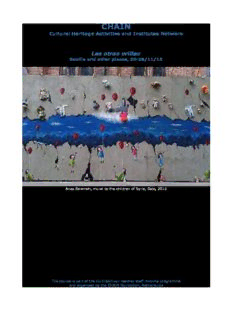
Anas Salameh, mural to the children of Syria, Oslo, 2015
The course is part of the EU Erasmus+ teacher staff mobility programme
and organised by the CHAIN foundation, Netherlands
La otra orilla
No hay otra orilla, no,
igual que no sabe el corazón
latir distinto.
Es una, una sola,
un solo río circular,
océano que late abierto, en redondo,
buscándose, buscándote, alma
o mente, vida, corazón,
con la fuerza que pone la piel
en el abrazo, que emplea tembloroso
el animal humano para recogerse entero,
para girarse y mirar, para encontrarse
- Adanes cansados y Evas - al amor cálido,
materno, de aquella cueva original
que espera siempre y que acoge.
Y de fondo, mar de fondo,
la misma costa, el mismo sol
mirándose de sur a norte,
la misma luz.
Carlos Wamba Dougoud (Sevilla 2015)
Table of Contents
Participants.................................................................................................................3
Programme.................................................................................................................5
• San Salvador (in Sevilla).......................................................................................7
• Las otras orillas - a course story line.......................................................................9
• The Mezquita in Cordoba.....................................................................................12
• Baelo Claudia.....................................................................................................14
• Ksar el Kebir (The great Fortress).........................................................................15
• Phoenicians in Morocco........................................................................................17
• Chefchaouen, one of the most colored cities..........................................................19
Backgrounds............................................................................................................21
• Timeline relations Morocco/Andalusia....................................................................23
• A short history of Morocco...................................................................................24
• Mudéjares and Moriscos......................................................................................33
• Walter Harris and Raisuli – two worlds..................................................................34
• Berbers and Arabs..............................................................................................37
• Guzman el Bueno, the legendary version...............................................................38
• Spain and the New World: the other side...............................................................40
• Spanish presence on the other shore....................................................................43
• The Spanish Inquisition.......................................................................................47
Andalusian shared families names Spain/North Morocco..........................................50
• al-Hakam II.......................................................................................................51
People
• La Bella Susona..................................................................................................55
• Lala al Hourra....................................................................................................56
Presentations...........................................................................................................57
Participant contributions
• The influence of ancient Greek and Arabic culture to Europe through the Iberian
Peninsula...........................................................................................................69
• Gibraltar Strait - la misma orilla?..........................................................................71
• Ottomania. The Ottoman Orient in Renaissance Art.................................................72
• Piatra Neamt - a city name with intercultural resonance and history.........................74
• People and Places: an example of migrant influences in local culture.........................76
• Coming from the other shores: Christianity in pagan Baltics.....................................79
• Piatra Neamt and the roots of an unknown civilization: the Immortal Dacians............81
• Two other shores: Antwerp and New York..............................................................83
• Song of the blowing wind - Manuel Alegre.............................................................85
• Travelled Waters................................................................................................88
• Spanish theatre plays in Greece during the junta (1967-1974).................................92
• History of Southwark..........................................................................................94
Poetry and Literature
• Al Mutamid - En sueños.....................................................................................103
• Esteban Tabares, Saludaré.................................................................................104
• The Mosque and the Palm Tree...........................................................................105
• Miguel Hernández, Nanas de la cebolla................................................................106
• Miguel Hernández, Llegó con tres Heridas............................................................107
• The key of Granada...........................................................................................108
• Lament for the Fall of Seville (1267)...................................................................109
• Languages and dictionary: Berber, Arabic, English................................................111
1
2
Participants
Name Address Town Country
Str. Decebal. nr. 35, BL. I4, SC. E, FLOOR 4,
Brindusa Andrei Piatra-Neamt Romania
AP.35
Alina Balus str. Bistritei F29 A ap. 11 Piatra-neamt Romania
Silvia Bortariu Street Elena Cuza, NR.7 Piatra NeamȚ Romania
Fokko Dijkstra Groenendaal 32 Groningen Netherlands
Angela Espin Plaza de San Leandro 2, 3º A Sevilla Spain
Steven Fontaine 24 Jeger Avenue London United Kingdom
Vicky Gkitzia 55 Parnonos str. Athens Greece
Evelyn Holdsworth John Donne School London United Kingdom
Alexandros Lazaridis Amfikratous 25 Athens Greece
Petruta Lostun Mihai Viteazu nr. 46, bl. D01, ap. 2 Piatra - Neamt Romania
Abdeslam Mouden BP 75-Chefchaouen Chefchaouen Morocco
Katerina Mourla Keiriadon 44, Kato Petralona Athens Greece
Ourania
Vlassopoulou 12 Athens Greece
Papadopoulou
Evija Pumpurina Karla iela 1 Valmiera Latvia
Arnaud Robin Chausée de Louvain 268/D Bouge Belgium
Helena Rodrigues Beco do Estragado n.º4, 3.º Dto Caldas Da Rainha Portugal
Vincent Schoon Steinweg 26 Oldenburg Germany
Nick Tildesley John Donne School London United Kingdom
Roos Truwant Jozef Verbovenlei 115 Deurne Belgium
Carlos Ubaldo Beco do Estragado n.º4, 3.º Dto Caldas Da Rainha Portugal
Renata Woroń Tenczynek, Ul. Na Grobli 42 Krzeszowice Poland
Daniel Zappi Abingdon, Oxfordshire Oxford United Kingdom
3
4
Programme
Arrival in Sevilla
19/11 - Th Don Paco
Dinner
Introduction
• Introduction Chain and the course theme: Las Otras Orillas (The Other
Shores)
• Technical aspects and tasks
• Mezquita Ibn Adabbas / Iglesia del Salvador
mo
Sevilla
20/11 - Fr
• The port to America : Torre del Oro, Torre de la Plata, Archivo de Indias,
Hospidal de la Caridad, Atarazanas (ancient shipyards), Casa de la Moneda
• Visit to the Alcazar
• Cathedral, Giralda - Moorish traces in a gothic monument, American silver
af and Columbus' tomb.
• Patio Casa de Contratación
Andalusia and Northern Africa: Cordoba
• 8:00 - departure
mo • 9:00 - Carmona: Carthaginian ('Kar-Hammon'), Roman (Necropolis),
Visigoth, Almohad, Mudejar
21/11 - Sat
• 13:00 - Mezquita , Jewish and Moorish quarters
• 15:30 - Medina Azahara : archaeological museum and site
af
La Otra Orilla
22/11 - Sun
Hotel
• Departure for Tarifa (arrival point of Tarif ibn Malik, first Muslim raid in
Continental ,
710) - visit
36 Dar Baroud,
• Archeological ensemble Baelo Claudia (Roman ruins)
Tanger,
• Departure boat from Tarifa
t: +212
• Reciprocal influences between Morocco and Andalusia: Tanger
39931024
La Otra Orilla
• Asilah (Portuguese influence and Raisuli)
23/11 - Mon
• Lixus (Phoenician and Roman ruins)
• Tetouan
Hotel Panorama
• Spanish colonial influences
• Migration from Northern Africa to Europe
• The Future of EU-Maghreb relations
24/11 - Tu Modern influences between Europe and Northern Africa
Casa Hassan • Tetouan
22, Rue Targui
Chefchauen
5
t: +212
• Chefchaouen - A city of Andalusian refugees
39986153
• Chefchaouen
• Departure for Ceuta, Algeciras, Sevilla
• Departure boat for Algeciras
25/11 - Wed
• Return to Sevilla
ev
La otra orilla: Triana
mo • Museum of the Inquisicion
• Santa Anna
26/11 - Th
• Meeting with meeting with Sevilla Acoge (immigrant organisation)
af • Flamenco session see: website
Reflection
• Ateneo - Reflection on the course theme
• Europe and 'Las Otras Orillas'
• Europe as 'Las Otras Orillas'
mo
• Evaluation
• Poetry reading
• Mudejar Museum
• Macarena district
27/11 - Fr
• Free afternoon
La otra orilla: Triana
af
• 19:00 Museum of the Inquisicion
• Joint last dinner
Sevilla:
(Optional for those who do not leave early)
28/11 - Sat mo Las Otras Orillas reflected in monuments and memorials
• Plaza de España
• Fabrica de Tabaccos
6
San Salvador (in Sevilla)
Reconstruction drawing Abderrahman II mosque (San Salvador)
The baroque collegiate church of San Salvador was built on the site a a former mosque, which was
constructed in the first half of the 9th century by Ibn Adabbas, under the emir Abderrahman II. During
the recent excavation and restoration works a column was found.
7
May Allah have pity with Abderrahmen b. Al Hakam, the righteous emir,
well guided by Allah, who ordered the construction of this mosque, under
direction of Umar b. Adabbás, judge of Sevilla, in the year 824 (11.3.829 -
27.2.830). This was written by Abad al-Barr b Harún.
Possibly the mosque was built on a former Roman temple, which may have been the first cathedral of
Sevilla. When Fernando el Santo conquered Sevilla (1248) he changed the mosque into a christian
church. Traces of the mosque are the ablution fountain, the Patio de los Naranjas and the basic structure
of the tower.
8
Description:Es una, una sola, un solo río circular, océano que late abierto, en redondo, buscándose, buscándote, alma o mente, vida, corazón, con la fuerza que pone la piel en el abrazo, que emplea tembloroso el animal humano para recogerse entero, para girarse y mirar, para encontrarse. - Adanes cansados