Table Of ContentEnvironmental Science
THIRTEENTH EDITION
G. TYLER MILLER, JR.
SCOTT E. SPOOLMAN
Australia • Brazil • Japan • Korea • Mexico • Singapore • Spain • United Kingdom • United States
Environmental Science, 13e © 2010, 2008 Brooks/Cole, Cengage Learning
G. Tyler Miller, Jr. and Scott E. Spoolman
ALL RIGHTS RESERVED. No part of this work covered by the copyright herein may
be reproduced, transmitted, stored, or used in any form or by any means graphic,
Publisher: Yolanda Cossio
electronic, or mechanical, including but not limited to photocopying, recording, scanning,
Development Editor: Christopher Delgado
digitizing, taping, Web distribution, information networks, or information storage and
Assistant Editor: Lauren Oliveira retrieval systems, except as permitted under Section 107 or 108 of the 1976 United
Editorial Assistant: Brandusa Radoias States Copyright Act, without the prior written permission of the publisher.
Media Editor: Alexandria Brady
For product information and technology assistance, contact us at
Marketing Manager: Tom Ziolkowski
Cengage Learning Customer & Sales Support, 1-800-354-9706
Marketing Assistant: Elizabeth Wong
For permission to use material from this text or product,
Marketing Communications Manager: submit all requests online at www.cengage.com/permissions.
Linda Yip Further permissions questions can be e-mailed to
[email protected].
Content Project Manager: Hal Humphrey
Art Director: John Walker
Library of Congress Control Number: 2009933440
Print Buyer: Karen Hunt
Paperback Student Edition:
Rights Acquisitions Account Manager,
Text: Margaret Chamberlain-Gaston ISBN-13: 978-0-495-56016-6
Rights Acquisitions Account Manager, ISBN-10: 0-495-56016-2
Image: Dean Dauphinais
Hardbound Student Edition:
Production Service/Compositor:
Thompson Steele, Inc. ISBN-13: 978-0-495-56017-3
Text Designer: Carolyn Deacy ISBN-10: 0-495-56017-0
Photo Researcher: Abigail Reip
Copy Editor: Andrea Fincke Brooks/Cole
Illustrator: Patrick Lane, ScEYEence Studios; 20 Davis Drive
Rachel Ciemma Belmont, CA 94002-3098
USA
Cover Designer: John Walker
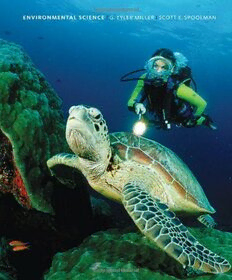
Cover Image: Green sea turtle © Reinhard
Dirscherl/Alamy. For more information about Cengage Learning is a leading provider of customized learning solutions with offi ce
this photo, see p. iv. locations around the globe, including Singapore, the United Kingdom, Australia, Mexico,
Brazil, and Japan. Locate your local offi ce at www.cengage.com/global.
Cengage Learning products are represented in Canada by Nelson Education, Ltd.
To learn more about Brooks/Cole, visit www.cengage.com/brookscole.
Purchase any of our products at your local college store or at our preferred online store
www.ichapters.com.
Printed in the United States of America
1 2 3 4 5 6 7 13 12 11 10 09
Brief Contents
Detailed Contents v SUSTAINING RESOURCES
AND ENVIRONMENTAL QUALITY
Preface for Instructors xiii
10 Food, Soil, and Pest Management 206
Learning Skills 1
11 Water Resources and Water Pollution 238
12 Geology and Nonrenewable Minerals 273
HUMANS AND SUSTAINABILITY: 13 Energy 296
AN OVERVIEW 14 Environmental Hazards and Human Health 344
1 Environmental Problems, Their Causes, 15 Air Pollution, Climate Change,
and Sustainability 5 and Ozone Depletion 368
16 Solid and Hazardous Waste 403
ECOLOGY AND SUSTAINABILITY
SUSTAINING HUMAN SOCIETIES
2 Science, Matter, and Energy 23
3 Ecosystems: What Are They 17 Environmental Economics, Politics,
and How Do They Work? 39 and Worldviews 424
4 Biodiversity and Evolution 59
Supplements S1
5 Biodiversity, Species Interactions,
and Population Control 79 Glossary G1
6 The Human Population and Urbanization 94 Index I1
7 Climate and Biodiversity 122
SUSTAINING BIODIVERSITY
8 Sustaining Biodiversity:
The Species Approach 152
9 Sustaining Biodiversity:
The Ecosystem Approach 178
iii
About the Cover Photo
my
Ala
Dirscherl/
Reinhard
©
The green sea turtle is one of seven species of sea turtles, all of which are endangered or threatened. It is
the largest of the sea turtles. The adults typically weigh 135–160 kilograms (300–350 pounds) and grow to
0.9 meters (3 feet) in diameter. They get their names from their green body fat, which results from a diet of sea
grasses and algae. Green sea turtles live near coral reefs and rocky shorelines of continental coasts and islands in
tropical and subtropical waters around the world. And they take an average of 25 years (but as many as 50) to
reach sexual maturity.
While these turtles spend most of their lives in the ocean, adult females must lay their eggs on land, and
biologists believe they return to beaches where they were born to make their nests. The female lands at night
and drags herself ashore using her front flippers. She buries about 100–150 eggs and returns to the sea. The eggs
incubate in the sand for about 2 months. Then the cookie-sized baby turtles hatch and dig out from under the
sand. Having evolved an ability to sense the heat of sunlight, they wait until dark to emerge and scramble toward
the sea. However, artificial lights from a human settlement, can lead them off course, and many then starve or
are caught and eaten by predators. Thus small and shrinking numbers of these hatchlings make it to the sea after
hatching.
The green sea turtle evolved before dinosaurs arrived on the earth. Now, having survived the entire age of
dinosaurs, it is endangered globally because of several human activities. They were hunted nearly to extinction,
primarily as a food source. And although they are now protected by laws, poachers still take them for their meat,
eggs, and shells. Also, thousands of sea turtles die each year when they are trapped and drowned in commercial
fishing nets. Many turtles become entangled in plastic debris (Figure 8-18, p. 171) or ingest plastic litter, which
can interfere with their digestion, causing them to starve. Ocean water pollution is another major threat, as is
coastal development, which often destroys or degrades their nesting areas.
Detailed Contents
Learning Skills 1
HUMANS AND SUSTAINABILITY:
AN OVERVIEW
1 Environmental Problems, 3 Ecosystems: What Are They
Their Causes, and Sustainability 5 and How Do They Work? 39
CORE CASE STUDY It’s All About Sustainability 5 CORE CASE STUDY Tropical Rain Forests
KEY QUESTIONS AND CONCEPTS 6 Are Disappearing 39
1-1 What Is an Environmentally Sustainable KEY QUESTIONS AND CONCEPTS 40
Society? 6 3-1 What Keeps Us and Other Organisms Alive? 40
1-2 How Are Our Ecological Footprints 3-2 What Are the Major Components
Affecting the Earth? 9 of an Ecosystem? 42
CASE STUDY China’s New Affluent Consumers 14 SCIENCE FOCUS Many of the World’s
1-3 What Is Pollution and What Can Most Important Organisms Are Invisible to Us 44
We Do about It? 14
1-4 Why Do We Have Environmental
Problems? 15
1-5 How Can We Live More Sustainably?
Three Big Ideas 19
REVISITING Sustainability 20
ECOLOGY AND SUSTAINABILITY
2 Science, Matter, and Energy 23
CORE CASE STUDY How Do Scientists Learn
About Nature? A Story about a Forest 23
KEY QUESTIONS AND CONCEPTS 24
2-1 What Do Scientists Do? 24
SCIENCE FOCUS Controversy over Climate
2-2 CWhhanagt eI s M27atter and How Do Physical Arnold, Inc
and Chemical Changes Affect It? 28 Peter
2-3 Wanhda Ct hIse mEnicearlg yC haanndg Heso wAf fDeoct PIht?y sic3a4l Kushal/
REVISITING The Hubbard Brook Experimental Deb
Forest and Sustainability 36 Photo 1 Air pollution from an industrial plant in India.
v
4-4 How Do Speciation, Extinction, and Human
Activities Affect Biodiversity? 68
SCIENCE FOCUS We Have Developed Two Ways
to Change the Genetic Traits of Populations 69
4-5 What Is Species Diversity and Why Is It
Important? 70
4-6 What Roles Do Species Play in an
Ecosystem? 71
CASE STUDY Cockroaches: Nature’s Ultimate
Survivors 72
SCIENCE FOCUS Why Should We Care about
the American Alligator? 75
CASE STUDY Why Should We Protect Sharks? 75
REVISITING Amphibians and Sustainability 76
5 Biodiversity, Species Interactions,
and Population Control 79
CORE CASE STUDY The Southern Sea Otter:
A Species in Recovery 79
KEY QUESTIONS AND CONCEPTS 80
Stock
Super
age footstock/
Photo 2 Point source of polluted water in Gargas, France.
3-3 What Happens to Energy in an Ecosystem? 45
3-4 What Happens to Matter in an Ecosystem? 48
SCIENCE FOCUS Water’s Unique Properties 50
3-5 How Do Scientists Study Ecosystems? 55
REVISITING Tropical Rain Forests
and Sustainability 56
4 Biodiversity and Evolution 59
CORE CASE STUDY Why Are Amphibians Vanishing?
Unraveling a Mystery 59
KEY QUESTIONS AND CONCEPTS 60
4-1 What Is Biodiversity and Why Is It
Important? 60
SCIENCE FOCUS Have You Thanked
the Insects Today? 62
4-2 How Does the Earth’s Life Change
over Time? 63
SCIENCE FOCUS How Did Humans Become Such
4-3 aH oPoww Derofu Gl Sepoelocigeisc?a l 6P5rocesses and Climate Stock
Change Affect Evolution? 66 Super
SCIENCE FOCUS Earth Is Just Right for Life Photo 3 The endangered brown pelican was protected in the first
to Thrive 67 U.S. wildlife refuge in Florida.
vi
Arnold, Inc.
Peter
P/
NE
U
Voltchev-
Photo 4 Severe desertification threatens an oasis in the Sahel region of West Africa
from a combination of severe drought, farming, and overgrazing.
5-1 How Do Species Interact? 80 6-5 What Are the Major Urban Resource
and Environmental Problems? 107
SCIENCE FOCUS Threats to Kelp Forests from
Predators and Climate Change 82 CASE STUDY Urbanization in the
5-2 What Limits the Growth of Populations? 86 United States 108
SCIENCE FOCUS Why Do California’s Sea Otters Face CASE STUDY Mexico City 113
an Uncertain Future? 87
5-3 How Do Communities and Ecosystems
Respond to Changing Environmental
Conditions? 89
REVISITING Southern Sea Otters and Sustainability 91
6 The Human Population
and Urbanization 94
CORE CASE STUDY Are There Too Many of Us? 94
KEY QUESTIONS AND CONCEPTS 95
6-1 How Many People Can the Earth Support? 95
6-2 What Factors Influence the Size
of the Human Population? 97
Image not available due to copyright restrictions
CASE STUDY The U.S. Population Is Growing
Rapidly 98
CASE STUDY The United States: A Nation
of Immigrants 100
6-3 How Does a Population’s Age Structure
Affect Its Growth or Decline? 101
6-4 How Can We Slow Human Population
Growth? 104
CASE STUDY Slowing Population Growth in China:
The One-Child Policy 106
CASE STUDY Slowing Population Growth
in India 106
vii
66--67 HHEannoodvww iLr DCoivnaoanmeb sleC eTni?rtt iaaenls1 s I1Bpm7oeprctaoacmttisoe?n M A1of1rfee4 cSt uUsrtabianna ble ment Enterprises
CASE STUDY The Ecocity Concept in Curitiba, Develop
BRanrEadVz IiSSlu ITst1IaN1i8Gna Pboilpituy lat1io19n Growth, Urbanization, International
7 Climate and Biodiversity 122
CORE CASE STUDY Different Climates Support
Different Life Forms 122
KEY QUESTIONS AND CONCEPTS 123
7-1 What Factors Influence Climate? 123
7-2 How Does Climate Affect the Nature
and Location of Biomes? 127
SCIENCE FOCUS Staying Alive in the Desert 131
7-3 How Have We Affected the World’s
Photo 7 Treadle pump used to supply irrigation water in parts of
Terrestrial Ecosystems? 139 Bangladesh and India.
7-4 What Are the Major Types of Aquatic
Systems? 140
7-5 Why Are the World’s Oceans Important
and How Have We Affected Them? 141
CASE STUDY Coral Reefs 143 SUSTAINING BIODIVERSITY
7-6 What Are the Major Types of
Freshwater Systems and How Have
8 Sustaining Biodiversity:
We Affected Them? 146
The Species Approach 152
REVISITING Climate, Biodiversity,
and Sustainability 149 CORE CASE STUDY Polar Bears and Projected
Climate Change 152
KEY QUESTIONS AND CONCEPTS 153
8-1 What Role Do Humans Play
in the Premature Extinction of Species? 153
SCIENCE FOCUS Estimating Extinction Rates 154
CASE STUDY The Passenger Pigeon:
Gone Forever 155
8-2 Why Should We Care About
Preventing Species Extinction? 157
8-3 How Do Humans Accelerate
Species Extinction? 159
CASE STUDY A Disturbing Message
from the Birds 160
CASE STUDY The Kudzu Vine 162
CASE STUDY Where Have All the
Honeybees Gone? 167
INDIVIDUALS MATTER A Scientist Who Confronted
Poachers 168
8-4 How Can We Protect Wild Species from
Premature Extinction? 169
Arnold, Inc. SSpCeIEcNieCs EA cFtO C1U7S1 Accomplishments of the Endangered
Peter CASE STUDY Protecting Whales: A Success
Bond/ Story . . . So Far 172
Martin CCaAlSifEo rSnTiUa DCYon Tdroyrin g1 t7o4 Save the
Photo 6 Roof garden and solar cells in Wales, Machynlleth (UK). REVISITING Polar Bears and Sustainability 175
viii
9 Sustaining Biodiversity:
The Ecosystem Approach 178
CORE CASE STUDY Wangari Maathai and the
Green Belt Movement 178
KEY QUESTIONS AND CONCEPTS 179
9-1 What Are the Major Threats
to Forest Ecosystems? 179
SCIENCE FOCUS Putting a Price Tag on Nature’s
Ecological Services 181
CASE STUDY Many Cleared Forests in the United
States Have Grown Back 185
9-2 How Should We Manage and Sustain
Forests? 188
TSiCmIEbNeCr E 1F8O8CUS Certifying Sustainably Grown Arnold
9-3 How Should We Manage and Sustain Peter
Grasslands? 190 NEP/
U
9-4 Hanodw N Sahtuoureld R Wesee rMveasn?a ge1 9a2nd Sustain Parks Rodriques-
CASE STUDY Stresses on U.S. Public Parks 192 D.
SCIENCE FOCUS Reintroducing the Gray Wolf Photo 9 Bird covered with oil in Brazilian waters.
to Yellowstone National Park 193
CASE STUDY Costa Rica—A Global Conservation
Leader 194
SUSTAINING RESOURCES AND
CASE STUDY Controversy over Wilderness Protection
in the United States 195 ENVIRONMENTAL QUALITY
9-5 How Can We Help to Sustain Terrestrial
Biodiversity? 195 10 Food, Soil, and Pest
SCIENCE FOCUS Ecological Restoration of a Tropical Management 206
Dry Forest in Costa Rica 197
CORE CASE STUDY Is Organic Agriculture
9-6 How Can We Help to Sustain Aquatic
the Answer? 206
Biodiversity? 198
KEY QUESTIONS AND CONCEPTS 207
CASE STUDY Industrial Fish Harvesting Methods 200
10-1 What Is Food Security and Why Is It Difficult
REVISITING Wangari Maathai and Sustainability 203
to Attain? 207
10-2 How Is Food Produced? 209
SCIENCE FOCUS Soil Is the Base of Life on Land 211
CASE STUDY Industrialized Food Production
in the United States 212
CASE STUDY Brazil: The World’s Emerging
Food Superpower 213
10-3 What Environmental Problems Arise
from Food Production? 215
10-4 How Can We Protect Crops from Pests
More Sustainably? 221
INDIVIDUALS MATTER Rachel Carson 223
SCIENCE FOCUS Ecological Surprises: The Law
of Unintended Consequences 225
10-5 How Can We Improve Food Security? 227
10-6 How Can We Produce Food More
Sustainably? 228
CASE STUDY Soil Erosion in the United States 229
SCIENCE FOCUS The Land Institute and Perennial
Nanosys Polyculture 233
REVISITING Organic Agriculture and
Photo 8 Flexible solar cells using nanotechnology. Sustainability 235
ix