
Download Energy Geostructures: Innovation in Underground Engineering PDF Free - Full Version
Download Energy Geostructures: Innovation in Underground Engineering by , in PDF format completely FREE. No registration required, no payment needed. Get instant access to this valuable resource on PDFdrive.to!
About Energy Geostructures: Innovation in Underground Engineering
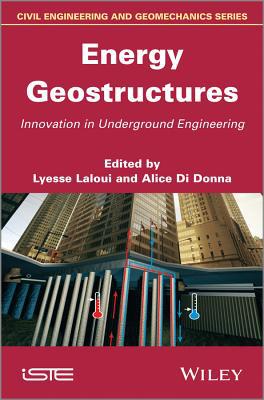
Energy geostructures are a tremendous innovation in the field of foundation engineering and are spreading rapidly throughout the world. They allow the procurement of a renewable and clean source of energy which can be used for heating and cooling buildings. This technology couples the structural role of geostructures with the energy supply, using the principle of shallow geothermal energy. This book provides a sound basis in the challenging area of energy geostructures. The objective of this book is to supply the reader with an exhaustive overview on the most up-to-date and available knowledge of these structures. It details the procedures that are currently being applied in the regions where geostructures are being implemented. The book is divided into three parts, each of which is divided into chapters, and is written by the brightest engineers and researchers in the field. After an introduction to the technology as well as to the main effects induced by temperature variation on the geostructures, Part 1 is devoted to the physical modeling of energy geostructures, including in situ investigations, centrifuge testing and small-scale experiments. The second part includes numerical simulation results of energy piles, tunnels and bridge foundations, while also considering the implementation of such structures in different climatic areas. The final part concerns practical engineering aspects, from the delivery of energy geostructures through the development of design tools for their geotechnical dimensioning. The book concludes with a real case study. Contents Part 1. Physical Modeling of Energy Piles at Different Scales 1. Soil Response under Thermomechanical Conditions Imposed by Energy Geostructures, Alice Di Donna and Lyesse Laloui. 2. Full-scale In Situ Testing of Energy Piles, Thomas Mimouni and Lyesse Laloui. 3. Observed Response of Energy Geostructures, Peter Bourne-Webb. 4. Behavior of Heat-Exchanger Piles from Physical Modeling, Anh Minh Tang, Jean-Michel Pereira, Ghazi Hassen and Neda Yavari. 5. Centrifuge Modeling of Energy Foundations, John S. McCartney. Part 2. Numerical Modeling of Energy Geostructures 6. Alternative Uses of Heat-Exchanger Geostructures, Fabrice Dupray, Thomas Mimouni and Lyesse Laloui. 7. Numerical Analysis of the Bearing Capacity of Thermoactive Piles Under Cyclic Axial Loading, Maria E. Suryatriyastuti, Hussein Mroueh , Sébastien Burlon and Julien Habert. 8. Energy Geostructures in Unsaturated Soils, John S. McCartney, Charles J.R. Coccia , Nahed Alsherif and Melissa A. Stewart. 9. Energy Geostructures in Cooling-Dominated Climates, Ghassan Anis Akrouch, Marcelo Sanchez and Jean-Louis Briaud. 10. Impact of Transient Heat Diffusion of a Thermoactive Pile on the Surrounding Soil, Maria E. Suryatriyastuti, Hussein Mroueh and Sébastien Burlon. 11. Ground-Source Bridge Deck De-icing Systems Using Energy Foundations, C. Guney Olgun and G. Allen Bowers. Part 3. Engineering Practice 12. Delivery of Energy Geostructures, Peter Bourne-Webb with contributions from Tony Amis, Jean-Baptiste Bernard, Wolf Friedemann, Nico Von Der Hude, Norbert Pralle, Veli Matti Uotinen and Bernhard Widerin. 13. Thermo-Pile: A Numerical Tool for the Design of Energy Piles, Thomas Mimouni and Lyesse Laloui. 14. A Case Study: The Dock Midfield of Zurich Airport, Daniel Pahud. About the Authors Lyesse Laloui is Chair Professor, Head of the Soil Mechanics, Geoengineering and CO2 storage Laboratory and Director of Civil Engineering at the Swiss Federal Institute of Technology (EPFL) in Lausanne, Switzerland. Alice Di Donna is a researcher at the Laboratory of Soil Mechanics at the Swiss Federal Institute of Technology (EPFL) in Lausanne, Switzerland.
Detailed Information
| Author: | , |
|---|---|
| Publication Year: | 2013 |
| ISBN: | 9781848215726 |
| Pages: | 320 |
| Language: | other |
| File Size: | 14.2211 |
| Format: | |
| Price: | FREE |
Safe & Secure Download - No registration required
Why Choose PDFdrive for Your Free Energy Geostructures: Innovation in Underground Engineering Download?
- 100% Free: No hidden fees or subscriptions required for one book every day.
- No Registration: Immediate access is available without creating accounts for one book every day.
- Safe and Secure: Clean downloads without malware or viruses
- Multiple Formats: PDF, MOBI, Mpub,... optimized for all devices
- Educational Resource: Supporting knowledge sharing and learning
Frequently Asked Questions
Is it really free to download Energy Geostructures: Innovation in Underground Engineering PDF?
Yes, on https://PDFdrive.to you can download Energy Geostructures: Innovation in Underground Engineering by , completely free. We don't require any payment, subscription, or registration to access this PDF file. For 3 books every day.
How can I read Energy Geostructures: Innovation in Underground Engineering on my mobile device?
After downloading Energy Geostructures: Innovation in Underground Engineering PDF, you can open it with any PDF reader app on your phone or tablet. We recommend using Adobe Acrobat Reader, Apple Books, or Google Play Books for the best reading experience.
Is this the full version of Energy Geostructures: Innovation in Underground Engineering?
Yes, this is the complete PDF version of Energy Geostructures: Innovation in Underground Engineering by , . You will be able to read the entire content as in the printed version without missing any pages.
Is it legal to download Energy Geostructures: Innovation in Underground Engineering PDF for free?
https://PDFdrive.to provides links to free educational resources available online. We do not store any files on our servers. Please be aware of copyright laws in your country before downloading.
The materials shared are intended for research, educational, and personal use in accordance with fair use principles.

