
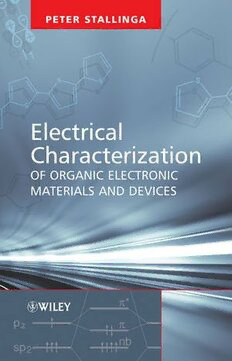
Download Electrical Characterization of Organic Electronic Materials and Devices PDF Free - Full Version
Download Electrical Characterization of Organic Electronic Materials and Devices by Professor Peter Stallinga in PDF format completely FREE. No registration required, no payment needed. Get instant access to this valuable resource on PDFdrive.to!
About Electrical Characterization of Organic Electronic Materials and Devices
Think like an electronOrganic electronic materials have many applications and potential in low-cost electronics such as electronic barcodes and in light emitting devices, due to their easily tailored properties. While the chemical aspects and characterization have been widely studied, characterization of the electrical properties has been neglected, and classic textbook modeling has been applied. This is most striking in the analysis of thin-film transistors (TFTs) using thick “bulk” transistor (MOS-FET) descriptions. At first glance the TFTs appear to behave as regular MOS-FETs. However, upon closer examination it is clear that TFTs are unique and merit their own model. Understanding and interpreting measurements of organic devices, which are often seen as black-box measurements, is critical to developing better devices and this, therefore, has to be done with care.Electrical Characterization of Organic Electronic Materials and DevicesGives new insights into the electronic properties and measurement techniques for low-mobility electronic devicesCharacterizes the thin-film transistor using its own modelLinks the phenomena seen in different device structures and different measurement techniquesPresents clearly both how to perform electrical measurements of organic and low-mobility materials and how to extract important information from these measurementsProvides a much-needed theoretical foundation for organic electronics
Detailed Information
| Author: | Professor Peter Stallinga |
|---|---|
| Publication Year: | 2009 |
| ISBN: | 9780470750094 |
| Pages: | 318 |
| Language: | English |
| File Size: | 1.559 |
| Format: | |
| Price: | FREE |
Safe & Secure Download - No registration required
Why Choose PDFdrive for Your Free Electrical Characterization of Organic Electronic Materials and Devices Download?
- 100% Free: No hidden fees or subscriptions required for one book every day.
- No Registration: Immediate access is available without creating accounts for one book every day.
- Safe and Secure: Clean downloads without malware or viruses
- Multiple Formats: PDF, MOBI, Mpub,... optimized for all devices
- Educational Resource: Supporting knowledge sharing and learning
Frequently Asked Questions
Is it really free to download Electrical Characterization of Organic Electronic Materials and Devices PDF?
Yes, on https://PDFdrive.to you can download Electrical Characterization of Organic Electronic Materials and Devices by Professor Peter Stallinga completely free. We don't require any payment, subscription, or registration to access this PDF file. For 3 books every day.
How can I read Electrical Characterization of Organic Electronic Materials and Devices on my mobile device?
After downloading Electrical Characterization of Organic Electronic Materials and Devices PDF, you can open it with any PDF reader app on your phone or tablet. We recommend using Adobe Acrobat Reader, Apple Books, or Google Play Books for the best reading experience.
Is this the full version of Electrical Characterization of Organic Electronic Materials and Devices?
Yes, this is the complete PDF version of Electrical Characterization of Organic Electronic Materials and Devices by Professor Peter Stallinga. You will be able to read the entire content as in the printed version without missing any pages.
Is it legal to download Electrical Characterization of Organic Electronic Materials and Devices PDF for free?
https://PDFdrive.to provides links to free educational resources available online. We do not store any files on our servers. Please be aware of copyright laws in your country before downloading.
The materials shared are intended for research, educational, and personal use in accordance with fair use principles.

