Table Of Content= SHOCKING
TALES OF =
REAL-LIFE =
VAMPIRES =
.. INSIDE
ANCIENT ORIGIN + VAMPIRES AROUND THE WORLD > MYTH VS REALITY
OREO a
=~ ~SSHISTORY=—
~ VAMPIRE
‘Thié idea that undead beings return to feast upon the living has fascinated ®
cultures and generations for centuries, with different parts of the world
— sharing their own unique tales of folklore, and with theories evolving as
: science and medicine have advanced. The characteristics of vampires have
always differed from country to country, as well as how they are created,
= how they are identified, and how ordinary folk can protect themselves
against vampires and even destroy them - should they be brave enough.
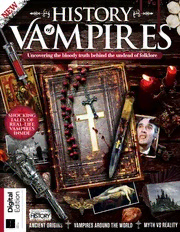
In History of Vampires, uncover the remarkable origins of vampiric beliefs,
and examine traditions from around the world, from gruesome tales of
blood-drinking Romanian vampires to the Filipino creature that feasts on
unborn children. Meet ‘real-life’ vampires, such as Vlad the Impaler and
Elizabeth Bathory, and learn about cases from the 19th-century
New England Vampire Panic, as well as 20th-century killers. We also
explore how the vampires of popular culture contrast those of folklore, and
analyse the influences and inspirations in literature and on screen.
With all this and much more to sink your teeth into, this is the ultimate *
companion for anyone with a thirst for vampire knowledge.
HISTORY
VAMPIRES
History
ak CONTENTS Coe
ig
ORIGINS Tuo), :
10. THE ORIGINS OF VAMPIRES
20 DEBUNKING THE VAMPIRE MYTH
22 THE VAMPIRE HUNTER'S HANDBOOK.’
Vanes AROUND -
_ THE WORLD
34. VAMPIRE SPOTTING _
3G LEGENDARY BLOODSUCI
~~ AND WALKING CORPSES ==
“40 SHROUD EATERS AND SEDUCTION. -
4G MEDIEVAL MENACE OR LITERARY FIEND?
50 MURDEROUS MOTHERS AND INFANTICIDE
54 PLAGUE CARRIERS AND ICE CANNIBALS
6
AO =
@2_ VLAD THE IMPALER
Q-=FHZABETH-BATHORY
78. THE NEW ENGLAND VAMPIRE PANIC
$8 VAMPIRES IN RECENT HISTORY
8 ORIGINS 2
TO THE ORIGINS OF VAMPIRES 10 i
The horrifying spectres that would terrorise a =
villages and drive people to insanity
-2O_DEBUNKING THE VAMPIRE MYTH
How science can explain the phenomena
that made people believe in the undead
y
22 -THE VAMPIRE HUNTER’S
HANDBOOK
<—\ How to identify, protect yourself from
and even Kill these elusive creatures Z
. =,
“a
Origins
The origins
of vampires
Vampires were not always characters contained to
stories, but horrifying spectres that would terrorise
villages and drive people to insanity
Words by Frances White
he moon jis full and high, a crack of light
dances across a pitch-black sky, and in the
distance a crow caws. In a rundown alley
off a moonlit street a shadow passes, his
high-collared cloak wafting at his feet, as if
he were hovering above the ground, As the
lighting cracks overhead, a glimpse of his face can
be seen: pale-white skin, raven-black hair and an
unnatural, hypnotising beauty. Most unusual of
all, however, are his teeth, which are sharp, as if
filed to a point. Another crack of lightning, and
the figure is gone; vanished, without a trace, as if
he had never been there at all, As the storm
rages, above the houses a single black bat can be
seen, powering through the rain into the
growing night.
‘This classic image of a vampire is one that is,
recognisable to almost anyone alive today. It is a
concept of vampires that has been popularised
by writers such as Bram Stoker, and entered the
cultural conscious to such a degree, that one does
not even need to name a fanged being for readers
to know what it is. Vampires are everywhere
they are the stars of books, TV shows, movies and
games. The idea of undead beings who return
to feast upon the living has entertained and
fascinated humanity for years. However, vampires
were not always characters to entertain and
enthral, but in fact very real threats to the people
who feared them. Before the characters and the
glamour of vampires there was the terror. This
terror drove people to unearth the dead, flee their
homes and mutilate the bodies of their loved ones
Today, vampires may be regarded as stylish and
alluring, but the origins of these beings are far
more sinister.
The origins of vampires
Origins
‘Melrose Abbey was largely rebuilt after
medieval wars ravaged its exterior
The
Hunderprest
of Melrose
Abbey
This zombie priest
returned at night to
haunt the living
‘Once a wealthy and prosperous monastery,
Melrose Abbey is home to one ofthe
creepiest vampire legends, certainly in
Scotland. in 139, there was a chaplain to
‘one of the ladies who lived nearby. This
chaplain was known to revel in a wide aray
of sins and vices, even earning himself the
nickname Hunderprest, meaning dog
priest’. He was given this title apparently
‘due to his fondness for hunting with a pack
‘of wild hounds. itis believed that when
the priest died, he paid for his sinful life by
being cursed to return asa revenant, oF
vampire. There were sightings of the priest
stalking the streets, searching for blood and
terrifying the locals. t was said he would
retur to the abbey in the dead of night in
the form of a bat. The monks at the abbey
‘were reportedly able to drive the vampire
‘away with prayers and rituals; however, this
simply drove the priest into the house of
his old mistress, who he bothered for sex.
Terrified, she called upon the help of the
monks, hoping an exorcism would help.
In order to finally rid themselves ofthis
sinful demon once and forall, an elder monk
travelled to the priest’ grave where he
reportedly witnessed the man rise out ofthe
‘ground and approach him. The monk fought
him off with a staff, and drove the phantom
back into the ground. Now confident he
‘was dealing with a vampire, the monk and
‘some companions opened up the grave the
following moming, Inside they found the
priest's body, a smile upon his lips. dripping
‘with blood, The monks removed the body,
burned it to ashes, and scattered the ashes
into the wind. The monks were satisfied that
‘the demon was dealt with and things began
to.calm down. However, today itis said that
‘on some nights ghostly howis can stil be
heard throughout the ruins ofthe abbey.
174
Although the word ‘vampite’ did not appear in
the English language until 1734, the idea of blood-
sucking, energy-consuming beings has existed
since ancient times, One of the earliest examples of
beings that resembled what we know as vampires
today was from ancient Sumer and Babylonia in
4,000 BCE. The ekimmu were a kind of vengeful
spirit of the recently deceased, returned from
the dead to consume the life-force of Ifa
the living
Tales of creatures that return
from the dead to consume the
blood or flesh of those still alive
appear in an alarming number
of cultures all around the world.
Although the term ‘vampire’ was
not used, these demons, strongly
associated with the devil, can be
linked with the modern-day vampire
that drinks the blood of its victims. India had
the vetalas, ghouls that inhabit corpses and the
pisaca, the spirits of people who died in insanity.
Persian history is littered with tales of blood-
drinking demons, Assyria told stories of Lilitu, who
sustained her hunger with the blood of babies, and
estries were female beings, able to change their
shape to roam the night and seek out their victims.
The Greco-Roman world further built on this
idea of blood-drinking demons with Empusa, a
nun made
the mistake of
stepping over an
unburied body, legenc
dictated she would
turn into
avampire
demonic child of the goddess Hecate who seduced
men and feasted on their blood, a far mote similar
example to the vampires of pop culture today. The
striges were described as feasting on children and
adults alike, and took on the appearance of crows,
an early example of the now-famous vampire link
to animals.
However, it wasn’t until the medieval period
that some of the most prominent myths
and stories surrounding vampires as
we know them today began. In the
Tath century, English historians,
Walter Map and William of
Newburgh recorded accounts
of revenants, animated undead
corpses to haunt the living. Unlike
vampites, revenants were said to
be in advanced states of decay, with
fiery, red eyes, reeking of rotting flesh
and dressed in burial shrouds, Revenants were
known to spread disease among the living and
could only be defeated by decapitation, burning
and removing the heart. Newburgh noted that
stories of revenants were so common he wouldn't
have the time to record every instance. In one of
his accounts, a husband returned from the dead
to visit his family and neighbours, becoming "a
serious nuisance” ‘These nocturnal visits are similar
to later accounts of vampires.
“These demons, strongly associated with the devil, can be linked
The sexual aspect of vampires tra
‘violent and non-consensual
with the modern-day vampire that drinks the blood of its victims”