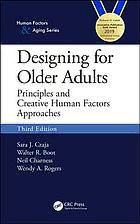
Table Of ContentDesigning for Older
Adults
Human Factors and Aging Series
Wendy A. Rogers
Khan Professor of Applied Health Sciences,
University of Illinois Urbana-Champaign
Given the worldwide aging of the population, there is a tremendous
increase in system, environment, and product designs targeted to the
older population. The purpose of this series is to provide focused volumes
on different topics of human factors/ergonomics as they affect design for
older adults. The books will be translational in nature, meaning that they
will be accessible to a broad audience of readers. The target audience
includes human factors/ergonomics specialists, gerontologists, psycholo-
gists, health-related practitioners, and industrial designers. The unifying
theme of the books will be the relevance and contributors of the field of
human factors to design for an aging population.
Designing Technology Training for Older Adults in Continuing
Care Retirement Communities
Shelia R. Cotten, Elizabeth A. Yost, Ronald W. Berkowsky, Vicki Winstead and
William A. Anderson
Designing Training and Instructional Programs for Older Adults
Sara J. Czaja and Joseph Sharit
Designing Telehealth for an Aging Population: A Human Factors
Perspective
Neil Charness, George Demiris and Elizabeth Krupinski
Designing Displays for Older Adults
Richard Pak and Anne McLaughlin
Designing for Older Adults: Principles and Creative Human
Factors Approaches, Second Edition
Arthur D. Fisk, Wendy A. Rogers, Neil Charness, Sara J. Czaja and
Joseph Sharit
For more information about this series, please visit: www.crcpress.com/
Human-Factors-and-Aging-Series/book-series/CRCHUMFACAGI
Designing for Older
Adults
Principles and Creative Human
Factors Approaches
Third Edition
Sara J. Czaja
Walter R. Boot
Neil Charness
Wendy A. Rogers
Center for Research and Education on Aging and
Technology Enhancement (CREATE)
CRC Press
Taylor & Francis Group
6000 Broken Sound Parkway NW, Suite 300
Boca Raton, FL 33487-2742
© 2019 by Taylor & Francis Group, LLC
CRC Press is an imprint of Taylor & Francis Group, an Informa business
No claim to original U.S. Government works
Printed on acid-free paper
International Standard Book Number-13: 978-1-138-05366-3 (Paperback)
International Standard Book Number-13: 978-0-367-13818-9 (Hardback)
This book contains information obtained from authentic and highly regarded sources.
Reasonable efforts have been made to publish reliable data and information, but the author and
publisher cannot assume responsibility for the validity of all materials or the consequences of
their use. The authors and publishers have attempted to trace the copyright holders of all mate-
rial reproduced in this publication and apologize to copyright holders if permission to publish
in this form has not been obtained. If any copyright material has not been acknowledged, please
write and let us know so we may rectify in any future reprint.
Except as permitted under U.S. Copyright Law, no part of this book may be reprinted, repro-
duced, transmitted, or utilized in any form by any electronic, mechanical, or other means, now
known or hereafter invented, including photocopying, microfilming, and recording, or in any
information storage or retrieval system, without written permission from the publishers.
For permission to photocopy or use material electronically from this work, please access www.
copyright.com (http://www.copyright.com/) or contact the Copyright Clearance Center, Inc.
(CCC), 222 Rosewood Drive, Danvers, MA 01923, 978-750-8400. CCC is a not-for-profit organi-
zation that provides licenses and registration for a variety of users. For organizations that have
been granted a photocopy license by the CCC, a separate system of payment has been arranged.
Trademark Notice: Product or corporate names may be trademarks or registered trademarks,
and are used only for identification and explanation without intent to infringe.
Visit the Taylor & Francis Web site at
http://www.taylorandfrancis.com
and the CRC Press Web site at
http://www.crcpress.com
We dedicate this book to:
− The older adults who have inspired us
– our parents and grandparents
− The participants in our research studies whose invaluable
efforts have helped us to develop these guidelines
Contents
Preface to the Third Edition ...........................................................................xv
Authors ...........................................................................................................xvii
Section I: The fundamentals of aging and technology
Chapter 1 Introduction and conceptual framework ...............................3
1.1 Rationale for the 3rd edition ..................................................................3
1.2 Demographics ..........................................................................................5
1.3 The changing face of aging ....................................................................6
1.3.1 Racial/ethnic diversity ..............................................................7
1.3.2 Education and health status .....................................................7
1.3.3 Living arrangements and family structures..........................9
1.4 How do we define “older adult” ............................................................9
1.5 Designing for older adults: Why this topic continues
to be important .......................................................................................10
1.6 Organization of the book ......................................................................11
1.7 Recommended readings .......................................................................14
Chapter 2 Characteristics of older adults ................................................15
2.1 Psychographics .......................................................................................15
2.2 Sensation & perception .........................................................................16
2.2.1 Vision .........................................................................................17
2.2.2 Hearing .....................................................................................18
2.2.3 Haptics and kinesthetics.........................................................19
2.2.4 Taste and smell .........................................................................20
2.3 Cognition ................................................................................................20
2.3.1 Processing speed ......................................................................22
2.3.2 Attention ...................................................................................23
2.3.3 Working memory .....................................................................24
2.3.4 Semantic memory ....................................................................25
2.3.5 Prospective memory................................................................25
vii
viii Contents
2.3.6 Procedural memory .................................................................26
2.3.7 Spatial cognition ......................................................................26
2.3.8 Language comprehension ......................................................27
2.3.9 Executive functioning .............................................................27
2.4 Anthropometry & movement control .................................................28
2.4.1 Anthropometry ........................................................................28
2.4.2 Movement control ....................................................................28
2.4.3 Strength .....................................................................................29
2.5 Summary ................................................................................................30
2.6 Recommended readings and links .....................................................31
2.6.1 Readings ....................................................................................31
2.6.2 Links ..........................................................................................31
Chapter 3 Individual differences..............................................................33
3.1 Dispelling the myth: Older adults are not all alike ..........................33
3.2 Sources of individual differences ........................................................36
3.2.1 Age .............................................................................................36
3.2.2 Gender .......................................................................................37
3.2.3 Culture and ethnicity ..............................................................37
3.2.4 Socio-economic status .............................................................38
3.2.5 Work and employment ...........................................................39
3.2.6 Literacy ......................................................................................39
3.2.7 Health status .............................................................................42
3.2.8 Functional status ......................................................................44
3.2.9 Family structures .....................................................................44
3.2.10 Sexual orientation and gender identity ................................45
3.3 Aging into vs. aging with a disability ................................................46
3.4 Why accommodating individual differences is important
to design ..................................................................................................46
3.5 Recommended readings and links .....................................................47
Chapter 4 Existing and emerging technology ........................................49
4.1 Older adults as technology consumers ..............................................50
4.1.1 Technology use patterns .........................................................50
4.1.2 Attitudes towards technology ...............................................51
4.1.3 Models of technology use and adoption ..............................52
4.1.4 Motivation .................................................................................54
4.1.5 Technology generations ..........................................................55
4.2 Variability ...............................................................................................55
4.2.1 Age, socioeconomic status, and location ..............................56
4.3 Existing and emerging technologies ..................................................56
4.3.1 Emerging technologies: Incrementally vs.
radically new .......................................................................58
4.3.2 The implications of continual change ...................................59
Contents ix
4.4 Summary ................................................................................................60
4.5 Recommended readings .......................................................................60
Section II: The fundamentals of design
Chapter 5 Basic principles of design ........................................................63
5.1 Design philosophies ..............................................................................63
5.1.1 User-centered design...............................................................63
5.1.2 Accessible, inclusive, and universal design .........................65
5.1.3 Modular/personalized/customized .....................................65
5.2 Defining users and needs .....................................................................65
5.2.1 Design research ........................................................................69
5.3 Development ..........................................................................................70
5.3.1 Concept generation ..................................................................70
5.3.2 Prototyping ...............................................................................72
5.3.3 Standards and heuristics ........................................................72
5.3.4 Iterative design .........................................................................74
5.4 Methods and tools .................................................................................74
5.4.1 Interviews .................................................................................75
5.4.2 Observations .............................................................................76
5.4.3 Task analysis .............................................................................77
5.4.4 Heuristic analysis ....................................................................78
5.4.5 Cognitive walkthrough ..........................................................78
5.4.6 User studies ..............................................................................78
5.5 Implementation and dissemination ....................................................82
5.5.1 Initial deployment ...................................................................82
5.5.2 Long-term use ..........................................................................82
5.6 Guidelines for the design process .......................................................83
5.7 Recommended readings and links .....................................................84
5.7.1 Readings ....................................................................................84
5.7.2 Links ..........................................................................................84
Chapter 6 Involving older adults in design research ............................87
6.1 Considerations when conducting research with older adults ........88
6.2 Sampling issues .....................................................................................89
6.2.1 Representative samples ...........................................................89
6.2.2 Sample size ...............................................................................91
6.2.3 Inclusion/exclusion criteria ....................................................91
6.3 Participant recruitment and retention ................................................93
6.3.1 Recruitment ..............................................................................93
6.3.2 Retention ...................................................................................96
6.4 Issues to consider when developing a research protocol .................97
6.4.1 General issues in protocol development ..............................97