Table Of Contentfp
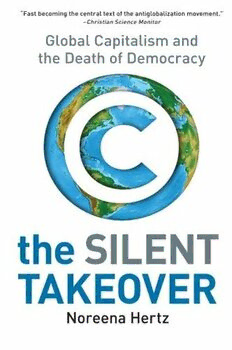
The
Takeover
GLOBACLA PITALAINSDMT HE
DEATHO FD EMOCRACY
Noreena Hertz
The Free Press
New York London Toronto Sydney Singapore
fp
THEF REPER ESS
AD iviosSfi iomn&o Snc huIsntce.r ,
123A0v enoutfeh Am ee ricas
NewY orNkY1, 0 020
Copyr©i2 g0h0bt1yN oreHeenrat z
OrigipnuabllliiyGns r heeBadrt i it2na0 i0nb1 yW illHieaimn emann
Alrli grhetsse rved,
incltuhdreii ngoghrf te production
iwnh oolrie pn a irnatn foyr m.
THFERE EP RESaSn cdo loaprhteor na demarks
oSf im&oS nc huIsntce.r ,
Foirn formraetgiaosrnpd eidcniigsa clfoo rub nutplsuk r chases,
plecaosnetS aicm&toS nc huSspteeScrai laels :
1-80506--46o 7rb9 u8s [email protected]
Deseidby J aPins ciotta
gn
Manufacitntu hrUeen diS tteadot Afem se rica
109 87 65 4 32 1
LiborCafor nyg Craetsasl oging-Diant-aP ublication
HerNtozr,e ena.
Thsei lteankte: go lvoecbraa pli taantldhi dese mao tfdh e mocNroarceyHe/en rat z.
p.c m.
Inclbuidbelsi orgerfaeparhneiidncn cadeles x .
I.S ocrieaslp onosbfi ubsiiln2ie.Cts oysr .p oratiaosnpse-3cS.tGo slc.oi baall ization.
4.C apita5l.Di esmmo.c rIa.Tc iyd.e .
HD6.0H 4270 02
338.8'8-dc21 2002021452
ISB0N- 7432-3478-2
Fomry l amtoet her-mLyfae tahhe,r -Joannasdti hsatne,r -Arabel.
Withd eelpoeavsnetgd r atitude.
CONTENTS
TheR evolWuitlNiloo Btne T elevised 1
LiviinnaM g a teWroiralld 13
LeTth eEma Cta ke 37
MannitnhDgeo oartt hPer ivSaetceHt Qo r 62
PoliftoSirac lse 88
ShoDpo,n V'ott e 109
AlTlh aGtl i.t. .t ers 132
EvangEenltirceaplr eneurs 154
MothBeurs iness 167
WhoW ilGlu atrhdGe u ards? 182
RecltahSietm a te 194
Notes 213
Acknowledgments 236
Index 237
ThRee volution
WilNloB te T elevised
Dancing with the Pink Fairies
J-20. For those in the know the acronym 1s easily decipherable: July
20, 2001, the call for action transmitted to hundreds of thousands at
the click of a mouse. J-20-Genoa.
I first learned about the Genoa protests through the Net, as did
most of those who gathered there. A chain letter sent to thousands and
forwarded to thousands more eventually reached me. Cyberwar with a
clear message: Be there, if you think that globalization is failing. Be
there if you want to protest against global capitalism. If you think
multinational corporations are too powerful. If you no longer believe
your elected representatives will listen. Be there if you want to be
heard.
On July 20, Genoa was host city to the G8 annual summit, and the
place to be for the "veterans" of Seattle, Melbourne, and London's City
and Parliament Square riots, for the veterans of Washington, Prague,
Nice, Quebec, and Gothenburg (if "veterans'' is the appropriate term
1
2 Noreena Hertz
for a movement only a couple of years old). They flocked there in
droves: pink fairies in drag, red devils handing out "Boycott Bacardi"
leaflets, Italian anarchists in game-show padded body armor, environ
mentalists with mobile phones, suburbanites with cameras snapping
as if they were on a day trip to the big city-a babel of different lan
guages and different objectives gathered under the one "anti" banner.
I was prepared for the tear gas: I had read the California-based
Ruckus Society's handbook, required reading for protesters, and had
brought the requisite lemon and vinegar and a handkerchief to wrap
around my face, as well as fake blood in a traveling shampoo container
(good when you want to get let through a crowd). I was prepared for
the police standoffs: I had studied the tactics of civil disobedience and
direct action at the nonviolence workshop I had attended earlier that
year in a hangarlike meeting place on the northwest outskirts of
Prague. Although nothing could have fully primed me for the brutal
ity of the Italian police.
What I was not prepared for was the extent of the sense of commu
nity among the divergent and often conflicting interests, the sense of
camaraderie and unity around a shared opposition to the status quo.
Neither was I prepared for the sheer rage, inflamed by the insistent
drumming and by the mournful wailing of the rainbow-stringed whis
tles sold at a dollar a piece: the black bloc anarchists intent on smash
ing shop front windows; the focus of many around me on tearing
down the fence that the Italian authorities had erected to keep the
world leaders in and the world protestors out.
Least of all, perhaps, was I prepared for the extent to which those I
spoke with were utterly disillusioned with politics and politicians, cor
porations and businesspeople alike, and the lengths to which they
were prepared to go to break what they saw as a conspiracy of silence.
The bare-chested young man with arms splayed in the sign of a paci
fist, who remained upright despite the fire of a water cannon pound
ing against his back; Venus, the girl with pink hair and glitter stars
stuck on her eyes, who told me in a soft Irish lilt that she was "willing
to die for this cause."
Ten years after the tanks last drove onto Red Square, twelve years
after the Berlin Wall came down, after the longest period of economic
The Silent Takeover 3
boom in modern times, dissent is nevertheless growing at a remarkable
rate, voiced not only by the hundreds of thousands who gathered in
Genoa or Gothenburg, Prague or Seattle, not only by the rainbow
warriors, but by disparate and often surprising parties-ordinary peo
ple with ordinary lives, homemakers, schoolteachers-suburbanites
and city dwellers, too. All over the world, concerns are being raised
about governments' loyalties and corporations' objectives. Concerns
that the pendulum of capitalism may have swung just a bit too far; that
our love affair with the free market may have obscured harsh truths;
that too many are losing out. That the state cannot be trusted to look
after our interests; and that we are paying too high a price for our in
creased economic growth. They are worried that the sound of business
is drowning out the voices of the people.
The fairy-tale ending of the story that began in Westminster on
May 3, 1979, the day Margaret Thatcher came into power, and was
later reproduced in the United States, Latin America, East Asia, India,
most of Africa, and the rest of Europe-the story of the streets being
paved with gold, and the realization of the American dream-is no
longer taken for granted. Myths that were perpetuated during the cold
war era, out of fear of weakening "our" position, are beginning to be
debunked. Wealth doesn't always trickle down. There are limits to
growth. The state will not protect us. A society guided only by the in
visible hand of the market is not only imperfect, but also unjust.1
The world that is emerging from the cold war is the antithesis of the
shrink-wrapped One World of the hyperglobalists. It is in fact con
fused, contradictory, and mercurial. It is a world in which a litany of
doubts is starting to be recited, not at the ballot box, but in cathedrals,
shopping malls, and on the streets. A world in which loyalties can no
longer be determined, and allegiances seem to have switched. While
BP was running a program for its top two hundred executives on the
future of capitalism in which the merits and demerits of globalization
were debated, a British Labour government was fighting to privatize
air traffic control.
The Space Odyssey world of 2001 is getting dangerously close to the
apocalyptic visions of Rollerball Network, and Soylent Green. It is a
world in which, as we will see, corporations are taking over from the
4 Noreena Hertz
state, the businessman becoming more powerful than the politician,
and commercial interests are paramount. As I will show, protest is fast
becoming the only way of affecting the policies and controlling the ex
cesses of corporate activity.
The BenettonB ubble
We can date the beginning of this world, this world of the Silent
Takeover, from Margaret Thatcher's ascendency. The hairspray
helmeted Iron Lady proselytized a particular brand of capitalism with
her compadre Ronald Reagan that put inordinate power into the hands
of corporations, and gained market share at the expense not only of
politics but also of democracy. And it has been a durable product.
Apart from a few discreet tweaks, theirs remains the dominant ideol
ogy across much of the world. Politics in the post-cold war age has be
come increasingly homogenized, standardized, a commodity.
Benetton provides an apt metaphor for politics today. Over the last
eighteen years this Italian fashion company has run the most provoca
tive advertising campaigns ever seen. Twenty-foot billboards with the
picture of a starving black baby; the AIDS victim at his moment of
death; the bloodied uniform of a dead Bosnian soldier; the "United
,,
Killers of Benetton campaign, a ninety-six-page magazine insert with
photograph after photograph of condemned prisoners languishing on
America's death rows. Benetton shocked us to attention, but shock is
all it provided. It didn't rally us into action. Nor did it try and address
these issues itself. Their advertising provided no exploration of the
morality of war, there was no attempt to relieve poverty or cure AIDS.
The only goal was to increase sales, not to start a discussion of the is
sues behind capital punishment. And if it profited from others' misery,
so what?2
We are living in a Benetton bubble. We are presented with shock
ing images by politicians who try to win our favor by demonizing their
opponents and highlighting the dangers of the "wrong" representa
tion. They speak of making a difference and changing our lives. Main
stream parties offer us supposedly different solutions and choices: