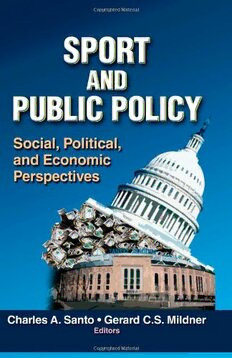
Table Of ContentSport
and
public policy
Social, Political,
and Economic Perspectives
Charles A. Santo, PhD
University of Memphis
Gerard C.S. Mildner, PhD
Portland State University
Human Kinetics
Library of Congress Cataloging-in-Publication Data
Sport and public policy : social, political, and economic perspectives / Charles A. Santo,
Gerard C.S. Mildner, editors.
p. cm.
Includes bibliographical references and index.
ISBN-13: 978-0-7360-5871-1 (hard cover)
ISBN-10: 0-7360-5871-0 (hard cover)
1. Sports--Economic aspects. 2. Sports--Social aspects. I. Santo, Charles Andrew
II. Mildner, Gerard C. S.
GV716.S584 2010
338.4'779604--dc22
2009039156
ISBN-10: 0-7360-5871-0 (print)
ISBN-13: 978-0-7360-5871-1 (print)
Copyright © 2010 by Charles A. Santo and Gerard C.S. Mildner
All rights reserved. Except for use in a review, the reproduction or utilization of this work in any form
or by any electronic, mechanical, or other means, now known or hereafter invented, including xerog-
raphy, photocopying, and recording, and in any information storage and retrieval system, is forbidden
without the written permission of the publisher.
The Web addresses cited in this text were current as of July 2009, unless otherwise noted.
Acquisitions Editor: Myles Schrag; Developmental Editor: Kathleen Bernard; Managing Editor:
Melissa J. Zavala; Assistant Editor: Casey A. Gentis; Copyeditor: Robert Replinger; Indexer:
Andrea Hepner; Permission Manager: Dalene Reeder; Graphic Designer: Bob Reuther; Graphic
Artist: Tara Welsch; Cover Designer: Keith Blomberg; Photographer (cover): © Human Kinet-
ics; Photographer (interior): © Human Kinetics, unless otherwise noted; Photo Asset Manager:
Laura Fitch; Photo Production Manager: Jason Allen; Art Manager: Kelly Hendren; Associate
Art Manager: Alan L. Wilborn; Illustrator: Alan L. Wilborn; Printer: Sheridan Books
Printed in the United States of America 10 9 8 7 6 5 4 3 2 1
The paper in this book is certified under a sustainable forestry program.
Human Kinetics
Web site: www.HumanKinetics.com
United States: Human Kinetics Australia: Human Kinetics
P.O. Box 5076 57A Price Avenue
Champaign, IL 61825-5076 Lower Mitcham, South Australia 5062
800-747-4457 08 8372 0999
e-mail: [email protected] e-mail: [email protected]
Canada: Human Kinetics New Zealand: Human Kinetics
475 Devonshire Road Unit 100 P.O. Box 80
Windsor, ON N8Y 2L5 Torrens Park, South Australia 5062
800-465-7301 (in Canada only) 0800 222 062
e-mail: [email protected] e-mail: [email protected]
Europe: Human Kinetics
107 Bradford Road
Stanningley
Leeds LS28 6AT, United Kingdom
+44 (0) 113 255 5665
e-mail: [email protected] E3430
Contents
Contributors vii Preface ix
PArt I Structure of Professional Sports 1
CHapter 1 Cooperation amidst Competition . . . . . . . . . . . . . . . . . . . . . . . . .3
The Nature of Sport Leagues
Nathaniel Sampson and Gerard C.S. Mildner
Why League Cooperation Is necessary . . . . . . . . . . . . . . . . . . . . . . . . . . . . . . . . . . 4
downside of Cooperation . . . . . . . . . . . . . . . . . . . . . . . . . . . . . . . . . . . . . . . . . . . . . 6
Organized Baseball: Evolution of a Cartel . . . . . . . . . . . . . . . . . . . . . . . . . . . . . . . . . 8
antitrust Law Interpretations and Baseball . . . . . . . . . . . . . . . . . . . . . . . . . . . . . . . 10
antitrust and Other Leagues: are all Sports Equal? . . . . . . . . . . . . . . . . . . . . . . . . 14
Effect of Public Policy on the Balance of Power . . . . . . . . . . . . . . . . . . . . . . . . . . . 18
Future Trends . . . . . . . . . . . . . . . . . . . . . . . . . . . . . . . . . . . . . . . . . . . . . . . . . . . . . 20
Conclusion . . . . . . . . . . . . . . . . . . . . . . . . . . . . . . . . . . . . . . . . . . . . . . . . . . . . . . . 21
CHapter 2 Beyond the Major Leagues . . . . . . . . . . . . . . . . . . . . . . . . . . . .23
Lessons from the Organization of International Sports
Gerard C.S. Mildner
Organization of Soccer, the World Sport . . . . . . . . . . . . . . . . . . . . . . . . . . . . . . . . 24
Women’s Soccer: The Trial of a Single-Entity League . . . . . . . . . . . . . . . . . . . . . . . 26
Rugby: The Contest over Professionalism, nations, and Clubs . . . . . . . . . . . . . . . 27
Cricket: The Broadcasters’ Leagues . . . . . . . . . . . . . . . . . . . . . . . . . . . . . . . . . . . . 28
Lessons for american Sports . . . . . . . . . . . . . . . . . . . . . . . . . . . . . . . . . . . . . . . . . 29
Future Trends . . . . . . . . . . . . . . . . . . . . . . . . . . . . . . . . . . . . . . . . . . . . . . . . . . . . . 30
Conclusion . . . . . . . . . . . . . . . . . . . . . . . . . . . . . . . . . . . . . . . . . . . . . . . . . . . . . . . 31
CHapter 3 Why professional athletes Make So Much Money . . . . . . . . . . . .33
Zenon X. Zygmont
The nHL’s Missing Season . . . . . . . . . . . . . . . . . . . . . . . . . . . . . . . . . . . . . . . . . . . 34
Wage determination in Professional Sports . . . . . . . . . . . . . . . . . . . . . . . . . . . . . . 35
Free agency . . . . . . . . . . . . . . . . . . . . . . . . . . . . . . . . . . . . . . . . . . . . . . . . . . . . . . 39
Player Productivity . . . . . . . . . . . . . . . . . . . . . . . . . . . . . . . . . . . . . . . . . . . . . . . . . 41
Is It Possible to Pay Too Much? . . . . . . . . . . . . . . . . . . . . . . . . . . . . . . . . . . . . . . . 44
Future Trends . . . . . . . . . . . . . . . . . . . . . . . . . . . . . . . . . . . . . . . . . . . . . . . . . . . . . 45
Conclusion . . . . . . . . . . . . . . . . . . . . . . . . . . . . . . . . . . . . . . . . . . . . . . . . . . . . . . . 46
PArt II Professional Sports, Cities, and Public Finance 47
CHapter 4 economic Impact of Sport Stadiums, teams, and events . . . . . . . .49
Charles A. Santo
Public Cost of Big-Time Sports . . . . . . . . . . . . . . . . . . . . . . . . . . . . . . . . . . . . . . . 49
Economic Magnitude of Sport in Perspective . . . . . . . . . . . . . . . . . . . . . . . . . . . . . 50
iii
iv Contents
Promoting Sport Investment Through Economic Impact analysis . . . . . . . . . . . . . 53
Sources of Exaggeration in Economic Impact analysis . . . . . . . . . . . . . . . . . . . . . 57
Ex Post Facto Empirical Evaluations . . . . . . . . . . . . . . . . . . . . . . . . . . . . . . . . . . . . 60
Policy Implications of Relying on Predicted Economic Impacts . . . . . . . . . . . . . . . 63
Conclusion . . . . . . . . . . . . . . . . . . . . . . . . . . . . . . . . . . . . . . . . . . . . . . . . . . . . . . . 64
CHapter 5 Cities, Stadiums, and Subsidies . . . . . . . . . . . . . . . . . . . . . . . .65
Why Cities Spend So Much on Sports
Charles A. Santo
Evolution of Major-League Sport Facility development . . . . . . . . . . . . . . . . . . . . . 66
Political Economy of Sport Facility development . . . . . . . . . . . . . . . . . . . . . . . . . . 83
Importance of Consumption Benefits . . . . . . . . . . . . . . . . . . . . . . . . . . . . . . . . . . . 87
Future Trends . . . . . . . . . . . . . . . . . . . . . . . . . . . . . . . . . . . . . . . . . . . . . . . . . . . . . 94
Conclusion . . . . . . . . . . . . . . . . . . . . . . . . . . . . . . . . . . . . . . . . . . . . . . . . . . . . . . . 95
CHapter 6 Community Ownership of professional Sport teams
and the role of Social entrepreneurship . . . . . . . . . . . . . . . . . . .97
Dorothy Norris-Tirrell and Susan Tomlinson Schmidt
Identifying Community Ownership alternatives . . . . . . . . . . . . . . . . . . . . . . . . . . . 98
Using the nonprofit–Charitable Purpose Structure:
The Memphis Redbirds Baseball Foundation . . . . . . . . . . . . . . . . . . . . . . . . . 102
Lessons from the Redbirds Foundation . . . . . . . . . . . . . . . . . . . . . . . . . . . . . . . . 105
Future Trends . . . . . . . . . . . . . . . . . . . . . . . . . . . . . . . . . . . . . . . . . . . . . . . . . . . . 110
Conclusion . . . . . . . . . . . . . . . . . . . . . . . . . . . . . . . . . . . . . . . . . . . . . . . . . . . . . . 111
PArt III Amateur Athletics, Participation, and Public Health 113
CHapter 7 Influences of Urban Form on physical activity . . . . . . . . . . . . . . 115
Jennifer Dill and Lynn Weigand
Importance and decline of Physical activity in the United States . . . . . . . . . . . . . 116
How Urban Growth Has Made Us Less active . . . . . . . . . . . . . . . . . . . . . . . . . . . 118
Public Policies to Increase Physical activity . . . . . . . . . . . . . . . . . . . . . . . . . . . . . 120
do These Strategies Work? . . . . . . . . . . . . . . . . . . . . . . . . . . . . . . . . . . . . . . . . . 128
Future Trends . . . . . . . . . . . . . . . . . . . . . . . . . . . . . . . . . . . . . . . . . . . . . . . . . . . . 130
Conclusion . . . . . . . . . . . . . . . . . . . . . . . . . . . . . . . . . . . . . . . . . . . . . . . . . . . . . . 131
CHapter 8 MLB’s Mixed Messages . . . . . . . . . . . . . . . . . . . . . . . . . . . . . 133
African American Participation in Baseball
David C. Ogden
Myth and Semiotics . . . . . . . . . . . . . . . . . . . . . . . . . . . . . . . . . . . . . . . . . . . . . . . 136
analyzing MLB’s Messages . . . . . . . . . . . . . . . . . . . . . . . . . . . . . . . . . . . . . . . . . 137
Moving From Political Speech to Myth . . . . . . . . . . . . . . . . . . . . . . . . . . . . . . . . . 139
Challenging Myth . . . . . . . . . . . . . . . . . . . . . . . . . . . . . . . . . . . . . . . . . . . . . . . . . 141
Policy Implications for Myth Making . . . . . . . . . . . . . . . . . . . . . . . . . . . . . . . . . . 142
Future Trends . . . . . . . . . . . . . . . . . . . . . . . . . . . . . . . . . . . . . . . . . . . . . . . . . . . . 144
Conclusion . . . . . . . . . . . . . . . . . . . . . . . . . . . . . . . . . . . . . . . . . . . . . . . . . . . . . . 145
CHapter 9 Contradictions and Conflict . . . . . . . . . . . . . . . . . . . . . . . . . . . 147
Ethical Dilemmas Inherent in Big-Time College Sports
Richard M. Southall, Mark S. Nagel, John Amis, and Crystal Southall
College Sports Today . . . . . . . . . . . . . . . . . . . . . . . . . . . . . . . . . . . . . . . . . . . . . . 149
Contents v
national Collegiate athletic association (nCaa) . . . . . . . . . . . . . . . . . . . . . . . . . . 151
Corporatization in College Sports . . . . . . . . . . . . . . . . . . . . . . . . . . . . . . . . . . . . . 152
Institutional Logics . . . . . . . . . . . . . . . . . . . . . . . . . . . . . . . . . . . . . . . . . . . . . . . . 153
Case Study: 2006 nCaa Men’s Basketball Tournament Broadcasts . . . . . . . . . . . 154
Future Trends . . . . . . . . . . . . . . . . . . . . . . . . . . . . . . . . . . . . . . . . . . . . . . . . . . . . 161
Conclusion . . . . . . . . . . . . . . . . . . . . . . . . . . . . . . . . . . . . . . . . . . . . . . . . . . . . . . 163
CHapter 10 Sport, Doping, and public policy . . . . . . . . . . . . . . . . . . . . . . . 165
Bryan E. Denham
Mediated doping Representations and the Formation of Public Policy . . . . . . . . 167
Sporting Competition and the Formation of Regulatory Bodies . . . . . . . . . . . . . . 171
Media Representations, Government Hearings,
and Public Policy in the 21st Century . . . . . . . . . . . . . . . . . . . . . . . . . . . . . . . 173
Future Trends . . . . . . . . . . . . . . . . . . . . . . . . . . . . . . . . . . . . . . . . . . . . . . . . . . . . 180
Conclusion . . . . . . . . . . . . . . . . . . . . . . . . . . . . . . . . . . . . . . . . . . . . . . . . . . . . . . 180
PArt IV Sport and Globalization 183
CHapter 11 political economy of the Olympic Games . . . . . . . . . . . . . . . . . 185
Greg Andranovich, Matthew J. Burbank, and Charles H. Heying
Globalization, the new Economy, and Political Economy . . . . . . . . . . . . . . . . . . . 185
Political Economy and the Olympic Games . . . . . . . . . . . . . . . . . . . . . . . . . . . . . 187
Los angeles: The Market Matters Most . . . . . . . . . . . . . . . . . . . . . . . . . . . . . . . . 189
atlanta: The State Matters Most . . . . . . . . . . . . . . . . . . . . . . . . . . . . . . . . . . . . . . 192
Mexico City: Civil Society Matters Most . . . . . . . . . . . . . . . . . . . . . . . . . . . . . . . . 194
Future Trends . . . . . . . . . . . . . . . . . . . . . . . . . . . . . . . . . . . . . . . . . . . . . . . . . . . . 195
Conclusion . . . . . . . . . . . . . . . . . . . . . . . . . . . . . . . . . . . . . . . . . . . . . . . . . . . . . . 198
CHapter 12 american Baseball and the Global Labor Market . . . . . . . . . . . . 201
Resistance and Hegemony in the Caribbean
Charles A. Santo
Globalization of american Professional Baseball . . . . . . . . . . . . . . . . . . . . . . . . . 202
Shared History and Parallel development of Caribbean Baseball . . . . . . . . . . . . . 203
dominican dependency, Underdevelopment, and Exploitation . . . . . . . . . . . . . . . 204
Cuban nationalism and Resistance . . . . . . . . . . . . . . . . . . . . . . . . . . . . . . . . . . . 206
Movement along the Spectrum . . . . . . . . . . . . . . . . . . . . . . . . . . . . . . . . . . . . . . 208
Future Trends . . . . . . . . . . . . . . . . . . . . . . . . . . . . . . . . . . . . . . . . . . . . . . . . . . . . 211
Conclusion . . . . . . . . . . . . . . . . . . . . . . . . . . . . . . . . . . . . . . . . . . . . . . . . . . . . . . 213
CHapter 13 expanding Global Consumer Market for american Sports . . . . . . 215
The World Baseball Classic
Mark S. Nagel, Matt T. Brown, Dan A. Rascher, and Chad D. McEvoy
Baseball’s Worldwide development . . . . . . . . . . . . . . . . . . . . . . . . . . . . . . . . . . . 216
Consumption of MLB in the United States . . . . . . . . . . . . . . . . . . . . . . . . . . . . . . 217
Creation of the World Baseball Classic . . . . . . . . . . . . . . . . . . . . . . . . . . . . . . . . . 218
World Baseball Classic Revenue Sources . . . . . . . . . . . . . . . . . . . . . . . . . . . . . . . 223
Future Trends . . . . . . . . . . . . . . . . . . . . . . . . . . . . . . . . . . . . . . . . . . . . . . . . . . . . 228
Conclusion . . . . . . . . . . . . . . . . . . . . . . . . . . . . . . . . . . . . . . . . . . . . . . . . . . . . . . 229
References 231 Index 257 About the Editors 267
Contributors
John Amis Dorothy Norris-Tirrell
University of Memphis University of Memphis
Greg Andranovich David C. Ogden
California State University University of Nebraska, Omaha
Matt T. Brown Dan A. Rascher
University of South Carolina University of San Francisco
Matthew J. Burbank Nathaniel Sampson
University of Utah Portland State University
Bryan E. Denham Charles A. Santo
Clemson University University of Memphis
Jennifer Dill Susan Tomlinson Schmidt
Portland State University University of Memphis
Charles H. Heying Crystal Southall
Portland State University University of Northern Colorado
Chad D. McEvoy Richard M. Southall
Illinois State University University of North Carolina
Gerard C.S. Mildner Lynn Weigand
Portland State University Portland State University
Mark S. Nagel Zenon X. Zygmont
University of South Carolina Western Oregon University
vii
Preface
In the summer of 2005 Americans found themselves wrapped up an unlikely
passion. An international bicycling road race was drawing 1.6 million viewers
a day to the otherwise unknown Outdoor Living Network and receiving coverage
in media outlets ranging from Time magazine to the Daily Show With Jon Stewart.
Rapt attention to sport contests is not unusual in the United States, but cycling
is far from a national pastime. But there were good reasons for the buzz. Texan
Lance Armstrong was vying for his seventh straight victory in cycling’s premier
event, the Tour de France. Sport fans, whether cycling enthusiasts or not, were
captivated by the drama of the moment: a single man attempting to overcome
188 competitors over a period of 23 days and more than 2,000 miles (3,200 km)
for the seventh time in a row. But at the time Lance Armstrong was more than
an athlete, and the realm of interest in his story spread far beyond sport fans.
Armstrong was an inspirational figure of mythic proportions and a human
interest story, having overcome a grueling battle with cancer in 1996 just a few
years before his first Tour win in 1999. He was also a charity giant. The Lance
Armstrong Foundation had raised millions of dollars to support people affected
by cancer, most notably through the sale of yellow silicone bracelets embossed
with the word LIVESTRONG, which had become ubiquitous from high school
hallways to the halls of the highest chambers of government.
The feel-good story of Lance Armstrong was tinged, however, by controversy
and ethical conflict, fueled by doping allegations levied against the American rider.
Alongside athletes from more prominent sports, like all-time home run leader Barry
Bonds, Armstrong had become a lead character in a growing and troubling public
discourse on performance-enhancing drugs in professional sports. The source of
the main accusations against Armstrong, French journalists, led some to discredit
the reports as deceit motivated by jealousy, and discussion ensued about the role
of the media in framing the issue. The controversy also came to symbolize an
undercurrent of tension between French and American culture that was, in part,
wrapped up in conflicting national policies toward military action in Iraq.
Back in the States, a separate (and much smaller) controversy brewed over the
United States Postal Service’s sponsorship of Armstrong’s racing team. The fed-
eral agency incurred over $40 million in expenses to serve as the team’s primary
sponsor from 1996 through 2004. During the same period the price of a first-class
stamp increased four times, from $0.32 to $0.37.
Whether hero or villain, cheater or testament to hard work (or maybe freak of
nature), in 2005 Lance Armstrong was a lightning rod—a
sport figure who drew attention from a disparate and
diverse audience for a wide variety of reasons. His story
is an example of the vast and varied ways in which sport
organizations, events, and figures become intertwined
with our lives.
ix
x Preface
These connections between sport and life are sometimes obvious, especially for
athletes or sport fans, but are often subtle or unexpected. Beyond the drama of
Armstrong’s athletic quest—indeed, contributing to the theater of the event—were
story lines that connected sport to culture and social causes. They involved legal
challenges, anchored public debate about ethics and drug use, called into question
the use of taxpayer money, and underscored tension in international relations.
As the chapters of this book will illustrate, these less obvious effects of sport
often relate to public policy decisions or have important social, economic, or
political implications. Let us explore where some of these policy linkages and
implications occur.
◾ Congress and the courts. Such relationships are perhaps most apparent
when sport issues appear on the agenda of our nation’s highest courts or legislative
bodies. Recent examples include the congressional probe into steroid use in Major
League Baseball and former Ohio State running back Maurice Clarett’s challenge
of National Football League draft rules as illegal restraint of trade.
◾ Local public finance. In recent decades, high-level sports have also had clear
public finance implications as cities have competed with one another to host sport
teams or events, offering sport facility subsidies as bargaining chips. Stadiums and
arenas have also become common elements of downtown revitalization efforts.
◾ Urban development and public health. The implications of local policy
decisions extend beyond the world of spectator sports. Public health issues reflect
our ability to be active where we live and are linked to development policies and
public investment decisions that hinder or encourage healthy lifestyles. Public
officials make decisions that determine whether neighborhoods will be walkable,
whether road networks will accommodate cyclists, and whether community
residents will have access to parks and recreation facilities. Community sport
programs can provide a vehicle for hands-on attempts at social change, such as
the First-Tee program, which focuses on teaching life skills and values while
exposing disadvantaged kids to the sport of golf.
◾ Political and social messages. Sport often hosts transformative social or
political messages. Consider the statement made by Jesse Owens’ symbolic Olym-
pic triumph amidst the hostile propaganda of Hitler’s Berlin in 1936, Tommie
Smith’s black power salute at the 1968 Games, or Billie Jean King’s victory over
former Wimbledon champ Bobby Riggs in the “Battle of the Sexes” tennis match
in 1973. Reflect on the subtle war protest of a handful of Major League Baseball
players who sit in the dugout while others stand during the singing of “Star-
Spangled Banner” to the perceived role of baseball in the nation’s recovery from
September 11, 2001.
◾ Globalization and international diplomacy. Sport can also reflect the
state of international diplomacy, beyond the Pollyanna symbolism of the Olympic
Games, and represent the changing impacts of globalization. Advances in com-
munications technology have made it easy to find international sporting events
on American television. Meanwhile, American sport leagues have developed a
clear and explicit business agenda of global expansion by staging exhibitions,
broadcasting events, and scouting for talent across the world. The factors behind
this agenda are similar to those that have driven the global expansion of many