Table Of ContentBlended Learning at the Boundary: Designing a New Internship
Blended Learning at the Boundary:
Designing a New Internship
Robert Heckman, Carsten S. Østerlund, Jeffrey Saltz
School of Information Studies, Syracuse University
Abstract
This paper explores how blended learning can enhance learning at the boundary between academia and
industry, and make possible the design of a new kind of internship. Boundary theory proposes that socio-
cultural discontinuities between different environments create opportunities for learning. Blended
learning pedagogy makes it possible to make the boundary between the classroom and the work place
more salient and continuous. We present principles for designing internships that leverage blended
learning to exploit boundaries, and describe an internship program based on these principles. Finally, we
reflect on what we have learned through two years experience offering the program to students and
employers.
Introduction
The idea that work can provide a suitable context for learning is deeply rooted in experiential
learning theory. Among others, Dewey (1986) and Kolb and Kolb (2005) have systematically explored a
philosophy of experience and the impact of experience on lasting, meaningful learning. One of the best-
known manifestations of experiential learning, the traditional college-student internship, has a number of
widely acknowledged benefits. It typically leads to improved employability and a higher salary after
graduation (Callanan & Benzing, 2004; Gault, Leach, & Duey, 2010; Gault, Redington, & Schlager,
2000), higher career satisfaction and faster promotion rates (D'Abate, 2010), and improvement in domain
specific knowledge (O'Connor MDa, Mahvi MD, Foley MD FACSa, Lund MD, & McDonald PhDa,
2010; Ogrinc et al., 2007; Pedro, 1984). Internships also build important non-cognitive skills such as time
management, self-discipline, communication, information literacy, listening skills, and collaboration
skills (Falconer & Pettigrew, 2002; Moser & Elbert, 2007; Zucchermaglio & Alby, 2009).
111
Blended Learning at the Boundary: Designing a New Internship
Despite these benefits, this paper questions whether the traditional internship fully leverages the
educational technologies and the evolving modern workplace that are available today. Two issues stand
out: first, abundant open educational resources generate rich opportunities for individualized,
contextualized, blended learning that was not previously available. Second, many of today's workplaces
operate globally and on a scale that was previously unimaginable. These extended enterprises often cross
traditional organizational boundaries to include customers, suppliers, and contractors. This flexing of
typical chains of interaction result in boundaries that are fluid and constantly changing, and which require
continual recalibration on the part of the employees (including interns) who must span them. The
increasing need for adaptability in the work place may be straining the traditional internship model, which
relies on clear-cut hierarchies and predetermined responsibilities. Indeed, as information technology
disrupts the higher education ecosystem and extends today’s workplaces, the work-based learning
literature hints that the traditional internship model may no longer be the best interface between these two
environments.
For example, Eraut (2004) calls for a new type of internship—one that is carefully designed to
refine the oversimplified concept of “knowledge transfer” with an integration of knowledge that embraces
both workplace and academy. In “Transfer of knowledge between education and the workplace,” Eraut
agrees learning in new situations happens through “knowledge transfer,” or “the learning process
involved when a person learns to use previously acquired knowledge/skills/competence/expertise in a new
situation” (2004, p. 58). However, he adds two new dimensions to that process: learners must not only
recognize what previously acquired knowledge and skills are needed, they must also have the ability to
transform them and integrate them in order to successfully navigate the new situation (Eraut, 2004).
Based on this process, he concludes learning in both education settings and workplace settings is essential
because the learner acquires different types of knowledge in each. Bridging these two types of knowledge
and bringing them together “requires both time and support,” which our blended learning internship
model provides (Eraut, 2004, p. 72).
Akkerman and Bakker (2011) describe the difference between “transfer” and “boundary” models
in a related critique of the traditional internship model. Boundary theory proposes that there are socio-
cultural discontinuities between different environments which, when crossed (or spanned, or blurred),
require individuals to reformulate their thinking (Akkerman & Bakker, 2011), creating opportunities for
learning to occur. Hence, instead of considering the boundary between academia and industry that Eraut
identified as posing a knowledge transfer problem, we approach it as a unique opportunity for enriched,
situated learning. We propose that beneficial boundary effects can be substantially enhanced during an
internship by leveraging a blended learning model and the technological tools that support it.
Student interns are typically required to cross the boundary between work and school, but too
often such crossings are infrequent, brief, and unsupervised. The skills required to succeed in the two
environments often remain compartmentalized as a student shifts from ‘work mode’ to ‘school mode.’ A
blended learning pedagogy can address these shortcomings and can make the boundary between the
classroom and the work place more salient to students. Over time, the conceptualization of blended
learning has evolved from a framework for integrating online lesson delivery into traditional classrooms,
to a more nuanced view that mixes different learning environments to create an integrated, individualized
educational experience (R. Garrison & Kanuka, 2004a). From this perspective, an internship provides the
perfect opportunity for blended learning to occur; during an internship, students are presented with
numerous opportunities to learn in various settings, with support from the academy. Yet surprisingly,
there has been little work exploring blended learning within an internship context.
Therefore, this paper addresses a specific question: How should we use blended pedagogy to
design an internship that fully exploits the learning potential of boundaries? Eraut (2004) points out that
112
Blended Learning at the Boundary: Designing a New Internship
in order to maximize the learning potential of any boundary, there is a critical need for careful design,
facilitation, and reflection. Thus we will explore specific principles for designing and executing an
internship program that uses blended learning techniques to facilitate reflection across the boundary
between the workplace and the academy. In the following section, we present a review of relevant
previous research that has guided this work. Next, we describe an immersive-boundary internship model
and the blended learning design principles derived from the model. We then present a case study of an
actual internship program that was designed and executed based on these principles We conclude by
describing how we evaluated this program, and finally, reflect on what we have learned to date from
offering it.
Background
Two streams of literature have influenced our thinking about optimizing the learning
opportunities provided by the academy-workplace boundary: (1) boundary theory and learning, and (2)
blended learning.
Learning Opportunities Created by Boundaries
While the benefits of work-based learning have been identified, there has been less attention paid
to the mechanisms by which these positive outcomes are realized. There is a broad educational
assumption (little explored) that knowledge transfer takes place automatically as students move from the
formal educational environment to the work setting (Eraut, 2004). The pedagogical strategies in many
work-based learning (WBL) programs are consistent with learning theories that assume this kind of
knowledge transfer. Transfer is promoted by emphasizing similarities between school and work
environments, and such similarities are often expressed in the form of abstract principles. In this way,
educators hope to bridge the many differences between university and workplace through abstract models
that can be widely applied to many different contexts (Eraut, 2004).
Säljö (2003) has suggested that the concept of transfer of knowledge has endured in educational
theory because it is a metaphor that generalizes easily across many disciplines. He argues that the concept
of transfer is a detour that does little to contribute to the understanding of learning (Säljö, 2003). To
address these limitations we turn to a learning theory that moves beyond the notion of knowledge transfer
across boundaries, and instead focuses on the learning potential created by the boundaries themselves.
Scholars have observed that boundaries carry learning potential, and that boundary crossing and
boundary spanning are activities that are conducive to the construction of new knowledge. This idea has
been derived from a rapidly growing literature on knowledge sharing across boundaries in organizational
and community contexts (Carlile, 2002; Levina & Vaast, 2005; Orlikowski, 2002; Østerlund, 1997;
Østerlund & Carlile, 2005; Star & Griesemer, 1989; Wenger, 1998). Some of this research has attended to
the ways in which individual learning involves boundaries. Specifically, the theory of situated learning in
communities of practice (Wenger, 1998) introduced the notion of legitimate peripheral participation
where a novice learns by crossing several boundaries, first from outside the community to the periphery,
and then successive crossings approaching the core. Akkerman and Bakker define a boundary as a
"sociocultural difference leading to discontinuity in action or interaction" (2011, p. 133). Such
discontinuities create fertile ground for learning because existing knowledge and familiar response
patterns may prove ineffective in the new context. Boundaries also connote commonality “in the sense
that within discontinuity two or more sites are relevant to one another in a particular way" (Akkerman &
Bakker, 2011, p. 133). The simultaneous coexistence of difference and similarity allows for the creation
of useful artifacts that carry meaning in two sites on either side of a boundary and can be shared between
them – boundary objects – and, as we will see below, these play a pivotal role in learning.
113
Blended Learning at the Boundary: Designing a New Internship
Researchers have begun to explore how industry-academia discontinuities can be leveraged to
facilitate professional growth. Harreveld and Singh (2009) identified the importance of contextualization
of learning when spanning the boundary between work and school. Smeby and Vågan (2008) focused on
differences between the classroom education of nurses and physicians and the knowledge required on the
job, and explored the idea that these gaps promoted constructive learning opportunities. But as Eraut
(2004) notes, the intentional facilitation of boundary spanning between school and work has largely been
absent, and for that reason, the full learning potential of boundary-spanning remains unrealized. A
blended learning pedagogy can provide the ideal foundation for designing internships that maximize the
learning potential of the academic-industry boundary.
Blended Learning
Graham et al. (2014) have pointed out that while interest in blended learning is high, efforts are
just beginning to apply and integrate models and theories to the blended learning domain (Drysdale et al.,
2013; Graham, 2013; Halverson et al., 2012). Early waves of blended learning research explored best
practices for designing web-based interactions (Bersin, 2004; Stacey & Gerbic, 2009; Tsai, Shen, & Tsai,
2011), incorporating web learning management systems into traditional curricula (Keengwe & Kang,
2011; Tamim, Bernard, Borokhovski, Abrami, & Schmid, 2011), and discovering the role that
technology-based learning plays in facilitating different modes of cognition (R. Garrison & Kanuka,
2004b; Mayer & Moreno, 2003; Tamim et al., 2011). Research often focused on the time and place in
which content delivery and interaction occurred, and this approach still has utility in a number of settings
(e.g. Staker and Horn (2012) in their classification of K-12 blended learning models). Blended learning
frameworks were often plotted on a two by two grid and anchored by the dimensions of time and place,
describing interaction modes as either same time or different time, and either same place or different
place. (See Figure 1.) But such a focus on delivery mode could sometimes run the risk of being
instructor-centered or content-centered, rather than student-centered.
Figure 1. A “Delivery Mode” Framework for Blended Learning
114
Blended Learning at the Boundary: Designing a New Internship
More recently, researchers have been less interested in how to use technology to manage delivery
modes, and more interested in how a blended learning experience works from a student’s perspective—a
student-centered model of blended learning. In a student-centered blended learning framework, designers
create opportunities for a self-directed student to construct an individualized learning environment that
draws on a rich array of learning resources and assets. The delivery mode framework provides a
foundation for exploring the possibilities afforded by new technologies, but the newer conceptualization
enriches that model by viewing the student experience as a multi-modal opportunity for learning. This
conceptualization of a blend is more holistic, focusing on the variety of experience available to the learner
afforded by multiple channels of interaction. This shift was championed by authors like R. Garrison and
Kanuka (2004a), and Oliver and Trigwell (2005), who argued that the definition of blended learning must
be rooted in the experience of the student, rather than the content and technology design decisions made
by the teacher. Picciano’s (2009) multimodal, “Blending with Purpose” model recognizes that learners
represent different personality types and learning styles, and thus advises instructional designers to use
multiple approaches that meet the needs of a wide spectrum of students. The shift also leverages the social
landscape resulting from the so-called Web 2.0 technologies (D. Randy Garrison & Vaughan, 2007), and
expands even further the possibilities for rich interactions in web-based learning environments (R.
Garrison & Kanuka, 2004a).
The student-centered model recognizes that there is potential value in all available learning assets,
even informal and serendipitous interactions. From this perspective, the ‘blend’ is more complex than just
online or in person. The rich variety of mediated experiences provided by today’s open educational
resources, combined with the face-to-face interactions, both formal and informal, provide a range of
opportunities to reinforce theoretical knowledge and practical application, as well as evaluation,
facilitation and support (Rossett & Frazee, 2006). As R. Garrison and Kanuka (2004a) argued, the best
use of blended learning effectively integrates all student experiences to achieve instructional goals, rather
than supplementing old models of instruction with new technologies.
Figure 2. A Student Centered Model of Blended Learning in the Workplace
115
Blended Learning at the Boundary: Designing a New Internship
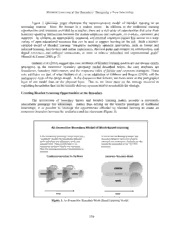
Figure 2 (previous page) illustrates the student-centered model of blended learning in an
internship context. Here, the learner is a student intern. In addition to the traditional learning
opportunities and resources provided by a teacher, there are a rich array of opportunities that arise from
boundary-spanning interactions between the student-employee and managers, co-workers, customers and
suppliers. In addition, an appropriately mentored, self-directed employee-learner has access to a wide
variety of open educational resources that can be used to support learning on the job. Such a learner-
centered model of blended learning “integrates seemingly opposite approaches, such as formal and
informal learning, face-to-face and online experiences, directed paths and reliance on self-direction, and
digital references and collegial connections, in order to achieve individual and organizational goals”
(Rossett & Frazee, 2006, p. 2)
Graham et.al (2014) suggest that core attributes of blended learning models are not always clearly
articulated. In the immersive boundary internship model described below, the core attributes are
boundaries; boundary interventions; and the respective roles of faculty and corporate managers. These
core attributes are part of what Graham et al., in an adaptation of Gibbons and Rogers (2009), call the
pedagogical layer of the design model. In the discussion that follows, we focus more on the pedagogical
layer of our model than on the physical layer. That is, we focus more on the strategy involved in
exploiting boundaries than on the specific delivery systems used to accomplish the strategy.
Creating Blended Learning Opportunities at the Boundary
The intersection of boundary theory and blended learning makes possible a previously
unavailable pedagogy for internships. Rather than relying on the transfer paradigm of traditional
internships, it is possible to leverage the opportunities afforded by blended learning to create an
immersive boundary between the workplace and the classroom (Figure 3).
Figure 3. An Immersive Boundary Work-Based Learning Model
116
Blended Learning at the Boundary: Designing a New Internship
We have designed and implemented an internship program based on this principle, the Boundary
Learning Internship (BLI) program at a mid-sized private university in the northeastern United States.
The program allows students to take courses while simultaneously working full-time in a large global
enterprise. The internship experience is comprised of a carefully selected internship position and a set of
related courses that are delivered through blended learning pedagogy. The program’s blended learning
approach uses a range of techniques including interaction with instructors, fellow students, managers and
senior organizational mentors. These interactions occur asynchronously online and synchronously in
workplaces, face-to-face residencies, teleconferences, and through telepresence meetings. Course
instructors are aware of and involved in the students’ work, and they incorporate student experiences at
work into the subject matter of their academic courses. The courses are specifically structured to integrate
academic content with the real-world challenges the students face in their internship. This approach is
illustrated in Figure 3 which demonstrates graphically how blended learning strategies make the
boundary-spanning experience continuous during internships, allowing students to be immersed in the
boundary.
We have used this program over the past two years (2011 and 2012) as a concrete test case to
experiment with the immersive boundary approach. The rest of this section describes the program, and
presents design principles based on immersive boundary and blended learning concepts suggested in the
literature review.
The Program
The BLI Program is open to students from any university, and enables a broad range of internship
companies to hire BLI students. Over the past several years, students have participated from eight
schools, including large public and private universities as well as several small colleges. Companies that
provided internship positions included large, global corporations in the financial services, technology, and
consulting sectors.
Students applied to the program in the Fall semester of their junior year. The program was open
to students from any major, but most students were from information technology programs (e.g. computer
science, information systems, information management, etc.). After a rigorous selection process,
successful candidates were awarded an eight-month, full-time position within one of the companies. The
length of the internship provides a rich opportunity for learning, since students can work on longer term,
more complex projects. Participating companies find the extended time allows students to become more
productive and integrated into the company than they would be in a summer internship.
Students began the program with a synchronous intensive residency class designed to prepare
them for the months ahead at work. During the residency, students who would be working in the same
organization were placed into project teams. Almost all teams had members who would not be co-located
with other team members in their fulltime assignments. This configuration would require them to work
virtually on academic team projects throughout their internships. The face-to-face residency allowed such
teams an opportunity to bond before beginning their distributed work assignments.
After the residency, students dispersed to their employing organizations, where they continued
taking asynchronous online courses and worked with team members on their major course project. Each
student was assigned a senior industry mentor who collaborated with the workplace manager and faculty
team to provide guidance to the student. The course concluded with an Innovation Project, developing an
IT-enabled innovation proposal and a project plan to implement the proposal, which was presented to and
evaluated by senior managers and mentors in the host organization. The BLI Program included three
required courses plus 3-6 internship credits for a total of 12-15 semester credits, a full course load.
117
Blended Learning at the Boundary: Designing a New Internship
Three Design Principles and Their Application
Building on the concepts identified above, we identified three principles for a pedagogy that
would maximize the learning potential of boundaries in internships. In this section we present each design
concept, and describe its implementation in the BLI Program.
Make the boundary between work and school continuously salient. Suspend students in the
boundary between school and work for the duration of their internship experience. In order for this to
happen, the student must participate in work and school simultaneously. Blended learning strategies make
it possible for students to take courses while they are working. Such courses should be relevant to the
work assignment and be integrated with it.
In the BLI Program, students are accountable for their workplace deliverables and their course
requirements simultaneously. Thus, they never abandon their school or work frame of mind, but must
employ (and often combine) both to deliver the work they are responsible for. This creates a fertile
ground for learning because immersion in the boundary renders existing knowledge and familiar response
patterns ineffectual in the new, hybrid environment.
Introduce purposefully designed boundary interventions. Beyond suspending students in the
boundary between school and work, there should be designed interventions requiring students to span
boundaries. In other words, there should be a specific assignment to push students into boundary spanning
situations. This idea is expressed as the final Innovation Project for the BLI Program, which is a
technology innovation proposal for the employing organization. The project design and requirements are
made clear to managers, mentors, and senior executives as well as to the students. After several months of
simultaneous intern work and academic courses within a blended learning environment, the student teams
present their proposal to senior organizational leaders, and the project is evaluated by course instructors,
senior leaders, and their managers at work.
The project thus serves as an artifact that carries meaning and value in both corporate and
academic organizational contexts. The Innovation Project clearly leverages the distinct boundary between
work and school, but it also capitalizes on other boundaries within the work organization that carry
learning potential. The boundaries between mid-level and senior management, between functional areas
of business, and between managers and technical workers are all examples of boundaries that naturally
occur within a firm. Taking advantage of these boundaries requires deliberate program decisions that will
make these boundaries salient and useful in course work.
Involve teachers in students’ work; involve managers in students’ courses. Teachers and
workplace supervisors often have different frames of reference when assessing performance, and they
often complement each other in terms of knowledge that the other might not use on a regular basis.
Involving teachers in the students’ workplace and managers in the students’ courses can make the
industry-academia boundary more salient. For example, a student might be a member of a project team
that has just handed over an important deliverable, subsequently evaluated by a supervisor. A teacher
might assess the same work from a theoretical perspective, or ask students to reflect on the experience in
relationship to their course work. There is value in both perspectives, and by engaging in discussion with
the student, the salience of the boundary is maximized.
Because BLI Program teachers are aware of and involved with their students’ activities at work,
they can provide targeted opportunities for reflection, discussion and comparison of those activities.
Likewise, a manager’s assessment of a course assignment may often be different from a teacher’s, so we
have made an effort to ensure managers are involved in several aspects of students’ course work. First,
118
Blended Learning at the Boundary: Designing a New Internship
managers and instructors collaborate closely to create course material that is relevant to issues in the work
place. Second, managers and company leaders are an integral part of the evaluation of the final Innovation
Project.
Evaluating the Program
In this section we reflect on what we learned about the application of these principles as we
offered the BLI Program in 2011 and 2012. As described above, we used this program over the past two
years as a case study to explore the immersive boundary approach. The case study is an accepted method
for studying complex contemporary phenomena. Yin (2002) suggests that the case study is appropriate for
a study that asks a “how” question about a contemporary set of events, occurring in their natural setting,
where principles of experimental control are not desirable. In this study, we explored how three design
principles derived from the literature would perform in a natural internship setting.
To evaluate the program, we applied a multi-method approach appropriate to the case study, one
that used quantitative surveys, open ended surveys, and interviews. We first created an instrument to
assess perceptions of program learning outcomes by three sets of stakeholders. At the end of the 2011
and 2012 BLI Program we surveyed students, managers, and senior mentors from the program’s largest
employer on their perceptions of each student’s progress on the program’s eight primary learning
outcomes. Respondents were asked to evaluate (on a five point Likert-type scale) a student’s level of skill
on each learning outcome at the beginning of the program, and at the end of the program. They were also
asked open-ended questions about which aspects of the program were most valuable, and which needed
improvement. Thirty-five students were surveyed. Twenty-seven of their managers and sixteen of their
senior mentors responded. Table 1 shows substantial perceived improvement in all eight learning
outcomes as independently perceived by students, managers, and mentors. While all three groups
perceived substantial and statistically significant improvements from the start of the program, not
surprisingly, students thought they had improved more than did managers, and the senior mentors were
more critical than managers. While student self-reports of learning can be biased, we regard the
independent assessments of managers and senior mentors as better evidence of student progress.
Table 1 Perceived Student Improvement on Learning Outcomes During BLI
119
Blended Learning at the Boundary: Designing a New Internship
Faculty and staff who participated in the program met after each year’s BLI Program to review
survey results and reflect on program successes and areas for improvement. Below we present reflections
on the three design principles described above.
1. Make the boundary between work and school continuously salient. We found that continual
immersion in the industry-academic boundary had a number of positive effects. Student impressions
of the BLI Program were overwhelmingly positive, and open-ended comments from the 2011 and
2012 surveys show that they valued the experience. As can be seen from a typical selection of student
comments, they recognize and appreciate the integration of school and workplace:
I love the idea of taking classes during an extended internship. I can't imagine many internships
being better than this one.
I have learned more here than I ever will in the classroom.
It has been one of the most amazing experiences of my life to date. Our ability to network and
learn is far better than being trapped in a college classroom.
We found that spanning boundaries put students into difficult situations that are impossible to
simulate in the classroom. Immersion in the two worlds means the students need to understand both,
communicate in both, and integrate both into a coherent framework. Spanning boundaries accelerates
the student maturation process forcing students to synthesize what they are learning with how to
apply that knowledge (with faculty and mentor support).
Our industry partners observed an unexpected benefit: students not only created a bridge between
academia and industry work, they also made existing organizational boundaries more salient. Several
mentors commented that they often do not have the time to make connections across the business
units (within the company), but the students make the time (as part of their course assignments). So
interns span business-unit boundaries and have identified best practices that can be shared across the
firm. In another example, students in the BLI Program acted as a conceptual and relational bridge
between faculty and managers/mentors. Several quotes from industry managers and mentors illustrate
these ideas:
Great opportunity for both the business and the intern – we get innovative ideas and the intern has
the opportunity to learn about technology and the business we support.
The interns bring a fresh look at the way business is done, a new perspective.
What we learned: The continuous immersion in school and work was not without challenges. Some
students struggled to find the right balance between courses and internship work demands. When job
pressures mounted, students sometimes found it difficult to focus on school work. Some reflected that
this pressure was the stimulus for improving time management skills:
I had a large work load. It helped me learn how to balance many different projects going on at
once.
Others found it stressful and overwhelming. In the design of future BLI Programs, we have created a
more complementary rhythm between courses and work by offering students the opportunity to work
part-time when course demands are heaviest.
120