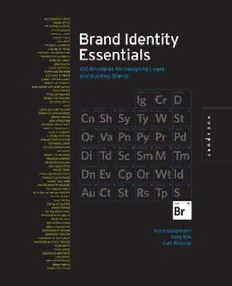
Table Of ContentBrand Identity
Essentials
100 Principles for Designing Logos
and Building Brands
Kevin Budelmann
Yang Kim
Curt Wozniak
Text JJoobb::0011889933 TTiittllee:: BBrraanndd IIddeennttiittyy EEsssseennttiiaallss ((RRoocckkppoorrtt))
000000001111----111100001111 00001111888899993333....iiiinnnndddddddd 1111 6666////1111////11110000 3333::::11113333::::33335555 PPPPMMMM
PPaaggee::11
Dedicated to BLT
Text JJoobb::0011889933 TTiittllee:: BBrraanndd IIddeennttiittyy EEsssseennttiiaallss ((RRoocckkppoorrtt))
000000001111----111100001111 00001111888899993333....iiiinnnndddddddd 3333 6666////1111////11110000 3333::::11113333::::33336666 PPPPMMMM
PPaaggee::33
CONTENTS
Introduction . . . . . . . . . . . . . . . . . . . . . . . . . . . . . . 6
IMAGERY TYPOGRAPHY PSYCHOLOGY
1. Illustrative Logos . . . . . . . . . . . . . . . . . . . . . . . 8 19. Monograms and Word Marks . . . . . . . . . . . 44 37. Marks and Meaning . . . . . . . . . . . . . . . . . . . 80
2. Visual Style . . . . . . . . . . . . . . . . . . . . . . . . . . . . 10 20. Type Choices . . . . . . . . . . . . . . . . . . . . . . . . . 46 38. Program Context . . . . . . . . . . . . . . . . . . . . . . 82
3. An Aesthetic Niche . . . . . . . . . . . . . . . . . . . . . 12 21. Type and Meaning . . . . . . . . . . . . . . . . . . . . . 48 39. Brand Psychology . . . . . . . . . . . . . . . . . . . . . 84
COLOR WRITING PROCESS
4. Color Choices . . . . . . . . . . . . . . . . . . . . . . . . . . 14 22. Names and Taglines . . . . . . . . . . . . . . . . . . . 50 40. Idea Generation . . . . . . . . . . . . . . . . . . . . . . 86
5. Applied Color . . . . . . . . . . . . . . . . . . . . . . . . . . 16 23. Editorial Style . . . . . . . . . . . . . . . . . . . . . . . . . 52 41. Prototyping . . . . . . . . . . . . . . . . . . . . . . . . . . . 88
6. Color Power . . . . . . . . . . . . . . . . . . . . . . . . . . . . 18 24. Voice . . . . . . . . . . . . . . . . . . . . . . . . . . . . . . . . . 54 42. Strategic Foundations . . . . . . . . . . . . . . . . . 90
DIMENSION STORY PRODUCTION
7. 3-D Logos . . . . . . . . . . . . . . . . . . . . . . . . . . . . . . 20 25. Logos as Storytellers . . . . . . . . . . . . . . . . . . . 56 43. Production Methods . . . . . . . . . . . . . . . . . . 92
8. Physical Elements . . . . . . . . . . . . . . . . . . . . . . 22 26. Narrative Applications . . . . . . . . . . . . . . . . . 58 44. "Image" as a Verb . . . . . . . . . . . . . . . . . . . . . 94
9. A Sense of Place . . . . . . . . . . . . . . . . . . . . . . . . 24 27. Brand Stories . . . . . . . . . . . . . . . . . . . . . . . . . . 60 45. New Sources of Meaning . . . . . . . . . . . . . . 96
CONTRAST ORDER DIGITAL IDENTITY
10. Contrast in Composition . . . . . . . . . . . . . . . 26 28. Logo Structure . . . . . . . . . . . . . . . . . . . . . . . . 62 46. Pictures in Pixels . . . . . . . . . . . . . . . . . . . . . . 98
11. Contrasting Elements . . . . . . . . . . . . . . . . . . . 28 29. Program Consistency . . . . . . . . . . . . . . . . . . 64 47. Building an Online Identity . . . . . . . . . . . . . 100
12. Being Diff erent . . . . . . . . . . . . . . . . . . . . . . . . 30 30. What Is "On Brand"? . . . . . . . . . . . . . . . . . . 66 48. Digital Brands . . . . . . . . . . . . . . . . . . . . . . . . 102
SHAPE VARIATION TRENDS
13. Logo Shapes . . . . . . . . . . . . . . . . . . . . . . . . . . . 32 31. Logo Flexibility . . . . . . . . . . . . . . . . . . . . . . . . 68 49. Logo Trends . . . . . . . . . . . . . . . . . . . . . . . . . . 104
14. Shape Patterns . . . . . . . . . . . . . . . . . . . . . . . . 34 32. Flexible Systems . . . . . . . . . . . . . . . . . . . . . . 70 50. Popular Culture . . . . . . . . . . . . . . . . . . . . . . . 106
15. Shape and Meaning . . . . . . . . . . . . . . . . . . . . 36 33. Brands that Surprise . . . . . . . . . . . . . . . . . . . 72 51. Macro Trends . . . . . . . . . . . . . . . . . . . . . . . . . 108
SYMBOLS PERSONALIZATION SHORTCUTS
16. Cultural Symbols . . . . . . . . . . . . . . . . . . . . . . 38 34. Personal Logos . . . . . . . . . . . . . . . . . . . . . . . 74 52. Do the Right Thing . . . . . . . . . . . . . . . . . . . . . 110
17. Symbol Vocabularies . . . . . . . . . . . . . . . . . . . 40 35. Inclusive Programs . . . . . . . . . . . . . . . . . . . . 76 53. Program Investments . . . . . . . . . . . . . . . . . . 112
18. Brands as Symbols . . . . . . . . . . . . . . . . . . . . . 42 36. My Brand . . . . . . . . . . . . . . . . . . . . . . . . . . . . 78 54. Walk the Talk . . . . . . . . . . . . . . . . . . . . . . . . . 114
Text JJoobb::0011889933 TTiittllee:: BBrraanndd IIddeennttiittyy EEsssseennttiiaallss ((RRoocckkppoorrtt))
000000001111----111100001111 00001111888899993333 ..CCiinn22dd..ddiinn dd 44dd 44 6666//22//1133////11110000 3311::::11003388::::33556600 PPPPMMMM
PPaaggee::44
SOCIAL MEDIA ORIGINALITY RESEARCH
55. New Interactions . . . . . . . . . . . . . . . . . . . . . . 116 73. Timelessness . . . . . . . . . . . . . . . . . . . . . . . . . 152 91. Do Your Homework . . . . . . . . . . . . . . . . . . . . 188
56. Social Innovation . . . . . . . . . . . . . . . . . . . . . . 118 74. Taking Chances. . . . . . . . . . . . . . . . . . . . . . . . 154 92. Constraints and Opportunities . . . . . . . . . . 190
57. Transparent Brands . . . . . . . . . . . . . . . . . . . . 120 75. The Human Element . . . . . . . . . . . . . . . . . . . 156 93. Know Your Customer . . . . . . . . . . . . . . . . . . 192
MULTIPLES WIT TOUCHPOINTS
58. Ingredient Brands . . . . . . . . . . . . . . . . . . . . . 122 76. Logos with a Sense of Humor . . . . . . . . . . . 158 94. Experiencing the Logo . . . . . . . . . . . . . . . . . 194
59. Standards of Hierarchy . . . . . . . . . . . . . . . . 124 77. Fun with Programs . . . . . . . . . . . . . . . . . . . . . 160 95. Connecting the Dots . . . . . . . . . . . . . . . . . . . 196
60. Managing Multiple Brands . . . . . . . . . . . . . 126 78. Funny Brands . . . . . . . . . . . . . . . . . . . . . . . . . 162 96. Customer Experience Planning . . . . . . . . . 198
INTELLECTUAL PROPERTY IDEALISM INSPIRATION
61. Trademarks . . . . . . . . . . . . . . . . . . . . . . . . . . . 128 79. Standing for Something . . . . . . . . . . . . . . . . 164 97. A Good Idea. . . . . . . . . . . . . . . . . . . . . . . . . . . 200
62. Trade Dress . . . . . . . . . . . . . . . . . . . . . . . . . . . 130 80. Building toward Something . . . . . . . . . . . . . 166 98. Contextual Inspiration . . . . . . . . . . . . . . . . . 202
63. Owning an Aesthetic . . . . . . . . . . . . . . . . . . 132 81. Promising Something . . . . . . . . . . . . . . . . . . 168 99. 99% Perspiration . . . . . . . . . . . . . . . . . . . . . . 204
DOCUMENTATION AUTHENTICITY SIMPLICITY
64. Logo Specs . . . . . . . . . . . . . . . . . . . . . . . . . . . 134 82. The Truth Comes Out . . . . . . . . . . . . . . . . . . 170 100. Keep It Simple . . . . . . . . . . . . . . . . . . . . . . . 206
65. Application Rules . . . . . . . . . . . . . . . . . . . . . . 136 83. Authenticity Grows . . . . . . . . . . . . . . . . . . . . 172
Contributor Index . . . . . . . . . . . . . . . . . . . . . . . . . 207
66. Brand Bibles . . . . . . . . . . . . . . . . . . . . . . . . . . 138 84. Honesty Is Sustainable . . . . . . . . . . . . . . . . . 174
Acknowledgments . . . . . . . . . . . . . . . . . . . . . . . . 208
EVOLUTION COMMITMENT About People Design . . . . . . . . . . . . . . . . . . . . . . 208
67. Logos Lifecycles . . . . . . . . . . . . . . . . . . . . . . . 140 85. Stick with a Good Idea . . . . . . . . . . . . . . . . . 176
68. Planning for Change . . . . . . . . . . . . . . . . . . . 142 86. Program Confi dence . . . . . . . . . . . . . . . . . . . 178
69. Change Strategy . . . . . . . . . . . . . . . . . . . . . . . 144 87. Decisive Brands . . . . . . . . . . . . . . . . . . . . . . . 180
COMPETITION STRATEGY
70. Dueling Logos . . . . . . . . . . . . . . . . . . . . . . . . . 146 88. The Sign of a Promise . . . . . . . . . . . . . . . . . . 182
71. Programs That Stand Out . . . . . . . . . . . . . . . 148 89. Customer Immersion . . . . . . . . . . . . . . . . . . 184
72. Competitive Landscape . . . . . . . . . . . . . . . . 150 90. Positioning. . . . . . . . . . . . . . . . . . . . . . . . . . . . 186
Text JJoobb::0011889933 TTiittllee:: BBrraanndd IIddeennttiittyy EEsssseennttiiaallss ((RRoocckkppoorrtt))
000000001111----111100001111 00001111888899993333 CCCC2222....iiiinnnndddddddd 5555 6666////22223333////11110000 1111::::00009999::::22221111 PPPPMMMM
PPaaggee::55
Logo
Brand
Text JJoobb::0011889933 TTiittllee:: BBrraanndd IIddeennttiittyy EEsssseennttiiaallss ((RRoocckkppoorrtt))
000000001111----111100001111 00001111888899993333....iiiinnnndddddddd 6666 6666////1111////11110000 3333::::11114444::::44447777 PPPPMMMM
PPaaggee::66
INTRODUCTION
Logos. Brands. What’s the Diff erence?
The name of this book is Brand Identity Essentials, An exploration of identities without including
but a good portion of it is dedicated to logos. logos would be like a tour of France without
Brands. Identities. Logos. What’s the diff erence? a stop in Paris. Including a discussion of
brands and how they relate to identities is like
The word logo is short for logotype—a graphic
connecting the trip to the culture of Western
representation of a brand. So, essentially, a logo
Europe. It puts it all in context.
is a picture that represents the collection of
experiences that forms a perception in the mind It might help to think of it this way: The logo
of those who encounter an organization. is a picture; the complementary elements and
application decisions form a program; and
Identity is often (mistakenly) used interchange-
the perception created by the picture and the
ably with logo, but an organization’s identity
program form the visual center of the brand.
encompasses much more than its logo. The
organization’s name is equally as important as The structure of the book logically fl ows from
the picture used to represent it. Other elements, this evolution. We explore each “Essential”
such as the color of a company’s mailing as it relates to graphic identity (in a word, logos).
envelopes or the music customers hear while Then, we follow some of the logos we dissect
on hold on the telephone, are elements of the through their applications as part of successful
identity. Most of the logos we admire more often identity programs. Finally, we discuss the ways
than not are part of a well-designed system. design (and designers) can infl uence customer
In such a system, the application of the logo perceptions through brand identity.
(as well as these other elements) has been as
carefully considered as the logo itself.
7
Text JJoobb::0011889933 TTiittllee:: BBrraanndd IIddeennttiittyy EEsssseennttiiaallss ((RRoocckkppoorrtt))
000000001111----111100001111 00001111888899993333....iiiinnnndddddddd 7777 6666////1111////11110000 3333::::11114444::::44447777 PPPPMMMM
PPaaggee::77
IMAGERY
Illustrative Logos
1
All illustrative logos are pictures, but they cover
quite a range of meaning. Some literally illustrate
a product or service. Others symbolically
represent an idea or metaphor more loosely
related to an organization’s mission. A third
group suggests meaning or captures a spirit
rather than illustrating something specifi c.
The more literal an illustrative logo is, the less
work a potential customer needs to do to
interpret it. If your client is a dentist, and you
create a logo for her practice that resembles a
toothbrush, her logo functions like a highway
sign. It says, “This is the dentist, not the cobbler.”
Sometimes, an illustration can be concrete
while its meaning remains abstract. Name your
moving company Mayfl ower Transit, and using
a picture of the famous Pilgrim vessel for your
graphic identity becomes the obvious choice—
provided you can make a connection in the
minds of your potential customers between the
thing being illustrated and a meaningful aspect
of your business.
Apple provides the classic example of an
1
illustrative logo with its meaning left open for
interpretation. Apple doesn’t sell apples, but
you wouldn’t know that from its logo—a stylized
image of an apple with a bite taken out of it.
The company’s original logo, with its direct
reference to Isaac Newton and the apple tree,
was replaced in 1976.
2 3 4
5
8 Brand Identity Essentials
Text JJoobb::0011889933 TTiittllee:: BBrraanndd IIddeennttiittyy EEsssseennttiiaallss ((RRoocckkppoorrtt))
000000001111----111100001111 00001111888899993333.. iiCCnn22dd..ddiinn dd 88dd 88 66//226655//11//11//110000 11 3300::::11224422::::44338800 PPAAMMMM
PPaaggee::88
Some logos literally illustrate
the name of an organization,
while others represent the
product or service being
provided. Still others stand
for a more abstract idea.
1. Mobile Digital Commons
Network
The Luxury of Protest
Michael Longford, Peter Crnokrak
2. Treehouse Records
Juicebox Designs
Jay Smith, Kristi Smith
3. Punane Puu
6 7
LOOVVOOL
Hannes Unt, Kadri-Maria Mitt,
Valter Kaleta
4. Plaid Owl
Palazzolo Design
Gregg Palazzolo, Ben Benefi el
5. Community Farm of Simsbury
Nordyke Design
John Nordyke
6. artwagen
hopperhewitt
Marcus Hewitt
7. Mayfl ower Transit
Lippincott
Rodney Abbot, Bogdan Geana,
Michael D’Esopo, Sasha Stack
8. The Port of Long Beach
Siegel+Gale 8 9
Sven Seger, Marcus Bartlett,
Monica Chai
9. Pappy’s Smokehouse
TOKY Branding + Design
Eric Thoelke, Dan Klevorn
10. Butler’s Pantry
TOKY Branding + Design
Eric Thoelke, Katy Fischer, Elvis Swift
11. Uncle Billy’s
Idea 21 Design
Tom Berno, Jeff Davis
12. Bulliard’s of Louisiana
Pepper Sauce
Britton Design
Patti Britton, John Burgoyne,
John Burns
13. Ben Jacob’s Plumbing
circle k studio 10 11
Julie Keenan
12 13
Imagery 9
Text JJoobb::0011889933 TTiittllee:: BBrraanndd IIddeennttiittyy EEsssseennttiiaallss ((RRoocckkppoorrtt))
000000001111----111100001111 00001111888899993333 CCCC2222....iiiinnnndddddddd 9999 6666////22223333////11110000 1111::::11112222::::44444444 PPPPMMMM
PPaaggee::99
IMAGERY
Visual Style
2
Creating a coherent identity program involves
more than slapping a bug on baseball hats and
polo shirts. The style of additive visual elements—
photography, illustration, etc.—truly helps defi ne
an identity program.
Sometimes, designers overlook the obvious.
Granted, there’s a fi ne line between obvious and
banal, and you do not want to cross it. Keep in
mind, however, that art and design serve diff erent
purposes. Art is a one-to-one communication.
Design needs to communicate directly with a
specifi c group of people. When developing the
photography or illustration style for a program,
you don’t need to trade clarity for sophistication.
A lot of programs fl ounder by using sophisticated,
but unclear imagery. Fall into this trap, and you
fail to communicate anything.
1
Insightful use of communicative images
reinforces—and in some cases, establishes—
a program’s visual tone.
2 3
1–3. Le Touessrok
Pentagram
John Rushworth, Charlotte Fritzberg,
Jess Earle, Graham Montgommery,
Jan Baldwin, Karim Illya,
Naresh Ramchandani
4. Cinémoi
The Luxury of Protest
Stefan Boublil, Peter Crnokrak,
Ekaterina Erschowa
5. 2FRESH LLC
2FRESH
6. Rebel Green
Wink
Richard Boynton, Scott Thares
7. Kresimir Tadija Kapulica
Bunch
Vanja Šolin of Process 15
4
10 Brand Identity Essentials
Text JJoobb::0011889933 TTiittllee:: BBrraanndd IIddeennttiittyy EEsssseennttiiaallss ((RRoocckkppoorrtt))
000000001111----111100001111 00001111888899993333....iiiinnnndddddddd 11110000 6666////1111////11110000 3333::::11114444::::55555555 PPPPMMMM
PPaaggee::1100