
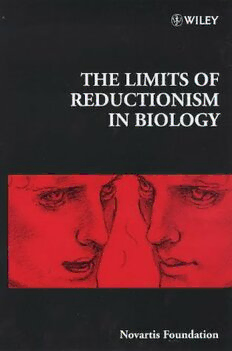
Download The Limits of Reductionism in Biology (Novartis Foundation Symposium 213) PDF Free - Full Version
Download The Limits of Reductionism in Biology (Novartis Foundation Symposium 213) by Novartis Foundation in PDF format completely FREE. No registration required, no payment needed. Get instant access to this valuable resource on PDFdrive.to!
About The Limits of Reductionism in Biology (Novartis Foundation Symposium 213)
The reductionist programme in biology has yielded amazing insights into the basic processes of life. In particular, the explanation of many cellular processes at the molecular level has revolutionized our understanding of biology. However, given the vast increase in the amount of analytical information now being obtained, we have to ask how much we really need to know in order to 'understand' a biological process. The reductionist programme raises fundamental questions about levels of explanation. This book brings together a celebrated group of philosophers and scientists to discuss these problems. Some chapters deal with the enormously powerful techniques of molecular biology, and analyse precisely how molecular information has improved our understanding of biological processes. Others deal with specific physiological systems in relation to the appropriateness of attempts to provide reductionist explanations. The area of brain and behaviour is given particularly close attention because there are a number of differing views held by scientists about whether an analytical and reductionist approach is even desirable in this context. Separate chapters deal with ecological and evolutionary issues. Providing a comprehensive account of the application of reductionist ideas in biology, this book deals with controversial ideas, particularly in relation to reductionist explanations of behaviour, and presents both sides of the argument. The issues raised are relevant to virtually every area of biological research.
Detailed Information
| Author: | Novartis Foundation |
|---|---|
| Publication Year: | 1998 |
| ISBN: | 9780471977704 |
| Pages: | 242 |
| Language: | English |
| File Size: | 15.357 |
| Format: | |
| Price: | FREE |
Safe & Secure Download - No registration required
Why Choose PDFdrive for Your Free The Limits of Reductionism in Biology (Novartis Foundation Symposium 213) Download?
- 100% Free: No hidden fees or subscriptions required for one book every day.
- No Registration: Immediate access is available without creating accounts for one book every day.
- Safe and Secure: Clean downloads without malware or viruses
- Multiple Formats: PDF, MOBI, Mpub,... optimized for all devices
- Educational Resource: Supporting knowledge sharing and learning
Frequently Asked Questions
Is it really free to download The Limits of Reductionism in Biology (Novartis Foundation Symposium 213) PDF?
Yes, on https://PDFdrive.to you can download The Limits of Reductionism in Biology (Novartis Foundation Symposium 213) by Novartis Foundation completely free. We don't require any payment, subscription, or registration to access this PDF file. For 3 books every day.
How can I read The Limits of Reductionism in Biology (Novartis Foundation Symposium 213) on my mobile device?
After downloading The Limits of Reductionism in Biology (Novartis Foundation Symposium 213) PDF, you can open it with any PDF reader app on your phone or tablet. We recommend using Adobe Acrobat Reader, Apple Books, or Google Play Books for the best reading experience.
Is this the full version of The Limits of Reductionism in Biology (Novartis Foundation Symposium 213)?
Yes, this is the complete PDF version of The Limits of Reductionism in Biology (Novartis Foundation Symposium 213) by Novartis Foundation. You will be able to read the entire content as in the printed version without missing any pages.
Is it legal to download The Limits of Reductionism in Biology (Novartis Foundation Symposium 213) PDF for free?
https://PDFdrive.to provides links to free educational resources available online. We do not store any files on our servers. Please be aware of copyright laws in your country before downloading.
The materials shared are intended for research, educational, and personal use in accordance with fair use principles.

