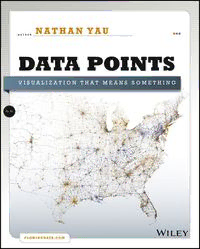
Table Of ContentFront Matter Page: v
Dedication Page: v
About the Author Page: vii
About the Technical Editor Page: vii
Acknowledgments Page: viii
Introduction Page: xi
The Process Page: xi
More Than a Tool Page: xiii
Ch. 1 Understanding Data Page: 1
WHAT DATA REPRESENTS Page: 2
FIGURE 1-1 A single photo, a single data point Page: 3
FIGURE 1-2 Grid of photos Page: 3
FIGURE 1-3 Colors in the wedding Page: 5
FIGURE 1-4 Photos over time Page: 7
FIGURE 1-5 GPS traces collected by Aaron Parecki, http://aaronparecki.com Page: 9
FIGURE 1-6 Selected maps from Atlas of the Habitual by Tim Clark, http://www.tlclark.com/atlasofthehabitual/ Page: 10
FIGURE 1-7 A page from 2010/2011 Annual Report by Nicholas Felton, http://feltron.com Page: 14
FIGURE 1-8 Selected pages from 2005 Annual Report by Nicholas Felton, http://feltron.com Page: 14
FIGURE 1-9 Selected pages from 2010 Annual Report by Nicholas Felton, http://feltron.com Page: 16
FIGURE 1-10 California map from A More Perfect Union (2011) by R. Luke DuBois, courtesy of the artist and bitforms gallery, New York City, http://perfect.lukedubois.com Page: 18
FIGURE 1-11 Washington, DC map from A More Perfect Union (2011) Page: 19
FIGURE 1-12 Louisiana map from A More Perfect Union (2011) Page: 20
VARIABILITY Page: 20
FIGURE 1-13 A firefly in the night by Kristian Cvecek, http://quit007.deviantart.com/ Page: 21
FIGURE 1-14 Path of a firefly by Kristian Cvecek, http://quit007.deviantart.com/ Page: 22
FIGURE 1-15 One aggregate Page: 23
FIGURE 1-16 Everything mapped at once Page: 24
FIGURE 1-17 Annual fatal accidents Page: 24
FIGURE 1-18 Monthly fatal accidents Page: 25
FIGURE 1-19 Daily fatal accidents Page: 26
FIGURE 1-20 Hourly fatal accidents Page: 28
FIGURE 1-21 Accident distributions over time Page: 30
UNCERTAINTY Page: 30
FIGURE 1-22 Household estimates in 2010 Page: 34
FIGURE 1-23 Gumballs and margin of error Page: 34
FIGURE 1-24 Carolyn Abbott's rating compared to her students’ Page: 35
CONTEXT Page: 35
FIGURE 1-25 View of the Sky by Santiago Ortiz, http://moebio.com/exomap/viewsofthesky/2/ Page: 36
FIGURE 1-26 A History of the World in 100 Seconds by Gareth Lloyd, http://datafl.ws/24a Page: 39
FIGURE 1-27 Commonly used passwords in Gawker hack Page: 40
WRAPPING UP Page: 41
Ch. 2 Visualization: The Medium Page: 42
ANALYSIS AND EXPLORATION Page: 45
FIGURE 2-1 Bar chart from The Commercial and Political Atlas by William Playfair Page: 46
FIGURE 2-2 William Playfair created the pie chart for Statistical Breviary in 1801 Page: 46
FIGURE 2-3 History Flow (2003) by Fernanda Viégas and Martin Wattenberg, http://hint.fm Page: 47
FIGURE 2-4 Life expectancy around the world, http://datafl.ws/24w Page: 48
FIGURE 2-5 Distance to McDonald's (2010) by Stephen Von Worley, http://datafl.ws/24y Page: 49
FIGURE 2-6 See Something or Say Something (2011) by Eric Fischer, http://datafl.ws/2ba Page: 50
TOOLS Page: 51
FIGURE 2-7 Components of the Water Cycle on a Flat Map (2011) by NASA/Goddard Space Flight Center Scientific Visualization Studio, http://svs.gsfc.nasa.gov/goto?3811 Page: 52
FIGURE 2-8 Perpetual Ocean (2012) by NASA/Goddard Space Flight Center Scientific Visualization Studio, http://datafl.ws/2bc Page: 54
FIGURE 2-9 ImagePlot by Software Studies Lab at California Institute for Telecommunication and Information Technology, http://datafl.ws/24x Page: 56
FIGURE 2-10 Gephi, http://gephi.org Page: 57
FIGURE 2-11 Treemap by the Human-Computer Interaction Lab at the University of Maryland, http://www.cs.umd.edu/hcil/treemap/ Page: 57
INFORMATION GRAPHICS AND PRESENTATION Page: 58
FIGURE 2-12 Mental disorder posters (2010) by Patrick Smith, http://datafl.ws/259 Page: 59
FIGURE 2-13 Coffee Drinks Illustrated (2007) by Lokesh Dhakar, http://lokeshdhakar.com/coffee-drinks-illustrated/ Page: 60
FIGURE 2-14 The True Size of Africa (2010) by Kai Krause, http://datafl.ws/12t Page: 61
STORYTELLING Page: 61
FIGURE 2-15 Digital Narratives (2011) by Microsoft Research, http://www.digitalnarratives.net/ and http://datafl.ws/2be Page: 63
FIGURE 2-16 So You Need a Typeface (2010) by Julian Hansen, http://julianhansen.com Page: 64
FIGURE 2-17 Analysis of paths and outcomes (2009) to Choose Your Own Adventure #2 by Michael Niggel, http://datafl.ws/6p Page: 66
FIGURE 2-18 What Love Looks Like (2012) by Louise Ma, http://love.seebytouch.com Page: 67
FIGURE 2-19 Illustrated Guide to a Ph.D. (2010) by Matthew Might, http://datafl.ws/25c Page: 68
ENTERTAINMENT Page: 69
HUMOR Page: 70
FIGURE 2-20 Selected cards from Indexed by Jessica Hagy, http://thisisindexed.com Page: 71
FIGURE 2-21 Bed Cartography (2012) from Doghouse Diaries, http://thedoghousediaries.com/3586 Page: 72
FIGURE 2-22 Organizational Charts (2011) by Manu Cornet, http://www.bonkersworld.net/organizational-charts/ Page: 72
FIGURE 2-23 The Trustworthiness of Beards (2010) by Matt McInerney Page: 73
DATA ART Page: 74
FIGURE 2-24 Forms (2012) by Memo Akten (http://memoakten.com/) and Quayola (http://www.quayola.com/), https://vimeo.com/37954818 Page: 75
FIGURE 2-25 Thriller, Vogue, Smells Like Teen Spirit, and Express Yourself from MTV's 10 Greatest Music Videos of All Time (2001) by Jason Salavon, http://salavon.com/work/MtvsTop10/ Page: 76
FIGURE 2-26 Cinemetrics (2012) by Frederic Brodbeck, http://cinemetrics.fredericbrodbeck.de Page: 77
FIGURE 2-27 A History of the Sky (2011) by Ken Murphy, http://datafl.ws/25s Page: 78
FIGURE 2-28 Immaterials: Light painting WiFi (2011) by Timo Arnall, Jørn Knutsen and Einar Sneve Martinussen, https://vimeo.com/20412632; Photo by Timo Arnall Page: 79
FIGURE 2-29 prettymaps (2010) by Stamen Design, http://prettymaps.stamen.com/ Page: 80
THE EVERYDAY Page: 81
FIGURE 2-30 Wind Map (2012) by Fernanda Viégas and Martin Wattenberg, http://hint.fm/wind/ Page: 82
FIGURE 2-31 I Want You To Want Me (2008) by Jonathan Harris and Sep Kamvar, http://www.iwantyoutowantme.org/ Page: 84
FIGURE 2-32 newsmap by Marcos Weskamp, http://newsmap.jp Page: 85
FIGURE 2-33 Trulia Local, http://www.trulia.com/local Page: 86
FIGURE 2-34 Planetary by Bloom, http://planetary.bloom.io/ Page: 87
FIGURE 2-35 datadecs by Really Interesting Group, http://datafl.ws/25v Page: 88
FIGURE 2-36 meshu by Rachel Binx and Sha Hwang, http://meshu.io/ Page: 88
WRAPPING UP Page: 89
Ch. 3 Representing Data Page: 90
FIGURE 3-1 Abstraction process Page: 92
VISUALIZATION COMPONENTS Page: 93
VISUAL CUES Page: 93
Position Page: 93
FIGURE 3-2 The components of visualization Page: 94
FIGURE 3-3 Visual cues Page: 95
FIGURE 3-4 Scatterplots Page: 96
Length Page: 96
FIGURE 3-5 Incorrect bar graph on left and correct one on the right Page: 97
Angle Page: 97
FIGURE 3-6 Mmm, pies and donuts Page: 98
Direction Page: 98
FIGURE 3-7 Slope and time series Page: 99
FIGURE 3-8 Same amount of change shown on varied scales Page: 100
Shapes Page: 100
Area and Volume Page: 100
FIGURE 3-9 Different shapes in scatterplot Page: 101
FIGURE 3-10 Squares and cubes sized by different dimensions Page: 102
Color Page: 103
FIGURE 3-11 Colors as perceived by those who have color vision deficiencies Page: 103
Perception of Visual Cues Page: 104
FIGURE 3-12 Visual cues ranked by Cleveland and McGill Page: 104
COORDINATE SYSTEMS Page: 104
FIGURE 3-13 Commonly used coordinate systems Page: 105
Cartesian Page: 106
Polar Page: 106
Geographic Page: 107
SCALES Page: 107
FIGURE 3-14 Map projections Page: 108
FIGURE 3-15 Scales Page: 109
Numeric Page: 109
FIGURE 3-16 Linear versus logarithmic scale Page: 110
FIGURE 3-17 Incorrect and correct pie charts Page: 111
Categorical Page: 111
FIGURE 3-18 Numeric and categorical scales on a bar plot Page: 111
Time Page: 112
FIGURE 3-19 Time cycles Page: 112
CONTEXT Page: 112
FIGURE 3-20 Measuring Type (2010) by Matt Robinson and Tom Wrigglesworth, http://datafl.ws/27m Page: 113
FIGURE 3-21 Remnants of a Disappearing UI (2010) by George Kokkinidis, http://datafl.ws/27n Page: 114
PUTTING IT TOGETHER Page: 115
FIGURE 3-22 Diagram of the Causes of Mortality in the Army in the East (1858) by Florence Nightingale Page: 116
FIGURE 3-23 On the Origin of Species: The Preservation of Favoured Traces (2009) by Ben Fry, http://benfry.com/traces/ Page: 117
FIGURE 3-24 Chart showing the distributions of deaths, based on United States census of 1870 by Francis A. Walker Page: 119
FIGURE 3-25 Visualization component combinations Page: 120
FIGURE 3-26 Data table on educational attainment in the United States Page: 122
FIGURE 3-27 Bar charts on educational attainment Page: 123
FIGURE 3-28 Change in high school educational attainment between 2000 and 2009 Page: 126
FIGURE 3-29 Using position and direction Page: 128
FIGURE 3-30 Position, symbols, and colors in scatterplots Page: 129
FIGURE 3-31 Choropleth maps Page: 131
FIGURE 3-32 Maps over time Page: 132
WRAPPING UP Page: 132
Ch. 4 Exploring Data Visually Page: 134
PROCESS Page: 136
FIGURE 4-1 The iterative data exploration process Page: 137
WHAT DATA DO YOU HAVE? Page: 137
WHAT DO YOU WANT TO KNOW ABOUT YOUR DATA? Page: 138
WHAT VISUALIZATION METHODS SHOULD YOU USE? Page: 139
FIGURE 4-2 The World's Population, Concentrated (2011) by Tim De Chant, http://persquaremile.com/ Page: 140
FIGURE 4-3 Notabilia (2011) by Mortiz Stefaner, Dario Taraborelli, and Giovanni Luca Ciampaglia, http://notabilia.net/ Page: 141
WHAT DO YOU SEE AND DOES IT MAKE SENSE? Page: 142
VISUALIZING CATEGORICAL DATA Page: 143
FIGURE 4-4 Patterns and visual cues Page: 144
FIGURE 4-5 Visualizing categorical data Page: 146
FIGURE 4-6 Bar graphs for survey results Page: 147
PARTS OF A WHOLE Page: 147
FIGURE 4-7 Symbols plot for survey results Page: 148
FIGURE 4-8 Bubble plots organized differently Page: 149
FIGURE 4-9 Pie charts to show categories Page: 149
FIGURE 4-10 Stacked bars to show categories Page: 150
SUBCATEGORIES Page: 150
FIGURE 4-11 Treemap on survey data Page: 151
Guardian of children in household Page: 151
FIGURE 4-12 Basic mosaic plot with one variable Page: 151
WHAT TO LOOK FOR Page: 152
FIGURE 4-13 Mosaic plot with two variables Page: 153
FIGURE 4-14 Mosaic plot with three variables Page: 153
VISUALIZING TIME SERIES DATA Page: 154
FIGURE 4-15 Visualizing time series data Page: 155
FIGURE 4-16 Bar graphs for time series data, with monthly on top and annual on the bottom Page: 156
FIGURE 4-17 Line chart to show time series Page: 159
FIGURE 4-18 Dot plot to show time series Page: 159
FIGURE 4-19 Sparse dot plot Page: 160
FIGURE 4-20 Sparse dot plot with connecting line Page: 160
FIGURE 4-21 Fitted LOESS curve Page: 161
CYCLES Page: 161
FIGURE 4-22 Weekly cycle Page: 161
FIGURE 4-23 Star plot to show time series data Page: 163
FIGURE 4-24 Line chart and star plot to show overlapping cycles Page: 163
FIGURE 4-25 Calendar heat map Page: 164
WHAT TO LOOK FOR Page: 165
VISUALIZING SPATIAL DATA Page: 165
FIGURE 4-26 Visualizing spatial data Page: 166
FIGURE 4-27 Dots in a geographic coordinate system Page: 167
FIGURE 4-28 Bubbles to show an additional metric on a map Page: 168
FIGURE 4-29 Connections between locations Page: 169
REGIONS Page: 169
FIGURE 4-30 Categorizing data for more specific views Page: 170
FIGURE 4-31 Choropleth world map Page: 172
FIGURE 4-32 County choropleth map Page: 173
FIGURE 4-33 Overlapping points on a map Page: 174
FIGURE 4-34 Filled contour map Page: 175
CARTOGRAMS Page: 175
FIGURE 4-35 Diffusion-based cartogram Page: 176
WHAT TO LOOK FOR Page: 176
MULTIPLE VARIABLES Page: 176
A FEW VARIABLES Page: 177
FIGURE 4-36 Scatter plot to compare two variables Page: 178
FIGURE 4-37 Varying correlation strength Page: 178
FIGURE 4-38 Fitted LOESS curve on a scatter plot Page: 179
FIGURE 4-39 Symbol plot on the left and colored scatter plot on the right Page: 180
FIGURE 4-40 Using redundant visual cues Page: 181
MANY VARIABLES Page: 181
FIGURE 4-41 Multiple encodings with a scatter plot Page: 182
FIGURE 4-42 Heat map to show multiple variables Page: 183
FIGURE 4-43 Relationships with heat map Page: 184
FIGURE 4-44 Parallel coordinates plot Page: 185
FIGURE 4-45 Relationships with parallel coordinates plot Page: 185
FIGURE 4-46 Highlight data for easier reading Page: 186
USING MULTIPLE VIEWS Page: 186
FIGURE 4-47 Star plots Page: 187
FIGURE 4-48 Multiple time series charts for categories Page: 188
WHAT TO LOOK FOR Page: 189
DISTRIBUTIONS Page: 189
FIGURE 4-49 Scatter plot matrix Page: 190
FIGURE 4-50 Using multiple visualization methods to explore different dimensions Page: 192
FIGURE 4-51 Heights of 100 imaginary people Page: 193
FIGURE 4-52 Heights of imaginary people, sorted from shortest to tallest Page: 194
FIGURE 4-53 Heights arranged in bins Page: 194
FIGURE 4-54 Histogram showing heights Page: 194
FIGURE 4-55 Visualizing distributions Page: 195
FIGURE 4-56 Box plot Page: 196
FIGURE 4-57 Multiple box plots for comparison Page: 196
FIGURE 4-58 Varying bin sizes with histograms Page: 197
FIGURE 4-59 Multiple histograms to compare distributions Page: 198
WHAT TO LOOK FOR Page: 199
WRAPPING UP Page: 199
Ch. 5 Visualizing with Clarity Page: 200
VISUAL HIERARCHY Page: 202
FIGURE 5-1 All visual elements on the same level Page: 203
FIGURE 5-2 Width of grid lines reduced to fit in background Page: 203
FIGURE 5-3 Focus of chart shifted to fitted line with color and width Page: 204
FIGURE 5-4 Grid and value labels adjusted and fewer, less prominent gridlines Page: 204
READABILITY Page: 205
FIGURE 5-5 The History of Film (2012) by Larry Gormley, http://historyshots.com Page: 206
FIGURE 5-6 Connecting visual cues to what data represents Page: 208
ALLOW COMPARISONS Page: 208
FIGURE 5-7 Allowing comparisons Page: 209
FIGURE 5-8 Bar chart versus bubble chart to show large counts Page: 210
FIGURE 5-9 If only we could fly the Atlantic! (1912) by Sid Treeby Page: 211
FIGURE 5-10 Color scale options Page: 212
FIGURE 5-11 Color scales that span the same range of values Page: 212
FIGURE 5-12 Zoomed in on a Cartesian coordinate system Page: 213
REPRESENT CONTEXT Page: 213
FIGURE 5-13 Crayola Color Chart 1903–2010 (2010) by Stephen Von Worley, http://www.datapointed.net/visualizations/color/crayola-crayon-chart/ Page: 214
FIGURE 5-14 Color by expectation Page: 215
FIGURE 5-15 Color based on where the data comes from Page: 216
FIGURE 5-16 Visualizing data generically Page: 217
FIGURE 5-17 Visualizing data in context Page: 217
NEGATIVE SPACE Page: 217
FIGURE 5-18 Grouping shapes with space and other elements Page: 218
FIGURE 5-19 Decreased negative space, decreased readability Page: 219
FIGURE 5-20 Spacing between data points makes patterns more obvious Page: 220
FIGURE 5-21 Visual vibrations from equal negative space Page: 221
FIGURE 5-22 Bars visually dominate with little negative space. Page: 221
FIGURE 5-23 Less vibration with a contrast between bars and negative space Page: 221
HIGHLIGHTING Page: 221
FIGURE 5-24 Examples of highlighting with color Page: 223
FIGURE 5-25 Placing focus on various aspects of the data Page: 223
FIGURE 5-26 Showing all data, but shifting focus with highlighting Page: 224
FIGURE 5-27 Highlighting the theme of a graphic Page: 225
FIGURE 5-28 Various color choices change the visual hierarchy. Page: 226
FIGURE 5-29 Highlighting in the background Page: 227
FIGURE 5-30 Using conflicting visual cues to highlight Page: 228
FIGURE 5-31 Using unused visual cues to highlight Page: 228
ANNOTATION Page: 228
EXPLAIN THE DATA Page: 228
FIGURE 5-32 Annotation for a chart Page: 229
FIGURE 5-33 Annotation added to scatter plot Page: 231
EXPLAIN STATISTICAL CONCEPTS Page: 231
FIGURE 5-34 Unannotated scatter plot Page: 232
FIGURE 5-35 Annotated scatter plot Page: 233
FIGURE 5-36 Histogram showing distribution Page: 233
FIGURE 5-37 Explanation of distribution Page: 233
EXPERIMENT WITH TYPOGRAPHY Page: 234
FIGURE 5-38 Trying various fonts Page: 235
DO THE MATH Page: 235
FIGURE 5-39 Using mean as a point of reference Page: 237
FIGURE 5-40 Transforming data based on point of reference Page: 237
FIGURE 5-41 Showing changes instead of raw values Page: 238
WRAPPING UP Page: 238
FIGURE 5-42 Cumulative values and totals Page: 239
Ch. 6 Designing for an Audience Page: 240
COMMON MISCONCEPTIONS Page: 242
NOVEL GRAPHICAL FORMS Page: 242
FIGURE 6-1 Periodic table of elements Page: 243
FIGURE 6-2 World Progress Report (2010), http://www.flowingprints.com/ Page: 245
FIGURE 6-3 Better Life Index (2011) by OECD, Moritz Stefaner, and Raureif, http://www.oecdbetterlifeindex.org/ Page: 246
VISUALIZING EVERYTHING Page: 246
FIGURE 6-4 A custom Better Life Index Page: 247
FIGURE 6-5 Topic breakdowns for a country Page: 247
FIGURE 6-6 Visualization without comparison Page: 248
FIGURE 6-7 Just showing the numbers Page: 248
MAKING THINGS PRETTY Page: 248
FIGURE 6-8 United States Wind Patterns (2012) by Nicolas Garcia Belmonte, http://www.senchalabs.org/philogl/PhiloGL/examples/winds/ Page: 249
FIGURE 6-9 Wind Map (2012) by Fernanda Viégas and Martin Wattenberg, http://hint.fm/wind/ Page: 250
FIGURE 6-10 Sleep Schedule (2010), http://datafl.ws/22 Page: 251
FIGURE 6-11 A rough sketch rather than a polished graphic Page: 252
FIGURE 6-12 Same data and graph with different aesthetics Page: 252
THE RULES Page: 252
FIGURE 6-13 Lostalgic (2012) by Santiago Ortiz, http://moebio.com/lostalgic Page: 253
PRESENT DATA TO PEOPLE Page: 254
JUST YOU Page: 254
A SPECIFIC AUDIENCE Page: 255
FIGURE 6-14 How a chart might look from variable distance Page: 256
A WIDER AUDIENCE Page: 256
FIGURE 6-15 State of the Polar Bear (2012) by Periscopic, http://pbsg.npolar.no/en/dynamic/app/ Page: 257
FIGURE 6-16 More details on a region Page: 258
THINGS TO CONSIDER Page: 258
DATA BACKGROUND Page: 259
GUIDANCE FOR CONCEPTS Page: 259
FIGURE 6-17 A flight from Slidell, Louisiana to Sarasota, Florida, according to FlightAware, http://flightaware.com/live/flight/N48DL Page: 260
FIGURE 6-18 Broken connections between visual cues, data, and what it represents Page: 261
DATA NARRATIVE Page: 261
FIGURE 6-19 Statistical questions and possible outcomes Page: 262
FIGURE 6-20 Generic report layout with separated figures and text Page: 264
FIGURE 6-21 One-column layout for a report with embedded charts Page: 264
RELATABILITY Page: 264
FIGURE 6-22 Probability of death in a year Page: 265
FIGURE 6-23 Individual focus for greater relatability Page: 266
FIGURE 6-24 Relatability through physical location Page: 267
PUTTING IT TOGETHER Page: 268
FIGURE 6-25 Comparing box plots to see changes over time Page: 268
FIGURE 6-26 Exploring distributions to see changes over time Page: 270
FIGURE 6-27 Time series plot with transparency and exploration of visual form Page: 271
FIGURE 6-28 Annual maps for spatio-temporal comparisons Page: 271
FIGURE 6-29 Greater contrast and borders removed for more readable maps Page: 272
FIGURE 6-30 Decreased obesity rate over the years, exploring binary color scheme Page: 272
FIGURE 6-31 Time series version of maps in Figure 6-30 to look for patterns Page: 273
WRAPPING UP Page: 273
FIGURE 6-32 Sketches for layout before moving on to final graphic Page: 274
FIGURE 6-33 Annotated and finalized graphic using findings from exploration Page: 275
Ch. 7 Where to Go from Here Page: 276
VISUALIZATION TOOLS Page: 278
MICROSOFT EXCEL Page: 278
GOOGLE SPREADSHEETS Page: 278
TABLEAU SOFTWARE Page: 279
FIGURE 7-1 Chart options with Google Spreadsheets Page: 279
FIGURE 7-2 Tableau Software Page: 279
MANY EYES Page: 280
DATA-SPECIFIC TOOLS Page: 280
Gephi Page: 280
ImagePlot Page: 280
Treemap Page: 281
TileMill Page: 281
FIGURE 7-3 TileMill by MapBox Page: 281
indiemapper Page: 282
FIGURE 7-4 indiemapper by Axis Maps Page: 282
GeoCommons Page: 283
ArcGIS Page: 283
PROGRAMMING Page: 283
R Page: 283
FIGURE 7-5 Graphics created in R Page: 284
JAVASCRIPT, HTML, SVG, AND CSS Page: 285
FIGURE 7-6 Charts made with JavaScript Page: 286
PROCESSING Page: 287
FLASH AND ACTIONSCRIPT Page: 287
PYTHON Page: 287
PHP Page: 288
ILLUSTRATION Page: 288
STATISTICS Page: 289
WRAPPING UP Page: 289
Back Matter Page: 291
Index Page: 291
Description:A fresh look at visualization from the author of Visualize This Whether it's statistical charts, geographic maps, or the snappy graphical statistics you see on your favorite news sites, the art of data graphics or visualization is fast becoming a movement of its own. In Data Points: Visualization That Means Something, author Nathan Yau presents an intriguing complement to his bestseller Visualize This, this time focusing on the graphics side of data analysis. Using examples from art, design, business, statistics, cartography, and online media, he explores both standard-and not so standard-concepts and ideas about illustrating data. Intriguing ideas from Nathan Yau, author of Visualize This and creator of flowingdata.com, with over 66,000 subscribers Focuses on visualization, data graphics that help viewers see trends and patterns they might not otherwise see in a table Includes examples from the author's own illustrations, as well as from professionals in statistics, art, design, business, computer science, cartography, and more Examines standard rules across all visualization applications, then explores when and where you can break those rules Create visualizations that register at all levels, with Data Points: Visualization That Means Something.