
Download Construction of New Buildings Behind Historic Facades PDF Free - Full Version
Download Construction of New Buildings Behind Historic Facades by D. Highfield in PDF format completely FREE. No registration required, no payment needed. Get instant access to this valuable resource on PDFdrive.to!
About Construction of New Buildings Behind Historic Facades
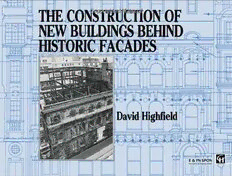
Facade-retention schemes are being used more and more as a means of providing modern accommodation for commercial and industrial buildings whilst preserving the external architectural features of historic and attractive buildings in conservation areas and city centres. This book is a guide to this highly complex technique and includes detailed case studies of eight successful facade-retention projects. The construction of new buildings behind historic facades is a unique phase in the history of architecture. It can only be applied to traditionally constructed buildings with load bearing external walls and it presents designers and contractors with special technical problems. The subject also raises philosophical and ethical questions which have generated much controversy amongst conservationists, architects, developers and planners. However, facade-retention has been recognized as a realistic and necessary compromise which combines architectural conservation with new development. The aim of "The Construction of New Buildings Behind Historic Facades" is to explain the key issues associated with the subject, including the background to and reasons for, its widespread use, its acceptability as a means of architectural conservation, planning procedures, design, the structural problems associated with facade-retention and the technical solutions which can be used to overcome them. The illustrated case studies of recent facade-retention schemes give a detailed insight into the particular techniques and solutions which can be used. This book should be of interest to architects, surveyors, structural engineers, developers and owners, planning officers and those concerned with building conservation and lecturers and students in these disciplines.
Detailed Information
| Author: | D. Highfield |
|---|---|
| Publication Year: | 1996 |
| ISBN: | 9780442312497 |
| Pages: | 162 |
| Language: | English |
| File Size: | 7.042 |
| Format: | |
| Price: | FREE |
Safe & Secure Download - No registration required
Why Choose PDFdrive for Your Free Construction of New Buildings Behind Historic Facades Download?
- 100% Free: No hidden fees or subscriptions required for one book every day.
- No Registration: Immediate access is available without creating accounts for one book every day.
- Safe and Secure: Clean downloads without malware or viruses
- Multiple Formats: PDF, MOBI, Mpub,... optimized for all devices
- Educational Resource: Supporting knowledge sharing and learning
Frequently Asked Questions
Is it really free to download Construction of New Buildings Behind Historic Facades PDF?
Yes, on https://PDFdrive.to you can download Construction of New Buildings Behind Historic Facades by D. Highfield completely free. We don't require any payment, subscription, or registration to access this PDF file. For 3 books every day.
How can I read Construction of New Buildings Behind Historic Facades on my mobile device?
After downloading Construction of New Buildings Behind Historic Facades PDF, you can open it with any PDF reader app on your phone or tablet. We recommend using Adobe Acrobat Reader, Apple Books, or Google Play Books for the best reading experience.
Is this the full version of Construction of New Buildings Behind Historic Facades?
Yes, this is the complete PDF version of Construction of New Buildings Behind Historic Facades by D. Highfield. You will be able to read the entire content as in the printed version without missing any pages.
Is it legal to download Construction of New Buildings Behind Historic Facades PDF for free?
https://PDFdrive.to provides links to free educational resources available online. We do not store any files on our servers. Please be aware of copyright laws in your country before downloading.
The materials shared are intended for research, educational, and personal use in accordance with fair use principles.

