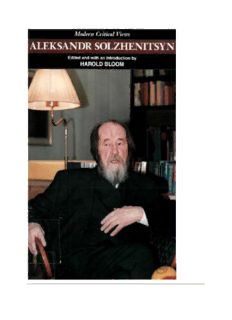
Table Of ContentModern Critical Views
ALEKSANDR SOLZHENITSYN
Edited and with an introduction by
Harold Bloom
Sterling Professor of the Humanities Yale University
©2001
ISBN:0791059189
Contents
Editor'sNotevii
Introduction1HaroldBloom
HumanityInExtremis:OneDayintheLifeofIvanDenisovichandTheLove-GirlandtheInnocent3EdwardE.
EricsonJr.
Solzhenitsyn'sTraditionalImagination:Tolstoy13JamesM.Curtis
PrussianNights:APoeticParableforOurTime73KennethN.Brostrom
TheGulagArchipelago:AlternativetoIdeology85JohnB.Dunlop
TheCalfandtheOak:DichtungandWahrheit95EdwardJ.Brown
Solzhenitsyn:TheRussianLiberal113MikhailS.Bernstam
Solzhenitsyn,theCreativeArtist,andtheTotalitarianState127Q.D.Leavis
HumanRightsandLiterature:SolzhenitsynandPasternak151AnnaDiegel
TheWorldofDetentioninDostoevskyandSolzhenitsyn161SophieOllivier
TheWordofAleksandrSolzhenitsyn171CarylEmerson
TheSolzhenitsynThatNobodyKnows183HughRagsdale
TheSubtextofChristianAsceticismin OneDayintheLifeofIvanDenisovich189SvitlanaKobets
Chronology205
Contributors211
Bibliography213
Acknowledgments215
Index217
Editor's Note
MyIntroductionwonderswhetherSolzehenitsyn'simportancemayprovetobemorehistoricalthanaesthetic,and
questionsalsowhetherhehasbeenabletotranscendTolstoy'sinfluenceuponhim.
ThechronologicalsequenceofcriticismbeginswithEdmundE.EricsonJr.'sconsiderationoftheshortnovel One
DayintheLifeofIvanDenisovich,whichisseenasatributetohumanity'sendurance.
Inaverychallengingessay,JamesM.CurtisanalyzesSolzhenitsyn'scomplexrelationtohisgreatprecursor,
Tolstoy,afterwhichKennethN.BrostromfindsinthepoemPrussianNightsSolzhenitsyn'sinsistencethatmorality
residesinouractions,andnotinourfeelings.
TheGulagArchipelagoisregardedbyJohnB.Dunlopasa"positive"statement,despitethehorrorsitdepicts,
becauseitrepresentsatriumphoverideology.
EdwardJ.BrownexaminesSolzhenitsyn'spolemicalliterarysatireTheCalfandtheOak,findinginitacrucial
documentofRussianculturalhistory,whileMikhailS.BernstamseesSolzhenitsynasanoriginalLiberalwithout
precedentinRussiantradition,andthereforedoomedtobemisunderstoodbothinRussiaandtheWest.
Q.D.LeavisdefendsSolzhenitsynbothasaliterarystylist,andasanadvocateofindividualrights,afterwhich
AnnaDiegelcomparesPasternakandSolzhenitsynassuchadvocates.
DostoevskyiscontrastedtoSolzhenitsyn,asnovelisticvisonariesofdetentionbythestate,inSophieOllivier's
essay,whileCarylEmersonviewsSolzhenitsynasaprophetwhoseWordwarnsusagainstthe"relentlesscultof
novelty."
HughRagsdaleemphasizeswhatisstillSolzhenitsyn'spoliticaldilemma:howtopreservethefolkethosofRussian
culturewhilethenationrecoilsfromSovietMarxismtowardsWesterncapitalism.
Inthisvolume'sfinalessay,SvitlanaKobetsfindsahiddenpatternofChristianasceticisminOneDayintheLifeof
IvanDenisovich,theTolstoyantalethatmarkedSolzhenitsyn'strueinception.
Introduction
SolzhenitsynisacentralfigureintheGreatRussiannarrativetraditionwhosetitansincludeTolstoy,Dostoevsky,
andLeskov,allofwhomwerecrucialinfluencesuponSolzhenitsyn'sownfiction.Tolstoy,thelargestofthese
presencesinSolzhenitsyn,seemstohavehadasprofoundaneffectuponthelaterwriter'slifeasuponthework.The
heroicstanceagainstacorruptandbrutalgovernment,thepatrioticRussianreaffirmationoftheOldBelieverFaith:
thesepassedfromTolstoytoSolzhenitsyn.CountTolstoy,aristocratandheresiarch,wasuntouchablebytheawed
Czaristregime.Solzhenitsyn,anuncommoncommoner,servedintheGulagdespitehisheroisminbattle,and
finallywassentintoexilebyaperplexedandfrightenedPolitboro.ReturningfromhisNewEnglandexilewhen
Communismfell,theagingSolzhenitsynat81isscarcelyathomeinthequasi-democraticRussiaofPutin,whereas
writerheisallbuttotallyisolated.Tolstoy,inhisdarkestmoments,wassupportedbythousandsofTolstoyans,
literaryandreligious,butSolzhenitsynseemstohavelivedbeyondhistime.Asaprophetcryingoutagainstmoral
depravityinhisbelovedRussia,heisignored,ordismissedasarelic.Jeremiah-like,hedenouncesRussianyielding
toWesternconsumerism,buttheconsumersarenotmoved.HecameoutneitherfornoragainstYeltsinandPutin,
butdeclaredagainforJesus,theRussianJesusofTolstoyand(withmanydifferences)ofDostoevsky.
ItisdifficulttojudgeSolzhenitsyn'smajorworks—August1914,CancerWard,TheFirstCircle,TheGulag
Archipelago,OneDayintheLifeofIvanDenisovich—apartfromtheircontext,hismagnificentstruggleagainstthe
Stalinistlegacy.ThejudgmentofhisyoungerRussiancontemporariesisthatallthesearenow,atbest,admirable
PeriodPieces.Willthatnowfashionablejudgmentprevail?
Clearly,thereisnoWarandPeacenorAnnaKarennina,noTheBrothersKaramazovnorCrimeandPunishment,
amongSolzhenitsyn'snarratives.Are
wetosaythatheisdoomedtoberememberedonlyinthecategoryofthewriter-as-witness,amuchlargerversionof
thesincerebutlimitedElieWiesel?IfonelooksforhisAmericanequivalent,onefindsnotFaulknernoreven
HemingwaybutJohnDosPassos,agrandcameraeye,orevenSteinbeck,whoseTheGrapesofWrathseemsnot
unworthyofSolzhenitsyn'spopulistreligiosity.
WedoSolzhenitsyn'snovelsakindofviolencebyattemptingtoreadthemapartfromtheircentral,historical
positionaspolemicaltestimoniesagainstStalinandhisheirs.Yetitistheyear2001.Dothesebookssustain
themselvesaestheticallybytheirowninternalstrength?CanwereadTheFirstCircleaswereadTheCharterhouse
ofParmaandTheMagicMountain,asanothergreatinstanceoftheclassicEuropeannovel?
Theanswerseemstomeatouchmixed:yesandno,noandyes.TheFirstCirclederivesfromWarandPeace,a
dangerousoriginforanynovelwhatsoever,andalsofromTolstoy'sgreatshortnovel, HadjiMurad.Severalcritics
havenotedtheclearrelationbetweenCzarNicholasIinHadjiMuradandStalininTheFirstCircle;bothrulersare
accuratelyportrayedasviciousegomaniacs.ButagenerallyTolstoyanatmospherepervadesallofTheFirstCircle,
andbecomesdisconcerting.Solzhenitsyntendstobealaconicwriter,morelikeHemingway(whomhehadread
closely)thanlikeTolstoy.ApersistentTolstoyanismdemandsTolstoy'sownpowertofreshlyre-perceivenatural
reality,asthoughhewereanewHomer.Solzhenitsynisawriterofawhollydifferentorder,drivenbyangerand
heroicendurancebutlackingTolstoy'ssuperblynaturalgrace.
FictionwritersofthecenturynowendinginRussiahaveincludedIsaacBabel,permanentlymemorableforhisshort
stories,andMikhailBulgakov,whosefantasy-novelTheMasterandMargaritaisanastonishment.Solzhenitsyn
doesnotprovidethepurepleasureofreadingtheydo,atleastforme.Andhemaynothavetheabsoluteaesthetic
eminenceofthegreatmodernRussianpoets:AlexanderBlok,AnnaAkhmatova,OsipMandelstam,Marina
Tsvetayeva.YetSolzhenitsyn,whocannotbesaidtohavetriumphedinhisaestheticagonwithTolstoy(butthen,
whocould?),hasaneminenceintimesostrongthatitmayprevailovertime.Hislifeandhisworkalikeare
exemplary,andscarcelycanbedistinguished,onefromtheother.
EDWARDE.ERICSONJR.
Humanity In Extremis:
One Day in the Life of Ivan Denisovich and
The Love-Girl and the Innocent
The
short novel One Day in the Life of Ivan Denisovich is a very importantwork,bothforSolzhenitsyn's
artisticreputationandfortheunfoldingstoryofhiscareer.TheplayTheLove-GirlandtheInnocentisconsiderably
lessimportantonbothscores.Whatlinksthemtogetheristheirsettinginsimilar(notidentical)hard-laborprison
camps;theyreflectonthesamegeneralperiodandexperiencesofSolzhenitsyn'slife.Bothwerecomposedshortly
aftertheauthor'sreleaseintofreedom.
ThestoryofthepublicationofOneDayintheLifeofIvanDenisovichisoneoftheexcitingliterarystoriesofour
time.When,in1961,SolzhenitsynhopedthattheSovietculturalclimatemightpossiblyhavethawedenoughto
allowhisnoveltobepublished,hesoughttogetitthroughtoAlexanderTvardovsky,editorofNovyMir.His
middlemanwasLevKopelev(thereal-lifemodelforthecharacterLevRubininTheFirstCircle.)Solzhenitsyn
knewthatheriskedhislifeinseekingtobepublished.HeknewalsothatifanySovietperiodicalwouldpublishhis
story,NovyMirwouldbetheone.Tvardovskystuffedthisworkbyatotalunknownintohisbriefcaseandtookit
home;and,aswashiswont,heproppedhimselfupcomfortablyinhisbedtopagethroughnewlyreceived
manuscripts.HeopenedOneDay.Theworkimmediatelyoverwhelmedhim:"Irealizedatoncethattherewas
something
(FromSolzhenitsyn:TheMoralVisionbyEdwardE.EricsonJr.©1980byWm.B.EerdmansPublishingCo.)
important,andthatinsomewayImustcelebratetheevent.Igotoutofbed,gotfullydressedagaininevery
particular,andsatdownatmydesk.ThatnightIreadanewclassicofRussianliterature."
Anticipatingtheknee-jerkresponseoftheSovietliteraryestablishmenttothissearingindictmentofStalin'sprison
camps,Tvardovsky,thesupremeliterarydiplomat,usinghispowerfulpositionandconnections,wentrighttothe
topandsoughtfromNikitaKhrushchevpermissiontopublishthenovel.Khrushchevapparentlydecidedthatthis
novelwouldhelphimconsolidatehisbaseofpower,whichhewasbuildingpartlyonadenunciationofStalin's
corruptionoftotalcontrol.Khrushchev'sfellowmembersofthePolitburofeltthattheyhadlittlechoicebuttoallow
NovyMirtopublishthecontroversialnovel.
ItappearedintheNovember1962issue,inanoverrunof95,000whichsoldoutimmediately.Aseparaterunof
nearlyamillioncopiesalsosoldoutquickly.Anunknownsmall-townteacherwas,atonestroke,onthecenterstage
ofRussianliterature.Thewholeworldtooknote.Forhis"liberalism"Khrushchevwaspraisedwidely.
Earlyreviews,eveninthemostorthodoxofSovietsources,wereoverwhelminglyfavorable.Pravdaremarkedon
Solzhenitsyn's"profoundhumanity,becausepeopleremainedpeopleeveninanatmosphereofmockery."Zhores
Medvedev,whowaslatertowriteTenYearsafterIvanDenisovich,emphasizedtheartistryofthenovel.Butmost
responses,inkeepingwithKhrushchev'smotivationforallowingpublication,centeredonthebook'spolitical
significance.Importantly,mostWesternreviewsalsoemphasizedthepoliticaldimension;thebook'spublication
wasviewedasaneventillustratingtheincreasingthawwithintheSovietUnion,thusauguringwellforfutureEast-
Westrelations.SofromthebeginningSolzhenitsyn'sworkwasviewedthroughthewronglens.
ApoliticalapproachdoesnotpenetratetotheheartofOneDay.Thenovelisnot,initsessence,aboutStalin's
inhumanitytoman;itisaboutman'sinhumanitytoman.Stalinisnotsomeaberrationinanotherwisesmooth
progressionofhumanenessinhistory.Theevilofthehumanheartisauniversaltheme:thisisSolzhenitsyn's
approach.
Perhapsneverhasthepoliticalappropriationofaworkofartbystateauthoritiesbackfiredsodramaticallyand
totallyasinthecaseofOneDay.Oncehavingbeencatapultedintothelimelightofworldattention,Solzhenitsyn
wouldnotbesilent.Nowhehadaplatform,andhissenseofdutyurgedhimon.Khrushchevhadletoutofthebottle
ageniewhichhissuccessorscouldnotputbackin.ThehighvisibilityaffordedbyKhrushchev'sdecisionprovided
Solzhenitsynwithalltheprotectionofworldopinionwhichheneededinordertoescapethebrutalitieswhich
almost
certainlywouldotherwisehavebeenvisiteduponhimforsayingwhathewentontosay.
Despitethefactthatsomecriticsconsider OneDayintheLifeofIvanDenisovichthebestpieceSolzhenitsynever
haswritten,heseemstohavefeltthathewasstillatakindofapprenticeshipstage.Hehadalreadylaidplansfor
muchlargernovels;firsthehadtoperfecthiscraftbyworkinginunitsofsmallerscope.
OneDayneverthelesshasmanytraitsincommonwithoneormoreofthelongernovels.Ofcourse,itkeepsitseye
onthoseuniversalissuesofhumansuffering,ofgoodandevil,oflifeanddeath.LikeTheFirstCircleandCancer
Ward,itisbasedonpersonsandeventswhichSolzhenitsynexperiencedandobservedinhisownlife.Ithas
Solzhenitsyn'scharacteristicallytightsettingintime—onedayinthiscase.Ithasalargenumberofcharacters,
givingussomethinglikeacrosssectionofSovietsociety—anotherSolzhenitsyntrait.
IfOneDaywaspartofaperiodofapprenticeship,itstandsneartheendofthatperiod.Theauthorwasaboutto
embarkonthoselongnovelsofhismaturity.Andthisnovelisapieceofsuchconsummateartistrythattocallitthe
workofanapprenticeseemsultimatelyinadequate.HadSolzhenitsynwrittennothingafterOneDay,hisreputation
asanauthorofnotewouldhavebeensecure.Withthisshortnovelhehadarrived,whateverhisfurtherambitions.
HisliterarysituationatthisstageisinterestinglyparalleltothatofMilton:hadMiltonwrittennothingafter
"Lycidas,"hewouldstillbeananthologizedpoet;buthewentontoParadiseLost,ParadiseRegained,andSamson
Agonistes.
Thenoveldepictsasingledayinthelifeofasimplepeasant,IvanDenisovichShukhov,whohasbeenunjustly
thrownintoaprisoncamp.Whileweseemanyofhisfellowzeks,thefocusremainsrathertightlyfixedonShukhov.
Itisadayinwhichnotmuch,certainlynothingmomentous,happens.Thezekseattheirpitifullyinadequategruel,
workhardasbricklayersandfoundrymen(Solzhenitsynhimselfworkedasboth),arecountedandrecounted,and
finallyretire—toprepareforanotherday,andotherdays,ofthesame.
Solzhenitsynshowsgreatrespectforhistitlecharacter.Shukhovisnotatallanauthorialalterego,asareOleg
KostoglotovinCancerWard(somewhat)andGlebNerzhininTheFirstCircle(considerably).Theclearestsignof
respectisinthemerenamingofthehero.Thecombinationofgivenname(Ivan—significantly,themostcommonof
Russiannames)andpatronymic(Denisovich—sonofDenis)isapoliteformmostreadilyusedforpersonsofhigh
stationorintrinsicimportance.Solzhenitsynappliesittoa
simplepeasant.Theauthordeemshischaracterworthyoftherespectusuallyreservedfor"important"people.
ThemostmemorabletechnicaltraitofOneDayisitsunderstatement.Thenoveldepictshorrorswhichmightwell
elicitwhite-hotanger—or,ifnotthat,akindofsentimentalityoverthesufferingofinnocents.Thennovelmakesno
suchexplicitclaimonouremotions.Rather,itdescribesthedayofShukhovandhisfellowsasnottoobad,as
almostagoodday.Thefinalpassageofthenovel,cappedbyabrilliantlyconceivedfinalsentence,highlightsthe
deviceofunderstatement:
Shukhovwenttosleep,andhewasveryhappy.He'dhadalotoflucktoday.Theyhadn'tputhiminthecooler.The
ganghadn'tbeenchasedouttoworkintheSocialistCommunityDevelopment.He'dfinagledanextrabowlofmush
atnoon.Thebosshadgottenthemgoodratesfortheirwork.He'dfeltgoodmakingthatwall.Theyhadn'tfounda
pieceofsteelinthefrisk.Caesarhadpaidhimoffintheevening.He'dboughtsometobacco.Andhe'dgottenover
thatsickness.
Nothinghadspoiledthedayandithadbeenalmosthappy.
Therewerethreethousandsixhundredandfifty-threedayslikethisinhissentence,fromreveilletolightsout.
Theextraoneswerebecauseoftheleapyears....
Thisconcludingpassagealsoallowsustocheckontheimportanttechnicalmatterofnarrativepointofview.Itisa
matterhandleddelicatelybutconsistentlyinthisnovel.Theauthorisalwaystellingthestory;Shukhovisalwaysin
thethirdperson.Yet,byacleversleightofhand,theauthorkeepsmakinghisreadersfeelasiftheyareinsidethe
mindofthemaincharacter;truly,IvanDenisovichistheonewhothinksthatthisisnottheworstofdays.Readers
areleftwiththeimpressionthattheyseeandexperienceShukhov'sdaythroughhisowneyes,thoughintechnical
facttheyneverdo.Inthis,Solzhenitsynhasshownconsiderableskillasafictionwriter.
AsistypicalofSolzhenitsyn'sworks,OneDayshowsussufferinghumanityinextremis.ButbecauseofShukhov's
limitedperspective,sufferinghereisdepictedasprimarilyphysical.InTheFirstCirclethemoresophisticatedGleb
Nerzhinshowsthatsufferingisalsopsychologicalandevenspiritual.Yetbothofthesenovels—incontrastwith
CancerWard,whichdealswiththemysteryofsuffering—treatasufferingtheperpetratorofwhichisnomysteryat
all.Still,eveninOneDaythesufferingofthebodytakesonametaphysicaldimension—throughthemediationof
theauthor,whocangobeyondthekenofthemaincharacter.Theinhospitablycoldclimate
becomesasymboloftheinhumanesettingforhumanlifeingeneral,andthereadercomesawayfeelingmoral
outrageratherthanmerevicariousphysicalpain.WhenamedicalassistantfindsthefeverishIvannotillenoughto
exemptfromtheday'swork,theauthorqueries,"Howcanyouexpectamanwho'swarmtounderstandamanwho's
cold?"Itisoneofthosemicrocosmicremarksfromwhichrayoutlargesymbolicmeanings.Thewarmmanisthe
oneopentoperpetratinginjustice.Solzhenitsyndevoteshislifetomakingwarmmenfeelthecold.
Anysuch"big"thoughtsareasfarbeyondShukhovastheyarebeyondtheprisonguards.Shukhov,nowyearning
afterahandfulofoatsthatoncehewouldhavefedonlytohishorses,thinks,ashegetshispittanceoffoodforthe
day,"Thiswaswhataprisonerlivedfor,thisonelittlemoment."Butevenherethestomachischeatedandthesoul,
thereby,troubled.Andwhatdotheseguardsofthe"animals"care?"Everyrationwasshort.Theonlyquestion
was—byhowmuch?Soyoucheckedeverydaytosetyourmindatrest,hopingyouhadn'tbeentoobadlytreated."
Thearbitrarinessofthelifeofthezeksisall-governing.Theguardsarenotallowedtorecognizethediversityand
unpredictabilityoflife;onlytwozeksmaybesickperday;onlytwolettersperzekmaybemailedoutperyear.
"Sovietpower,"Solzhenitsynsatirizes,hasdecreedthatthesunstandshighestintheskynotatnoonbutanhour
later.Beingdehumanizedentailsbeingdenatured.
GiventhecollectivistideologyoftheSoviets,anironiceffectoftheirprisonregimenisthatitbreaksdownthesense
ofhumansolidarity.Solzhenitsyn,whospeaksconsistendyonbehalfofindividualdignity,alwaysspeakswithequal
consistencyonbehalfofhumansolidarity.Sohelamentsthatinazek'sminditisanotherzekwhoisone'sworst
enemy.Occasionaldisplaysofsolidarity,whichshouldbeanaturaloutflowingofthezeks'commonhumanityand
theirsharedplight,usuallysuccumbtothecampattitude,"YoucroaktodaybutImeantolivetilltomorrow."
Nevertheless,howevermuchthegrimenvironmentandtheneedtoadaptsomehowtoitmayreducethebasic
humanityofthezeks,suchpressurescannevereradicatethehumanessence.Tobesure,Shukhovisconstantlyand
instinctivelyconcernedwithself-preservation.Whenhewasaccused,absurdly,ofhightreasonforsurrenderingto
theGermanswiththeintentionofbetrayinghiscountry,hecoollycalculated:"Ifhedidn'tsign,hewasasgoodas
buried.Butifhedid,he'dstillgoonlivingawhile.Sohesigned."Butthereismore.Amanwillasserthiswantsas
wellashisneeds.Forinstance,hewantstosmoke;itisanunnecessarysmallpleasure,buthewillfindaway.Then,
thereissatisfactioninwork.Ivanworkspoorlyonlywhengivenmeaninglesstasks.Layingbrickswellpleaseshim,
evenifin
prison.Constructiveworkbringsoutinhimtheennoblingqualityofself-validationthroughcreativeeffort.And
whattrulyhumanbeingcanremainforeversilentwhenheistreatedasmerefleshandbones?When,onthewayto
work,Ivanisfriskedbythecampguards,hethinks,"Comeon,pawmeashardasyoulike.Thereisnothingbutmy
soulinmychest."Thecampsystemwouldgranthimthestatusonlyofananimal,aworkhorse.Itisuptohimto
insist,howeverinaccurately,thatheismorethanthat,thatheisspiritual,too,andnotonlymaterial.
ThegreatestofallhumancapacitiesdemonstratedbyIvanDenisovichishiscapacitytoabsorbpainandyetto
endurewithatleastsomevestigesofhumanityintact.ThisenduringhumanityisoneofSolzhenitsyn'smost
importantthemes,anditishisgreatconsolationasheweepsformankind.Thebesteffortstoreducehumanitytothe
leveloftheanimalareneverentirelysuccessful;and,bydefinition,aprocessofdehumanizationwhichisnottotally
successfulisafailure:somehumanityremains."There'snothingyoucan'tdotoaman..."—exceptthatyoucannot
doawaywithhishumanityaltogether.Longsuffering,Solzhenitsynthinks,isapeculiarlystrongtraitoftheRussian
peasantry.Thepeasantmaybepatient,butheisalsodurable;andultimatelyhewillovercome.
IvanDenisovich'sattitudetowardreligionismuchlikeMatryona'sin"Matryona'sHouse."Bothshowlittleinterest
informalreligion,eitherecclesiasticalorcredal.Yetbothbreatheakindofnaturalpiety,andreligiousreferences
peppertheireverydaytalk.Ivan'sreadyresponsetohistribulationsinprisonis,"Aslongasyou'reinthebarracks—
praisetheLordandsittight."Atday'send,gratefulthatheisnotinthecellsandthinkingthatitisnot"sobad
sleepinghere,"hemurmurs,"ThankGod."Whenheforgetsuntilthelastmomentbeforeheisfriskedthathehasa
hacksawbladeonhim,healmostinvoluntarilypraysas"hardashecould":"GodinHeaven,helpmeandkeepme
outofthecan!"Afterwards,however,thisdown-to-earthpeasant"didn'tsayaprayerofthanksbecausetherewasn't
anytimeandtherewasnosenseinitnow."
Ivan'sfaithisnaiveandunreasoned,andincludesasizeabledoseofsuperstition.HebelievesinGod:"WhenHe
thundersupthereinthesky,howcanyouhelpbelieveinHim?"Healsobelieves,asfolkinhisvillagedo,thateach
monthGodmakesanewmoon,becauseheneedstheoldonetocrumbleupintostars:"Thestarskeepfallingdown,
soyou'vegottohavenewonesintheirplace."Atheisticrulersmaycurtailthegrowthofreligion("TheRussians
didn'tevenrememberwhichhandyoucrossyourselfwith"),butitisbeyondtheirpowertoshakethefaithofthe
MatryonasandIvans.
WhileSolzhenitsynclearlyadmiresIvan'sfaith,Ivandoesnot
representhisreligiousideal.AcharacterwhocomesclosertodoingsoisAlyosha(orAlyoshka)theBaptist.Itis
intriguingthatSolzhenitsyn,whohasreturnedtohisancestralRussianOrthodoxChurch,givesthedeepestreligious
sentimentsinthisnoveltoacharacterwhoishostiletoOrthodoxy.Thisdepictionisofapiecewiththenovel'shigh
praiseoftwoEstonianzeks—andthisfromanauthorsometimescalledchauvinisticandnationalistic.Thefactis
thattheauthorissimplybeingfaithfultothequalityofthepersonswhomheknewinthecamps.Inaddition,
Solzhenitsyn'shandlingofAlyoshashowsthathisprimaryreligiousconcernsarenotwiththeparticularitiesof
OrthodoxybutwiththosecentralaspectsoftheChristianfaithheldincommonbyallChristians.
TheclimacticconversationofthenovelisbetweenIvanandAlyosha.Alyosha'sprominenceherehasbeenprepared
forbyfrequentearlierdepictionsofhimasagoodworkerandkindperson.Alyosha'sfaithdoesnotincapacitatehim
forsurvival.Onthecontrary,itisasourceoftheinnerstrengththatsooftencharacterizesSolzhenitsyn'slittle
heroes,thesmallpeoplewhosomehowareabletowithstandeverythingthatasoullessbureaucracyinflictsonthem.
Whileheallowsanyonetoorderhimabout,heisstillcleverenoughtohavehiddenhisNewTestamentinachinkin
thewallsothatithassurvivedeverysearch.TheregularSundayfellowshipofAlyoshaandhisfellowBaptists
allowsthemtocopewiththehardshipsofcamplife"likewateroffaduck'sback."Heissustainedbybiblical
passagesofconsolation:"YetifanymansufferasaChristian,lethimnotbeashamed;butlethimglorifyGodon
thisbehalf."
TheclimacticconversationbeginswhenAlyosha,readinghisBible,overhearsIvan'sroutine,day'sendprayerand
says,"Lookhere,IvanDenisovich,yoursoulwantstopraytoGod,sowhydon'tyouletithaveitsway?"Ivan,the
naiveOrthodox,associatesthisBaptistwithhighdevotionandthinksthatAlyosha'seyesglowed"liketwocandles."
ButIvan,forwhomcampexperienceisamicrocosmofalloflife,doubtstheefficacyofpraying:"...allthese
prayersarelikethecomplaintswesendintothehigher-ups—eithertheydon'tgetthereortheycomebacktoyou
marked'Rejected.'"AlyoshkascoldsIvanfornotpraying"hardenough,"andadds,"ifyouhavefaithandtellthe
mountaintomove,itwillmove."Thisboldconfidenceistoomuchforliteral-mindedIvan,whohasneverseena
mountainmove(thoughhethenallowsthathehasneverseenamountainatall!).Forhispart,Ivan,unlikethose
zekswhohavelosttheircapacityforcompassion,pitiestheBaptistsas"poorfellows":Theywereinnoone'sway,
and"alltheydidwaspraytoGod";yet"theyallgottwenty-fiveyears...."Onthequestionofmountain-moving,
Alyoshaassertsthesupremacyofthespiritualrealmoverthematerial,sinceofallphysicalthings,theLord
commanded
themtoprayonlyfortheirdailybread;beyondthat,"Wemustprayaboutthingsofthespirit—thattheLordJesus
shouldremovethescumofangerfromourhearts...."
Ivandoesnotwanttobemisunderstood.Althoughdisillusionedbyabadpriest,heinsiststhathebelievesinGod.
"ButwhatIdon'tbelieveinisHeavenandHell."Theafterlife,afterall,isnotopentoempiricalverification,asare
monthlynewmoonsandfallingstars.Whenheprays,hesays,itwillbeforsomethingreal,likereleasefromprison.
ThisattitudescandalizesAlyosha,whoconsciouslysuffersforChrist.Hecounters,"Whatdoyouwantyour
freedomfor?Whatfaithyouhaveleftwillbechokedinthorns.Rejoicethatyouareinprison.Hereyoucanthinkof
yoursoul."Thisspiritualfocus,whichSolzhenitsynelsewhereassertsinhisownperson,affectsIvan:"Alyoshawas
talkingthetruth.Youcouldtellbyhisvoiceandhiseyeshewasgladtobeinprison."
SolzhenitsynadmirestheBaptist'sabilitytogiveapositivemeaningtohisprisonexperience;Alyoshaistheonly
characterinthenovelwhocandoso.Ivanadmiresthat,too.Butitjustwillnotdoforhim."ItwasChristtoldyouto
comehere,andyouareherebecauseofHim.ButwhyamIhere?Becausetheydidn'tgetreadyforthewarlikethey
should'veinforty-one?Wasthatmyfault?"
AlthoughhecannotbelieveeverythingAlyoshacan,Ivan'sactionsareasgoodasanyone's.ConsideringAlyosha
impractical,alwaysgivingandnevergetting,Ivangiveshimabiscuit,thoughthatgestureleavesthegiverwith
nothingforhimself.Solzhenitsyncomments,"We'venothingbutwealwaysfindawaytomakesomethingextra."
Ivangivesthecupofcoldwater,thoughnotalwaysknowinglyinGod'sname.IfAlyoshahasthebestwords,noone
hasbetterdeedsthanIvan.
IvanandAlyoshaarebrothersundertheskin.Botharemodelsofhumanityinthemidstofinhumanity;bothcarefor
othersasmuchasforthemselves.Ivanrepresentsthebestpossiblefromamanwithoutanarticulatedfaith;aman
canactverywellwithoutfaithinatranscendentreality.Suchaoneisinnoposition,however,toexplainthe
mysteryofsuffering.Thiscrucialmatter,whichIvandeeplyneeds,iswhatAlyoshacanadd.WithoutAlyosha,the
novelwouldbemuchdiminished.Ivan,asgoodasheis,needsAlyosha'sinsighttocompletethepicture.
TheLove-GirlandtheInnocentisoneofSolzhenitsyn'stwopublishedplays,neitherofwhichranksamonghistop
literarysuccesses.Inthiscase,thelargecastofcharactersinabriefworkisespeciallyproblematical(fifty-seven
individuals,plusothersingroups—inaplayof133pages).ItshareswithOneDayintheLifeofIvanDenisovichthe
settingofaprisoncamp,thoughthistimeamixedcampof"politicals"andthieves.Italsosharesthe
themesofsuffering,injustice,anddehumanization.Campland,that"invisiblecountry,"istheplace"whereninety-
ninemenweepwhileonemanlaughs."
Thetwomemorablecharactersarethetitlecharacters:LyubaXyegnevitskaya,thelove-girl,andRodionNemov,the
newlyarrivedinnocent.Herviewisthatallmenare"onlyafteronething."Sosheadapts.She,aso-calledkulak
fromaland-owningfamily,hadbeenmarriedoffatfourteenyearsofage.Nemov,nottheadapterLyubais,feels
"sorryforeveryone"inthecruelcampsetting.HecarrieswithinhimthestapleSolzhenitsynconvictionthat
conscienceismoreimportantandvaluablethanlifeitself.Formerlyacavalrycaptain,Nemovuponhisarrivalthere
isnamedproductionchiefofthecamp.Butquicklytheprofessionalthieves,whomStalinconsidered"socialallies,"
persuadethecampcommandanttogetridofthiscircumspectmanandtoreplacehimwithamanoftheirownilk,
theengineerKhomich.Lyuba,despitehercompromises,hasenoughinsighttoknowagoodmanwhensheseesone,
andshefeelssorryforNemov;sherecognizesthatheisnotcamp-wise.
AfterNemovisdemotedtofoundryman,heandLyubadiscoverastrongmutualattraction.Theyliveforaweekina
courtship-likearrangement.Butthecampdoctor,Mereshchun,wantsLyubaforhislive-in"campwife."Nowin
lovewithNemov,shesuggeststhatheandthedoctorshareher;shecanmanagethatmuch.ButtheidealisticNemov
cannottoleratesuchanarrangement.
Shortlythereafter,Nemovisstruckontheheadbyafallinglumpofcoal.Firstwordisthatheisdead,butitturns
outthatheisnot.ThefinalsceneshowsLyubareturningtothedoctor'scabin,sadbutreconciledtoherdemeaning
fate.
Thisdrama,especiallygivenSolzhenitsyn'selaboratestagedirections,wouldprobablybebetterintheplayingthan
inthereading.Thebackground,picturingStalinandflowersandchildren,aswellasposters("Workennoblesman,"
"Hewhodoesnotworkdoesnoteat,"andlater"Peoplearethemostvaluablecapital—J.Stalin"),providesa
strikingcontrastwiththeforegroundanditsunmitigatedmiseryandinjustice.
TheLove-GirlandtheInnocentshowsasclearly,ifnotsoeffectively,asOneDayintheLifeofIvanDenisovichthe
dehumanizationoftheSovietcamps.LittleofSolzhenitsyn'sreligiousoutlookcomesthroughinthisplay,although
hismoralvisionremainsconstant.Inthatlight,thisplaycouldbeseenasthemostdirectlyanti-Stalinist,oranti-
Soviet,ofallSolzhenitsyn'sfull-lengthworks—theothersalwaysrisingratherclearlytomoreuniversalthemes.
Still,thedualvisionofhumannature,withgoodandevilwarringineachhumanheart,remainsprominent.The
struggleisseenmoresharplyinLyubathaninanyothercharacter.
Itispossibletoreadthisplayallegorically,thoughcaremustbeexercisedhere,sinceSolzhenitsyn'swritings
generallydonotinvitesuchaninterpretation.YetitiseasyenoughtoseeLyubaasMotherRussia,whosubmits
unhappilytothedemeaningyokeofservitude;repressingherbestmoralinstincts,sheturnsherback,regretfully,on
thehighbuthardway—toprivatefreedomwithinpublicbondage—offeredbytheexampleofNemov.
JAMESM.CURTIS
Description:Despite persecution and censorship in his homeland, this Russian writer has been able to produce such important works as One Day in the Life of Ivan Denisovich and The Gulag Archipelago. This title, Alexander Solzhenitsyn, part of Chelsea House Publishers’ Modern Critical Views series, examines th